
Gong Pushes Revenue AI Into a New Phase
Gong has introduced Mission Callisto, a new expansion of its Revenue AI Operating System designed to connect trusted business context, agentic execution and measurable revenue outcomes. The announcement was made at Gong’s Celebrate 26 customer conference on September 30, 2026.
The launch reflects a broader shift in enterprise technology. Businesses are moving beyond AI tools that simply summarize information and toward systems that can investigate situations, recommend actions and execute repeatable workflows. Consequently, revenue intelligence is becoming increasingly connected to everyday business operations.
Why Better Context Matters for Revenue Teams
Sales teams already generate large volumes of information through customer conversations, CRM records and engagement activity. However, important account and contact information can remain incomplete or scattered across multiple data providers.
Gong Enrich addresses this challenge by adding third party account and contact information to the Gong Revenue Graph. According to Gong, organizations can use multiple data providers through a configurable enrichment process while administrators can govern access, spending and CRM writeback.
As a result, sellers can work with more complete customer information without constantly moving between different systems. This development also highlights an important lesson for businesses following Technology insights and IT industry news. Better AI performance often depends on the quality and context of the information surrounding the model.
AI Agents Move From Assistance to Execution
Another important part of the announcement is Agent Builder. Gong says teams can create Custom Agents that respond automatically to defined events and conditions. Users can specify triggers, conditions, steps and actions, or describe the desired agent in natural language.
This represents a meaningful change in how enterprise AI can operate. Instead of waiting for employees to initiate every task, an AI system can monitor predefined situations and begin an appropriate workflow.
For example, a revenue organization could design an agent around a specific business event and allow it to perform a sequence of approved actions. Therefore, repetitive processes can become more consistent while employees can spend more time on customer relationships and strategic decisions.
Gong Assistant Expands Revenue Intelligence
Mission Callisto also expands Gong Assistant beyond basic question answering. Gong says its Deep Mode can investigate complex business questions by examining broader information and connecting signals across the organization before producing an evidence backed report.
Meanwhile, the assistant is being integrated into Deal Boards and Account Boards so revenue teams can investigate accounts and opportunities without manually reviewing each record individually.
This approach could have implications beyond sales. Marketing teams can increasingly connect campaign activity with customer outcomes, while HR teams can examine workforce capabilities that support revenue operations. In that sense, HR trends and insights, Marketing trends analysis and Sales strategies and research can increasingly intersect through shared business intelligence.
From Revenue Data to Measurable Outcomes
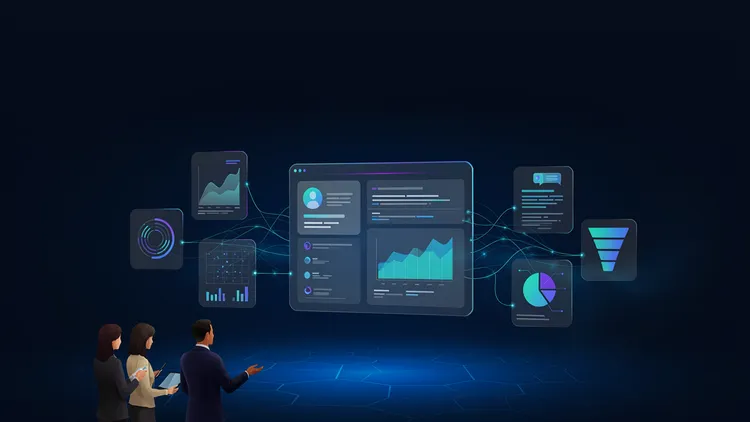
Another major element is Gong Dashboards. The company says these dashboards allow revenue teams to define reusable metrics and targets and then examine performance across pipeline, engagement and outcomes. Managers can also move from a key performance indicator into the accounts or opportunities behind the result.
This matters because collecting data is only one part of modern analytics. The bigger challenge is connecting measurements with decisions.
For finance teams, similar thinking appears in Finance industry updates where organizations increasingly focus on measurable performance and forecasting. Revenue operations face a comparable challenge. Data becomes more useful when teams can understand what changed, why it changed and what action should follow.
The Growing Role of Governed AI
The expansion of AI agents also raises an important question around governance. Automated systems need clearly defined permissions, reliable information and appropriate human oversight, especially when they can trigger business processes.
Gong has been building toward this model through its Revenue Harness and earlier Mission Big Dipper launch, which introduced an agentic execution layer designed to govern and connect AI agents across revenue workflows.
Mission Callisto builds on that direction by adding richer context and more ways for agents to reason across business information and execute defined actions. Consequently, the competitive focus in enterprise AI is increasingly moving from having an AI assistant to building a dependable operating environment around it.
What Mission Callisto Means for Businesses
The broader significance is that revenue intelligence is becoming less about observing what happened and more about supporting what happens next.
Businesses evaluating AI investments should therefore look beyond impressive demonstrations. They should consider whether an AI platform has reliable data, relevant business context, measurable outcomes, controlled automation and clear integration with existing workflows.
Furthermore, organizations should identify repetitive processes where automation can create measurable value without removing necessary human oversight. This can help connect AI adoption with practical business objectives rather than treating AI as another isolated technology project.
Practical Insights for Revenue Teams
The expansion of Gong’s platform shows how enterprise AI is evolving toward a combination of trusted data, specialized agents and continuous measurement. Companies can apply the same principle when evaluating their own AI strategies.
Start with the quality of business information, then identify workflows where automation can produce a measurable improvement. After that, establish clear governance and performance metrics. Finally, make sure employees remain involved in decisions where context, judgment and customer relationships matter.
For businesses tracking Technology insights, IT industry news and changing Sales strategies and research, the key takeaway is clear. The next stage of enterprise AI will depend not only on smarter models but also on better context, stronger workflows and measurable execution.
Stay informed with practical technology and business developments through InfoProWeekly.
Connect with InfoProWeekly for more insights covering AI, sales, finance, marketing and the evolving digital economy.