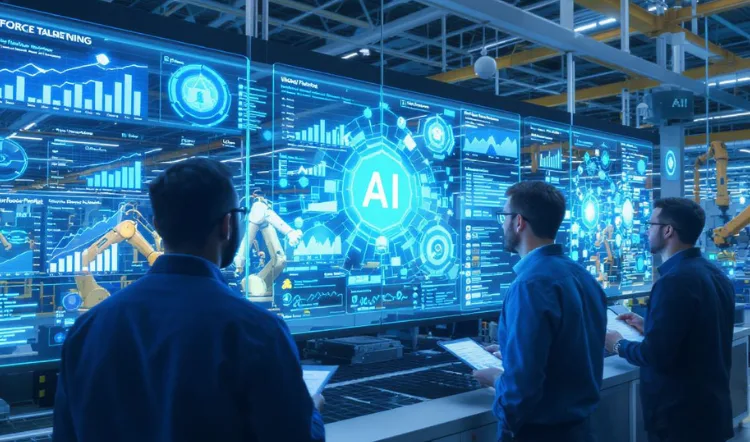
Manufacturing is entering a new era where intelligent technologies are reshaping how organizations operate, hire, train, and retain talent. While automation has been a part of production environments for decades, artificial intelligence is creating opportunities that extend far beyond machinery and production lines. Today, business leaders are increasingly exploring AI in manufacturing as a strategic tool that supports workforce development, operational efficiency, and long term growth.
As organizations face labor shortages, changing skill requirements, and rising competition, artificial intelligence offers practical solutions that help companies adapt. Moreover, it allows HR teams to make more informed decisions while supporting employees through ongoing workplace transformation.
Why Workforce Strategy Matters in Modern Manufacturing
A successful manufacturing operation depends on more than equipment and technology. People remain at the center of innovation, productivity, and business success. Consequently, workforce strategy has become a critical area of focus for manufacturers seeking sustainable growth.
Artificial intelligence helps organizations better understand workforce trends, predict staffing needs, and identify skill gaps before they become significant challenges. In addition, predictive analytics enables leaders to align hiring efforts with future production demands. As a result, businesses can make smarter talent decisions while reducing operational disruptions.
Furthermore, workforce planning powered by intelligent systems helps organizations remain competitive in rapidly evolving markets.
Transforming HR Functions Through Intelligent Technology
Human resources departments are increasingly adopting digital tools to improve employee management and organizational performance. AI in manufacturing supports HR teams by streamlining recruitment, onboarding, performance evaluation, and workforce analytics.
For example, advanced systems can analyze large volumes of candidate information and identify applicants whose skills closely match job requirements. Likewise, onboarding programs can be personalized based on employee experience levels and learning needs.
At the same time, HR professionals gain access to valuable data that supports decision making. Rather than relying solely on historical records, they can leverage real time insights to improve workforce engagement and retention strategies.
Consequently, HR departments become more proactive and strategic in supporting organizational goals.
Building Skills for the Future Workforce
One of the most significant benefits of AI driven transformation is its ability to support workforce development. As manufacturing technologies evolve, employees must continuously learn new skills to remain effective in their roles.
Artificial intelligence can identify competency gaps and recommend customized training pathways. Additionally, adaptive learning platforms help workers develop technical and operational skills at their own pace.
Meanwhile, organizations gain a clearer understanding of future workforce requirements. This allows HR leaders to invest in targeted training programs that prepare employees for emerging responsibilities.
Accordingly, businesses create a culture of continuous learning while strengthening employee confidence and productivity.
Enhancing Employee Experience and Engagement
Employee engagement remains a major concern across manufacturing industries. High turnover rates and workforce shortages can negatively affect productivity and profitability. Therefore, organizations are turning to intelligent workforce solutions to improve employee experiences.
Data driven insights help HR teams understand employee sentiment, identify workplace challenges, and address concerns before they lead to dissatisfaction. Similarly, personalized career development opportunities encourage workers to remain engaged and committed.
Furthermore, intelligent scheduling systems can improve work life balance by creating more efficient shift patterns. As a result, employees experience greater job satisfaction while organizations benefit from improved retention rates.
These developments align closely with current HR trends and insights that emphasize employee wellbeing and long term workforce sustainability.
Managing Change and Workforce Transition
The introduction of advanced technology often raises concerns about job displacement. However, successful organizations view artificial intelligence as a tool that enhances human capabilities rather than replacing workers entirely.
Effective change management requires transparent communication and strategic workforce planning. Therefore, HR leaders must actively involve employees in transformation initiatives and provide opportunities for skill development.
In many cases, routine tasks become automated, allowing employees to focus on higher value activities that require creativity, problem solving, and collaboration. Consequently, organizations can achieve greater efficiency while creating new career opportunities.
This balanced approach helps businesses build trust and support successful technology adoption.
The Connection Between Manufacturing and Business Intelligence
Modern manufacturing increasingly relies on data driven decision making. AI in manufacturing enables organizations to gather insights from production systems, workforce data, and operational processes.
These insights often extend beyond factory operations. For instance, leadership teams can combine workforce analytics with broader business information to improve strategic planning. Similar approaches are shaping technology insights, finance industry updates, sales strategies and research, and marketing trends analysis across multiple sectors.
As industries become more interconnected, organizations that effectively use intelligent technologies gain a stronger competitive advantage.
Creating a Future Ready HR Strategy
Future focused manufacturers recognize that technology investments must be supported by strong people strategies. While advanced systems can improve efficiency, long term success depends on workforce readiness and organizational adaptability.
Therefore, HR leaders should focus on aligning talent management initiatives with business objectives. This includes workforce planning, leadership development, employee training, and continuous performance improvement.
Additionally, organizations should establish clear metrics to measure the impact of workforce transformation efforts. By doing so, they can refine strategies and maximize the value of technology investments over time.
Notably, companies that integrate workforce planning with innovation initiatives are often better positioned to navigate industry changes and seize new opportunities.
Valuable Insights for Manufacturing Leaders
As artificial intelligence continues to evolve, manufacturers should prioritize workforce readiness alongside technology adoption. Investing in employee development today can reduce future skill shortages and strengthen organizational resilience.
Equally important, HR teams should leverage workforce analytics to anticipate talent needs, improve employee experiences, and support strategic decision making. By combining human expertise with intelligent technologies, manufacturers can create agile organizations capable of thriving in an increasingly competitive environment.
Connect with InfoProWeekly to discover expert perspectives, emerging trends, and actionable strategies that drive business success. Reach out today and stay ahead in a rapidly changing digital world.