
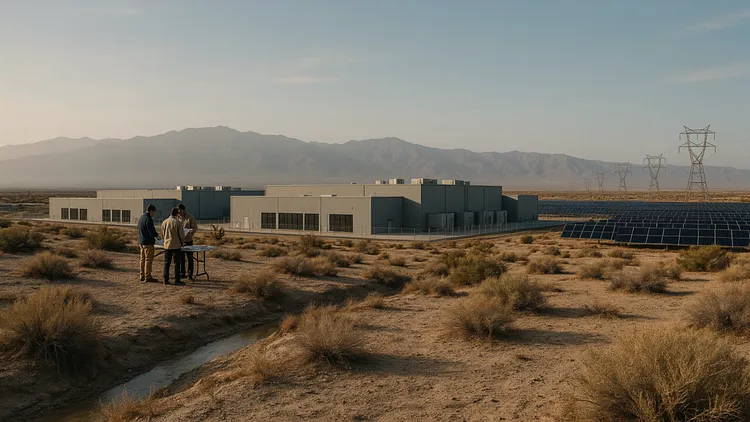
Why Nevada Has Become a Focus of AI Infrastructure Development
Artificial intelligence is driving a rapid expansion of digital infrastructure across the United States. Behind every AI chatbot, advanced analytics platform, and automated business application are data centers that require substantial electricity, cooling systems, and physical space. However, as technology companies search for suitable locations, their infrastructure plans are increasingly colliding with environmental concerns and local community priorities.
Nevada has become a prominent example of this challenge. The proposed Townsite Data Center near Boulder City has triggered debate over whether federal land should be used for large scale AI infrastructure and whether the environmental consequences have received sufficient scrutiny.
The issue extends beyond one development. It raises important questions about how governments can support technological progress while protecting natural resources, public interests, and long term energy security.
The Townsite Data Center Controversy
The Bureau of Land Management approved the Townsite Data Center project in June 2026 on approximately 88.5 acres of public land near Boulder City. The site had previously been associated with a proposed solar power and battery storage project.
The change in intended use attracted criticism from local officials and environmental advocates. Critics questioned whether an environmental assessment prepared for the earlier energy project was sufficient for a data center with different infrastructure requirements and potential impacts.
The dispute escalated when an administrative judge issued a stay on September 1, 2026, halting development while the legal challenge proceeded. The ruling raised serious questions about the federal agency’s decision to treat the revised proposal as substantially similar to the original project.
Consequently, the case has become an important test of how federal agencies evaluate emerging technology infrastructure on public land.
Water Scarcity and Environmental Pressure
Nevada’s desert climate makes water management a particularly important consideration. Data centers can require water for cooling, depending on their design, operating conditions, and cooling technology. Their construction may also affect surrounding land, wildlife habitats, and local infrastructure.
In a region already facing pressure on water resources, residents want clear information about projected consumption and the measures developers will take to limit environmental damage.
Nevertheless, the actual impact depends on the facility’s design. Air based cooling, efficient equipment, recycled water where suitable, and transparent monitoring can reduce certain pressures. Developers should explain these measures before construction begins rather than relying on general sustainability commitments.
Furthermore, environmental assessments should consider cumulative impacts. If several facilities are developed within the same region, their combined resource requirements may become more significant than the effects of an individual project.
Rising Electricity Demand Raises New Questions
AI computing requires substantial processing capacity, and large data centers can place considerable demands on electricity networks. As a result, utilities may need to upgrade transmission infrastructure, increase generation capacity, or develop additional energy storage.
For Nevada, the central question is how these requirements will affect grid reliability and existing electricity customers. If new infrastructure creates additional costs, residents and businesses will want to know who ultimately pays for them.
At the same time, data center investment could create opportunities for energy developers, construction companies, equipment suppliers, and technology service providers. Renewable power and battery storage may contribute to meeting demand, although their availability, transmission access, and reliability must be assessed carefully.
Therefore, responsible planning should establish how developers will fund necessary infrastructure and demonstrate that additional demand can be managed without compromising existing users.
Federal Land Use and Community Participation
The controversy also highlights the relationship between federal decision making and local communities. Public land can support infrastructure and economic development, but changes in land use can affect residents who live nearby.
In September 2026, Congresswoman Dina Titus introduced the Public Lands Accountability Act, seeking greater transparency, public participation, and environmental review for data centers proposed on federal land.
This debate reflects a broader challenge for policymakers. Faster permitting can help the United States develop AI infrastructure and compete globally. However, accelerating approvals without adequate assessment could weaken public confidence and create costly legal disputes.
For this reason, meaningful consultation, accessible project documents, and clear environmental standards can help developers identify concerns before they become major obstacles.
What Businesses and Technology Leaders Should Understand
The debate offers important Technology insights for companies investing in AI infrastructure. Environmental responsibility is no longer simply a public relations consideration. Water availability, energy access, permitting requirements, and community support can influence project costs and delivery schedules.
Similarly, IT industry news increasingly reflects the connection between digital transformation and physical infrastructure. Businesses adopting AI should consider the energy and resource requirements of their technology partners when evaluating long term sustainability.
The issue can also influence Finance industry updates as investors assess regulatory uncertainty, infrastructure costs, and potential project delays. Meanwhile, Sales strategies and research can help infrastructure providers understand customer demand, while Marketing trends analysis can reveal how sustainability commitments affect public trust.
Across these areas, transparent reporting and realistic planning can help organizations make better decisions.
Practical Insights for Sustainable AI Development
Companies considering new data center projects should evaluate water availability, electricity demand, environmental impacts, and community concerns early in the planning process. They should also publish credible information about expected resource consumption, cooling methods, power sourcing, and infrastructure costs.
Policymakers, meanwhile, should establish consistent review procedures that support innovation without overlooking environmental protection or public participation. Local communities need opportunities to understand proposals and raise concerns before decisions become difficult to reverse.
Ultimately, Nevada’s experience illustrates the importance of balancing AI growth with responsible land management. The future of digital infrastructure will depend not only on computing power but also on whether development can earn public trust and operate within environmental limits.
Stay informed about emerging technology, business developments, and sustainability challenges with InfoProWeekly.
Visit InfoProWeekly.com for fresh industry insights that help professionals understand changing markets and make informed decisions.