ISRO and ESA Strengthen Long Term Space Cooperation
India and Europe are expanding their space partnership after the Indian Space Research Organisation and the European Space Agency agreed to extend their existing cooperation framework until January 2032. The agreement was signed and exchanged during the International Space Summit in Paris on September 10 2026.
The renewed arrangement continues a partnership that has developed over more than two decades. At the same time, it expands cooperation into areas that are becoming increasingly important as space activities move toward more complex exploration, stronger environmental monitoring and greater attention to the sustainability of outer space.
The development is significant for technology insights because international space programmes increasingly depend on shared scientific knowledge, specialised infrastructure, satellite data and advanced engineering capabilities.
New Areas Added to the Cooperation Framework
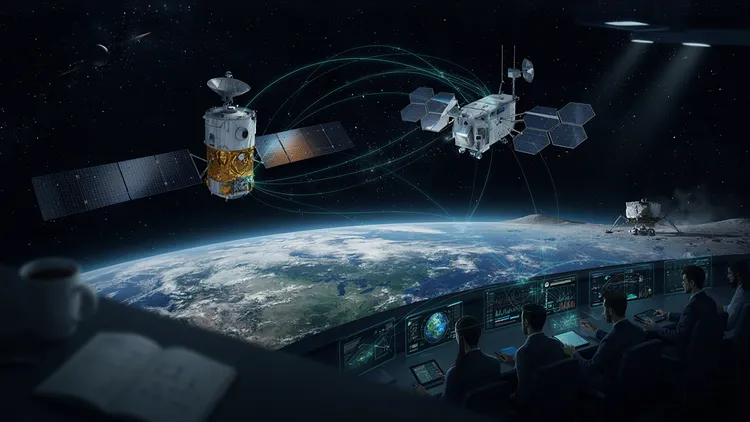
The updated agreement expands the existing areas of collaboration to include human and robotic exploration, space weather and the sustainability of space activities. Existing cooperation in areas such as Earth observation, space science and mission operations will also continue.
This broader scope reflects how the global space sector is changing. Space agencies are no longer focused only on launching satellites or conducting individual scientific missions. Instead, they are increasingly looking at long term exploration, space safety, environmental monitoring and technologies that can support sustained activity beyond Earth.
Consequently, cooperation between major space organisations can help combine technical capabilities while reducing duplication in research and infrastructure.
Human and Robotic Exploration Could Become More Important
Human spaceflight is one of the most notable areas of future cooperation. In 2025, ISRO and ESA signed a Joint Statement of Intent focused on human space exploration, including cooperation around low Earth orbit and possible future lunar activities.
The earlier statement included potential collaboration involving astronaut training, rendezvous and docking systems, analogue missions and research activities. It also identified opportunities connected with India’s planned Bharatiya Antariksh Station and future scientific utilisation of low Earth orbit.
Now that human and robotic exploration has been incorporated into the broader cooperation framework, additional mission opportunities could emerge as both organisations develop their respective exploration programmes.
Space Weather Becomes a Shared Priority
Space weather is another important addition. Solar activity can affect satellites, communications, navigation systems and other technologies that depend on space based infrastructure.
Therefore, stronger international cooperation in space weather research and monitoring could support better understanding of solar activity and its potential effects on spacecraft and Earth based systems.
For businesses, this development connects directly with IT industry news because modern companies increasingly depend on satellite communications, navigation, timing services and Earth observation data. Better space weather knowledge can ultimately support more resilient digital infrastructure.
Earth Observation Remains a Major Connection
Earth observation has already been an important part of India Europe space cooperation. In March 2026, ISRO and ESA signed an arrangement covering joint calibration and validation activities and scientific studies for Earth observation missions.
Satellite based Earth observation can support agriculture, environmental monitoring, climate research, disaster management and infrastructure planning. As a result, collaboration in this area can generate value well beyond the space sector.
The availability of better satellite data can also influence finance industry updates because financial institutions and businesses increasingly use environmental and geographic information when evaluating risks, assets and economic activity.
Sustainability Is Becoming Central to Space Activities
The renewed agreement also recognises the growing importance of sustainability in outer space. As more governments and commercial organisations operate satellites, managing the long term space environment is becoming increasingly important.
Sustainable space activities can involve responsible mission planning, better awareness of orbital environments and technologies that support safer operations.
In addition, these priorities could create opportunities for companies developing satellite monitoring systems, space traffic technologies, data platforms and other specialised services.
New Opportunities for Technology and Industry
The expanded partnership could have implications for India’s growing space technology ecosystem and European aerospace industries. Research institutions, universities and private companies may benefit from new opportunities connected with scientific missions, satellite technologies, data processing and exploration systems.
Moreover, technology development in the space sector often creates knowledge that can later influence commercial industries. Sensors, communications systems, artificial intelligence, robotics and advanced materials can find applications across different markets.
This creates connections with sales strategies and research because companies entering space related markets will need to understand emerging technologies and identify specialised commercial opportunities.
Skills and Workforce Development Will Matter
As cooperation expands, demand for specialised skills could also increase. Space programmes require expertise across software engineering, robotics, electronics, data science, cybersecurity, satellite operations and scientific research.
Consequently, HR trends and insights within the technology sector may increasingly focus on building teams capable of working across international projects and highly specialised engineering environments.
Universities and training organisations could also play a larger role by preparing students for careers involving space systems, artificial intelligence, satellite data and advanced computing.
Marketing and Commercial Opportunities Could Expand
The growing space economy is creating opportunities beyond government agencies and traditional aerospace companies. Startups and technology businesses can participate in areas such as satellite data services, analytics, communications, robotics and space infrastructure.
As these markets mature, marketing trends analysis will become increasingly relevant because companies will need to communicate complex technologies to investors, enterprise customers and government organisations.
Similarly, sales teams will need stronger technical knowledge when working with customers purchasing specialised space and data services.
What the 2032 Extension Means for Businesses
The extension provides a longer framework for cooperation while giving both organisations room to develop specific activities through future agreements and programmes. The ESA has described the updated framework as a continuation of cooperation supporting scientific discovery, technological innovation and sustainable space activities.
For businesses, the broader lesson is that space technology is becoming increasingly connected with mainstream digital infrastructure. Satellite data, communications, navigation, artificial intelligence and Earth observation can influence industries ranging from agriculture and finance to logistics and cybersecurity.
Therefore, companies following technology insights should watch developments in international space partnerships alongside traditional IT industry news.
Valuable Insights for Technology Leaders
The ISRO and ESA extension shows how space cooperation is evolving from individual missions toward broader technology and exploration frameworks. Human exploration, robotics, space weather, Earth observation and sustainability are becoming interconnected areas of research.
Businesses can prepare by monitoring emerging space technologies, identifying opportunities for satellite data applications and developing workforce capabilities in software, artificial intelligence, cybersecurity and advanced engineering.
For technology professionals, the development also highlights an important trend. The future space economy will require cooperation between governments, research institutions, technology companies and skilled professionals across multiple disciplines.
For more technology insights, IT industry news and emerging business trends, connect with InfoProWeekly for practical perspectives that help businesses understand a rapidly changing digital economy. Reach out to InfoProWeekly to explore technology developments, industry opportunities and strategies shaping the future of business.