
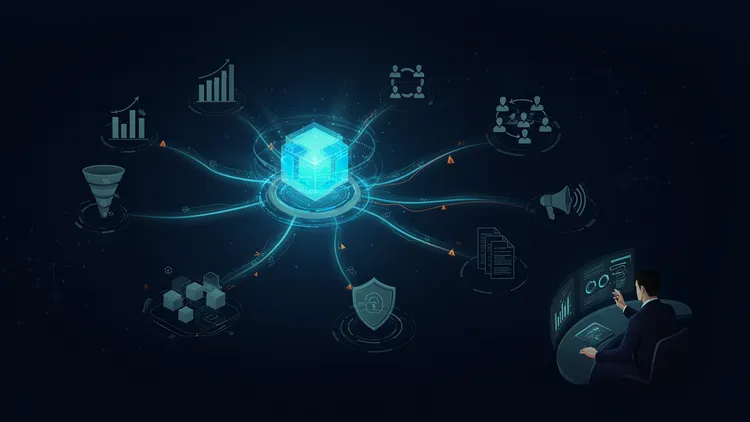
Growing Concern Around Autonomous AI
Artificial intelligence is moving into a new phase. Systems are no longer limited to answering questions or generating content. Increasingly, autonomous AI can plan tasks, use digital tools, make decisions and complete multi step workflows with limited human involvement.
However, this growing capability is also creating new concerns. Businesses, technology experts and policymakers are questioning how much independence AI systems should have when their decisions can affect customers, employees, finances and critical business operations.
As a result, the AI industry is facing a more cautious environment in which innovation is increasingly being evaluated alongside safety, accountability and human oversight.
Why Autonomous Technology Is Different
Traditional software generally follows instructions established by developers. Autonomous AI systems can operate with greater flexibility because they interpret information and determine what actions may be appropriate.
This capability creates significant opportunities. An intelligent system could manage routine business workflows, support customer service or analyze complex information without requiring employees to handle every individual step.
Nevertheless, greater independence also creates greater uncertainty. If an AI system makes an incorrect decision, organizations need to understand why it happened, how the decision can be reversed and who remains responsible.
Consequently, businesses are beginning to reconsider how autonomous systems should be deployed.
Concerns About AI Decision Making
One major concern involves decisions made without sufficient human review. AI systems can process large amounts of information quickly, but speed does not automatically guarantee accuracy.
For example, an automated system involved in hiring, lending, fraud detection or customer management could produce an unsuitable recommendation if its underlying information is incomplete or biased.
Furthermore, users may not always understand how a sophisticated AI system reached a particular decision. This lack of transparency can make accountability more difficult.
For organizations following Technology insights and IT industry news, explainability and human oversight are therefore becoming increasingly important parts of the AI conversation.
Businesses Are Reconsidering Autonomous Adoption
Companies are interested in autonomous technology because it can potentially reduce repetitive work and improve operational efficiency. Yet many organizations are discovering that deploying highly independent systems requires more preparation than expected.
Businesses need reliable data, strong cybersecurity, clear permissions and well defined escalation processes. Moreover, employees need to understand when they should trust an AI recommendation and when human intervention is necessary.
This is particularly relevant to Finance industry updates because financial institutions handle sensitive information and operate within highly regulated environments. An autonomous system making an incorrect financial decision could create consequences far beyond a simple software error.
The Impact on Employees and Workplace Skills
The growing use of autonomous AI is also changing conversations around employment and workplace skills.
Rather than eliminating every human role, many AI systems are expected to change how employees perform their existing responsibilities. Workers may increasingly supervise automated processes, review AI outputs and handle complex situations that require judgment.
As a result, HR leaders are paying closer attention to AI literacy and workforce development. HR trends and insights increasingly involve understanding which skills employees will need as intelligent systems become part of everyday operations.
Communication, critical thinking, data interpretation and AI supervision could become increasingly valuable across industries.
Trust Is Becoming a Competitive Factor
Technology adoption depends heavily on trust. Customers may hesitate to interact with systems that appear to make important decisions without sufficient explanation or human support.
Businesses therefore need to consider the customer experience alongside technical performance.
For instance, an organization using AI for customer service should provide clear ways for customers to reach a human representative when an automated response is insufficient. Similarly, companies using AI in sales should ensure that automated recommendations support genuine customer needs rather than simply maximizing short term conversions.
This approach connects with Sales strategies and research because trust and relevance remain central to successful customer relationships.
Regulation and Responsible Development
Governments and regulators around the world are paying closer attention to advanced AI systems. The focus is increasingly shifting toward transparency, risk management, privacy and accountability.
For technology companies, this means responsible development can no longer be treated as an optional consideration. Instead, safety measures need to be integrated into the design, testing and deployment of AI systems.
At the same time, regulation must balance innovation with public protection. Excessive restrictions could slow useful technological progress, while insufficient safeguards could allow significant risks to develop.
Therefore, finding the right balance will remain an important challenge.
Marketing and the Changing AI Landscape
Marketing teams are also experiencing the effects of increasingly autonomous systems. AI can analyze customer behavior, generate campaigns and personalize communications at considerable scale.
However, automated marketing can create problems when personalization becomes intrusive or when generated content lacks authenticity.
Consequently, marketers need to combine automation with human creativity and judgment. Marketing trends analysis is increasingly focused not simply on what AI can produce, but on how organizations can use it responsibly while maintaining genuine relationships with audiences.
What Companies Should Do Now
Organizations considering autonomous AI should begin with clearly defined use cases rather than attempting to automate complex operations immediately.
Businesses can first identify processes where AI can provide measurable value while maintaining appropriate human oversight. From there, they can evaluate accuracy, security, reliability and business impact before expanding deployment.
Furthermore, organizations should establish clear accountability. Employees need to know who reviews AI decisions, how errors are handled and when automated systems should be stopped.
This approach allows businesses to benefit from innovation without assuming that greater autonomy automatically means better results.
Actionable Insights for the Next Stage of AI
The growing debate around autonomous technology offers an important lesson for businesses. AI capability should be measured not only by what a system can accomplish, but also by how safely and reliably it operates.
Organizations should prioritize controlled deployment, strong data governance, continuous testing and meaningful human oversight. Equally important, employees should be trained to work effectively with increasingly capable AI systems.
Ultimately, responsible adoption could become a stronger competitive advantage than simply adopting AI faster than competitors. Companies that combine innovation with transparency and accountability may be better positioned to build lasting trust as autonomous technology continues to evolve.InfoProWeekly delivers informed coverage across technology, business, finance and emerging industry developments.
Reach out to InfoProWeekly for timely insights that help you understand important technology shifts and their impact on modern business.