Google Takes AI Computing Into Orbit
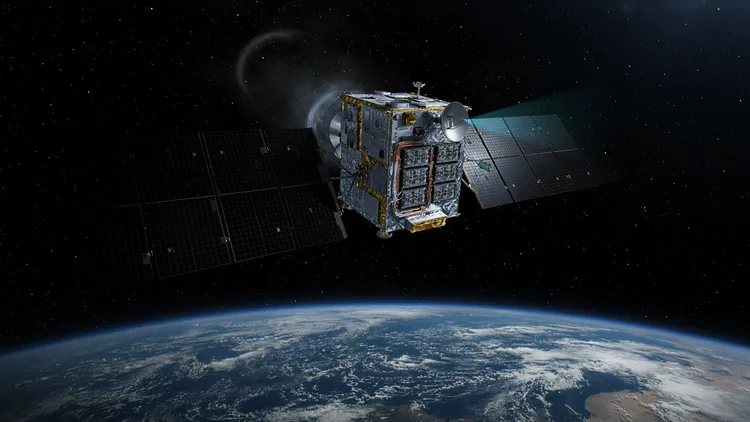
Artificial intelligence infrastructure is expanding beyond traditional data centers as Google begins testing whether advanced computing hardware can operate in space. Through Project Suncatcher, Google has placed its first prototype satellite in orbit to study how its Tensor Processing Units perform under real space conditions.
The satellite launched aboard SpaceX’s Transporter 18 rideshare mission in partnership with Planet. Google confirmed that it established contact with the spacecraft and that the prototype is operating as expected.
The project represents an early research step rather than a commercial space data center. Nevertheless, it could provide important Technology insights into how future AI infrastructure might be designed.
Why Put AI Chips in Space
The idea behind Suncatcher is connected to a simple infrastructure challenge. AI systems require enormous amounts of computing power and electricity, while traditional data centers face constraints involving energy, land, cooling and infrastructure.
Space offers a different environment. Google says satellites operating in low Earth orbit could potentially receive near constant sunlight and generate significantly more solar power than comparable systems on Earth.
Consequently, an interconnected network of solar powered satellites could eventually provide computing capacity for machine learning workloads. However, that possibility remains a long term research objective rather than an established commercial model.
Testing Google TPU Hardware in Orbit
The first Suncatcher satellite is designed to answer a fundamental question about hardware reliability. Can Google’s AI chips continue operating effectively after launch and under the demanding conditions of space?
The spacecraft exposes the hardware to vibration, radiation and extreme thermal conditions. Google previously conducted radiation testing on its Trillium TPUs at the University of California, Davis, where researchers monitored AI workloads for errors caused by radiation.
However, laboratory testing cannot reproduce every condition encountered in orbit. Therefore, collecting real flight data is an important part of the experiment.
Cooling AI Chips Without Air
Cooling could become one of the most difficult engineering problems for orbital computing. On Earth, data centers commonly depend on air movement and other cooling systems to remove heat from processors.
Space presents a different situation because there is no atmosphere surrounding the spacecraft. Google is therefore investigating systems involving heat pipes and radiators to move heat away from the TPUs.
This challenge demonstrates that moving AI infrastructure into space involves much more than simply putting computer chips inside a satellite.
Radiation Creates Another Challenge
Space radiation can interfere with electronic components and cause computing errors. For AI hardware, even occasional errors can become important when systems are expected to operate continuously.
Google has reported that its earlier radiation experiments showed promising results for its Trillium TPUs. The company says those tests indicated that the hardware could withstand radiation levels beyond what it would receive during a five year space mission.
Even so, orbital testing remains necessary because actual space conditions can reveal problems that controlled experiments cannot fully capture.
The Future of Orbital AI Networks
Google’s longer term vision goes beyond one satellite. Future designs could involve multiple satellites carrying TPU hardware and communicating with one another through high bandwidth laser links.
The company plans to test this type of satellite interconnection with two additional satellites in 2027. Precise communication will be essential because the spacecraft would need to maintain connections while moving rapidly around Earth.
If such systems eventually become practical, AI computing could operate as part of an orbital network rather than being concentrated entirely in terrestrial facilities.
What It Means for the Technology Industry
The experiment arrives as the technology industry searches for new ways to support rapidly growing AI workloads. IT industry news increasingly focuses on the enormous infrastructure requirements associated with advanced computing, including electricity, cooling and data center capacity.
Suncatcher introduces another possibility. Instead of solving every infrastructure challenge on Earth, some computing resources could potentially be located in an environment with continuous access to solar energy.
However, major technical and economic questions remain. Reuters reported that experts see commercial orbital computing as years away because of launch costs, engineering constraints and satellite production challenges.
Broader Business Implications
The implications could eventually extend beyond computing companies. More powerful orbital processing could influence satellite services, scientific research, Earth observation and other industries that generate large quantities of data.
For finance professionals, this development connects with Finance industry updates around the growing infrastructure requirements of artificial intelligence. Meanwhile, businesses following Marketing trends analysis, Sales strategies and research, and HR trends and insights can view Suncatcher as another example of how quickly AI is expanding into new areas of the economy.
The immediate commercial impact remains uncertain, but the research highlights how businesses are thinking about computing infrastructure several steps ahead.
Insights From the Suncatcher Experiment
The most important lesson from Suncatcher is that scaling AI requires more than better models. Computing hardware, energy, cooling, communications and physical infrastructure all have to evolve alongside software.
Google’s first satellite is therefore best understood as an engineering experiment designed to collect evidence. The results from orbit will help researchers understand which assumptions work in practice and which require new solutions.
As AI workloads continue growing, experiments like Suncatcher could help shape the infrastructure decisions that determine where and how future computing takes place. For more Technology insights and informed coverage of emerging innovations, stay connected with InfoProWeekly.
Reach out to InfoProWeekly for clear perspectives on the technologies transforming business and the global digital economy.