
Atlanta Is Giving Security a Robotic Upgrade
The overnight security shift is taking an unusual turn in Atlanta. At some apartment communities, four legged robotic machines are now patrolling parking areas and shared spaces instead of traditional human guards.
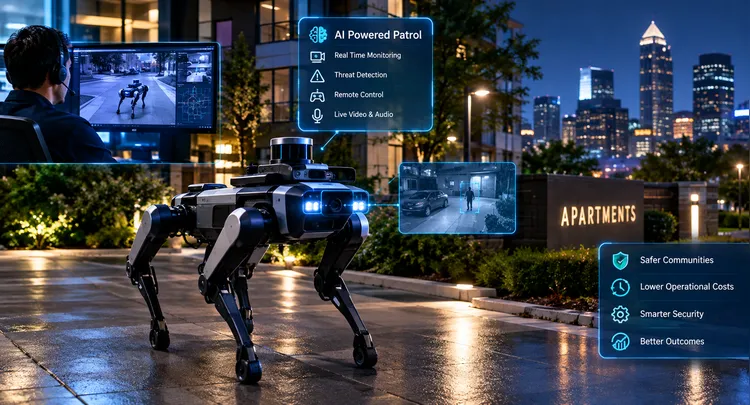
The technology combines cameras, artificial intelligence, remote human operators and mobile robots. As a result, property managers can maintain a visible security presence while allowing people to monitor situations remotely.
At 445 Cleveland Apartments in southwest Atlanta, two robotic dogs now patrol a community of roughly 200 units after the leasing office closes. The property previously used a team of two or three security guards for overnight and weekend coverage, according to Reuters.
How Robot Dogs Are Being Used
These machines are not simply wandering around properties without supervision. Instead, human operators can monitor their cameras, control their movements and communicate with people through onboard speakers.
That combination creates a different model of security. A robot can move toward a suspicious situation while the human operator remains at a remote location. If necessary, the operator can contact property managers or law enforcement.
At some Atlanta properties, the robots have also been connected with existing surveillance systems. This allows operators to use information from several cameras while directing a mobile unit toward a particular location.
Why Property Managers Are Interested
The appeal is partly about cost, but safety is another important factor. Traditional overnight guards may have to approach unfamiliar groups or investigate suspicious activity alone, sometimes in poorly lit parking areas.
Property managers at 445 Cleveland told Reuters that their previous security team faced situations where workers were uncomfortable approaching groups gathered on the property. The robotic system changes that dynamic because a machine can make the initial approach while a human remains behind the controls.
Furthermore, company representatives have said the service can cost about half as much as traditional security staffing. However, those claims come from the company and should not be treated as independently verified measurements of overall security performance.
Robot Dogs Are Becoming Part of a Larger Security System
The Atlanta example is important because the technology is not operating as an isolated gadget. Instead, it is becoming part of a broader security network involving cameras, remote operators, property managers and police.
In May 2026, robotic units at a West Midtown apartment complex helped track suspects after cameras captured vehicle break ins. Local reporting said one robot followed fleeing suspects while another alerted Atlanta police.
Similarly, the DeKalb County Police Department has used robotic security systems that provide live audio and video feeds to its Real Time Crime Center during critical incidents.
Therefore, the bigger story is not simply about machines replacing people. It is about security becoming increasingly connected through robotics, artificial intelligence and remote monitoring.
Human Workers Are Still Part of the Equation
Despite the attention surrounding robotic patrols, humans have not disappeared from the process. Remote operators remain responsible for observing situations, communicating with people and deciding when additional action may be necessary.
This creates an interesting change in security employment. Instead of every worker physically walking a property throughout the night, some roles can move toward remote monitoring, technology operation, incident assessment and system management.
That shift connects directly with HR trends and insights because employers may need people with different technical abilities. Workers who understand surveillance technology, cybersecurity, incident response and remote operations could become increasingly valuable.
Security Automation Raises New Questions
The expansion of robotic security also introduces questions about privacy and responsible surveillance. Cameras can capture people moving through residential properties, while remote operators may observe activity from another location.
Consequently, property owners need clear policies around data access, video storage, operator permissions and communication with residents. Security technology can provide useful visibility, but businesses still need to consider how that visibility affects trust.
Cybersecurity is equally important. A connected security robot is effectively another digital endpoint. If cameras, communication systems or control interfaces are compromised, the technology could create new risks rather than simply reducing existing ones.
These concerns make technology insights and IT industry news increasingly relevant to physical security decisions.
The Business Case Goes Beyond Security
For property owners, robotic patrols can influence more than security budgets. A visible patrol presence may affect how residents perceive a property, how managers handle incidents and how quickly suspicious activity receives attention.
There can also be implications for finance industry updates because businesses are increasingly evaluating technology investments according to measurable operating costs and risk reduction. Security automation therefore needs to be assessed through both financial and operational perspectives.
Sales strategies and research may also change as security technology companies demonstrate their systems to property developers, hotels, construction companies and commercial facilities.
Marketing Will Need to Explain the Technology Clearly
The growing use of robotic security creates a new challenge for marketing teams. Companies cannot simply promote a machine as futuristic technology. Customers want to understand what it actually does, who controls it and how it affects people.
This makes marketing trends analysis especially relevant. Successful communication will likely depend on demonstrating practical outcomes rather than relying entirely on futuristic imagery.
For technology providers, showing real deployments, explaining human oversight and addressing privacy concerns can help potential customers understand the value of robotic security more clearly.
What the Atlanta Experiment Could Mean for Other Industries
The technology is already attracting interest beyond apartment communities. Reporting indicates that robotic security systems are being deployed or considered for construction sites, hotels and other properties around Atlanta.
Over time, similar systems could appear in warehouses, industrial facilities, parking areas and large commercial campuses where repetitive overnight patrols are difficult to staff.
Nevertheless, adoption will depend on more than hardware. Reliable connectivity, cybersecurity, remote operators, maintenance, privacy policies and local regulations will all influence whether businesses can use these systems effectively.
Valuable Insights for Businesses
The Atlanta experience shows that workplace automation does not always mean removing humans completely. In this case, robotics can change where people work and what they do rather than eliminating human involvement altogether.
Businesses considering security automation should therefore examine the entire operating model. The important questions involve who monitors the system, how incidents are escalated, how personal data is protected and what happens when the technology fails.
For employees, the development highlights another broader workplace trend. Technical knowledge is becoming more valuable even in roles that were traditionally centered on physical tasks. For employers, it reinforces the importance of combining automation with human judgment.
Robot dogs may attract attention because they look futuristic, but their larger significance is practical. They demonstrate how robotics, AI surveillance and remote human oversight can work together to change everyday security operations. For more technology insights, IT industry news and emerging business trends, connect with InfoProWeekly for practical industry coverage.
Stay informed about robotics, AI, workplace changes and technology driven business opportunities through InfoProWeekly.