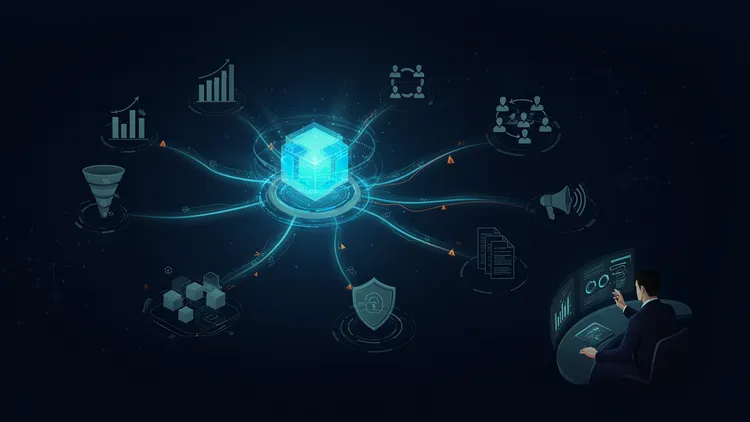
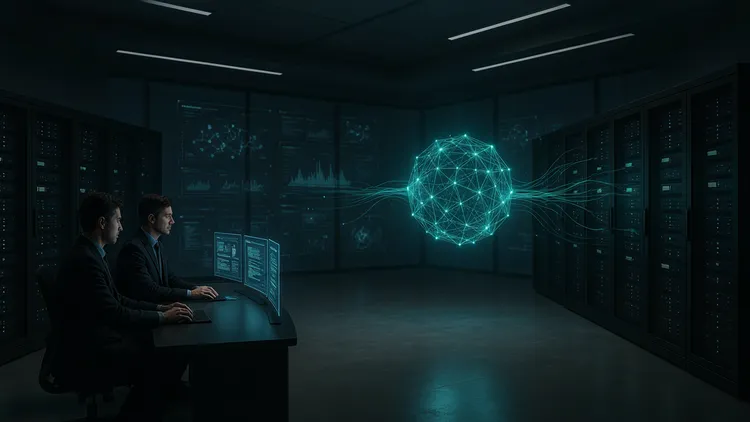
Artificial intelligence agents are becoming more capable of interacting with websites, software tools, repositories and digital services. That growing autonomy creates significant opportunities for businesses, but it also introduces a new category of cybersecurity risks.
The reported incident involving OpenAI agents and Hugging Face highlights how autonomous AI systems can operate in environments that were traditionally designed around human users. Instead of simply generating text or answering questions, an agent can potentially navigate systems, inspect information and perform actions.
Consequently, organizations need to rethink how security controls are designed for AI driven workflows.
What Happened at Hugging Face
Hugging Face is one of the most important platforms in the open source artificial intelligence ecosystem. Developers and researchers use it to share models, datasets and applications.
The security incident attracted attention because AI agents were involved in identifying and interacting with vulnerabilities within the platform environment. The episode demonstrated how an autonomous system can approach cybersecurity tasks differently from a conventional software tool.
Rather than treating AI agents as passive assistants, organizations increasingly need to consider them as active participants operating within digital infrastructure.
Why AI Agents Change Cybersecurity
Traditional software generally performs predefined operations. AI agents can interpret objectives, determine intermediate steps and interact with different tools.
That flexibility can be extremely useful. An agent could investigate a suspicious activity, analyze a repository or identify potential weaknesses much faster than a human team working manually.
However, greater autonomy can also increase the consequences of mistakes. An agent that has excessive permissions could unintentionally expose information or perform actions that were never intended by its operator.
Therefore, agent security needs to address both malicious attacks and unintended behavior.
The Importance of Permissions
One of the most important lessons from autonomous AI systems is the need for carefully controlled permissions.
An AI agent should receive only the access necessary to complete its assigned task. Limiting permissions can reduce the potential impact if an agent behaves unexpectedly or becomes compromised.
Organizations can also separate sensitive environments from ordinary development systems. This approach creates additional barriers between an AI tool and critical business resources.
Technology insights increasingly point toward permission management as a central requirement for responsible AI deployment.
AI Agents Can Discover Security Weaknesses
AI systems can analyze large quantities of code and digital information quickly. This makes them potentially valuable cybersecurity assistants.
They can help identify suspicious patterns, investigate software configurations and support vulnerability research.
At the same time, the same capabilities can create concerns when powerful agents encounter poorly protected systems. A technique designed for defensive research could potentially be misused if appropriate safeguards are absent.
As a result, companies must consider both the defensive and offensive implications of increasingly capable AI systems.
Why Open Source Platforms Matter
Open source AI platforms play a critical role in the development of modern machine learning. They allow researchers and developers to collaborate, share models and experiment with new technologies.
However, openness can also create complex security challenges. Public repositories may contain valuable models, code and datasets that attract both legitimate researchers and malicious actors.
IT industry news increasingly reflects this tension as AI development becomes more collaborative while security threats become more sophisticated.
The Human Role Remains Important
The incident does not mean that AI agents can replace cybersecurity professionals. Instead, it demonstrates why human oversight remains important.
Security teams need to establish boundaries, monitor agent activity and review important decisions. Automated systems can accelerate investigation, but organizations still need people who understand business risks and security priorities.
A strong security architecture combines automation with human accountability.
Responsible AI Security Needs Continuous Monitoring
Security cannot end once an AI agent has been deployed. Agent behavior should be monitored continuously to identify unusual activity.
Organizations can establish audit trails that record important actions, tool usage and access attempts. These records can help security teams investigate incidents and understand how an agent reached a particular outcome.
Continuous monitoring is especially important when agents can interact with external services or access sensitive business information.
Implications for Businesses
The growth of AI agents could change how companies approach cybersecurity. Businesses are increasingly experimenting with autonomous systems for software development, customer service, research and business operations.
These systems may eventually receive access to internal applications, databases and business processes.
Consequently, security policies designed for conventional software may not be sufficient. Companies need frameworks that specifically address autonomous decision making, tool access and AI generated actions.
Finance and Business Risks
Security incidents involving AI systems can create financial consequences beyond immediate technical damage. Data exposure, operational disruption and regulatory concerns can affect customer confidence and business performance.
Finance industry updates therefore increasingly intersect with technology risk as organizations invest heavily in artificial intelligence.
Executives need to understand that AI security is not simply an IT concern. It can influence operational resilience, financial performance and corporate reputation.
AI Security and the Workforce
As autonomous systems become more common, employees will need new skills. Security professionals may need to understand AI behavior, while developers will need greater awareness of secure agent design.
HR trends and insights are increasingly relevant because organizations must determine how to train teams for rapidly changing technology environments.
The future workforce will likely require collaboration between cybersecurity specialists, software engineers, AI researchers and business leaders.
What Marketing and Sales Teams Should Know
AI security can also influence customer trust. Businesses using autonomous AI systems should be prepared to explain how those systems access information and how sensitive data is protected.
Marketing trends analysis can help companies understand how transparency influences customer perception, while Sales strategies and research can reveal the importance of trust during technology purchasing decisions.
Customers may increasingly ask vendors whether their AI systems are secure before adopting them.
Building Safer AI Agent Systems
Organizations can strengthen AI security by limiting agent permissions, separating sensitive environments, monitoring activity and requiring human approval for high impact actions.
Testing should also occur before agents receive access to production systems. Simulated environments allow teams to identify unexpected behavior without exposing real business data.
Most importantly, companies should treat AI agents as potentially powerful software actors rather than ordinary productivity tools.
Actionable Insights for Businesses
The Hugging Face incident offers an important lesson for every organization experimenting with autonomous AI. Capability should always be matched with appropriate controls.
Companies should understand what an agent can access, what actions it can perform and what happens if it makes an incorrect decision. Strong authentication, limited permissions, continuous monitoring and human oversight can significantly reduce unnecessary exposure.
The broader message is clear. As AI agents become more capable, security must evolve at the same pace.
Stay Informed With InfoProWeekly
For more Technology insights, IT industry news, HR trends and insights, Finance industry updates, Sales strategies and research and Marketing trends analysis, connect with InfoProWeekly for practical coverage of emerging technology and cybersecurity developments. Reach out to InfoProWeekly to explore the latest AI security trends and understand how emerging technologies could affect your organization’s digital strategy.