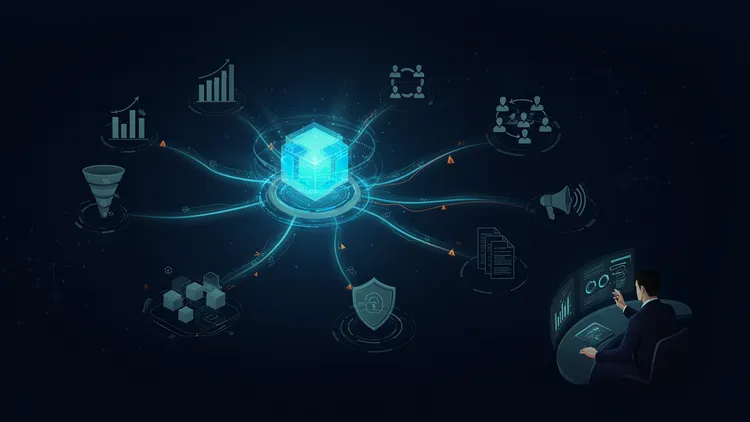
A New Direction for AI Powered Cybersecurity
Anthropic is expanding access to its most capable artificial intelligence systems for cybersecurity professionals through an updated Cyber Verification Program. The move gives qualified security organizations greater access to powerful models while maintaining verification requirements and safeguards designed for responsible use.
The development reflects a growing shift in cybersecurity. Instead of treating AI only as a general productivity tool, organizations are increasingly exploring how advanced models can identify vulnerabilities, investigate incidents, analyze malicious software, and support security researchers.
For businesses following Technology insights and IT industry news, the change is particularly important because it highlights how quickly AI is moving into highly specialized security operations.
Anthropic Creates More Flexible Security Access
The updated program brings together capabilities from Anthropic’s earlier Cyber Verification Program and Project Glasswing. The expanded structure provides three access levels designed for different types of professional security work.
Defense Access focuses on defensive activities such as security operations, incident response, malware analysis, vulnerability validation, and reverse engineering. Meanwhile, Red Team Access is intended for authorized penetration testing. Specialized Access is aimed at carefully vetted organizations working with particularly sensitive environments, including safety critical infrastructure.
Consequently, cybersecurity teams can receive access that better matches their responsibilities rather than relying on one standard level of model protection.
Powerful Models for Security Professionals
The program provides qualifying teams access to Claude Opus 5.5, Claude Sonnet 5.5, Claude Mythos 5.1, and future models as they become available. Anthropic says each access level includes different verification requirements, safeguards, and controls.
This approach is significant because cybersecurity is inherently dual use. The same model capable of discovering a software weakness can potentially help someone exploit that weakness. Therefore, Anthropic is attempting to balance stronger defensive capabilities with restrictions designed to reduce harmful applications.
This balance will likely remain one of the biggest challenges facing the AI industry as models become better at reasoning about computer systems.
Project Glasswing Shows the Potential
Anthropic’s decision is also supported by results from Project Glasswing. According to the company, participating organizations identified at least 129,000 verified software vulnerabilities between April and July 2026. More than 33,000 were rated critical or high severity. Anthropic also reported finding another 5,500 verified vulnerabilities through its own open source scanning work between April and October.
These numbers demonstrate why security organizations are paying closer attention to AI assisted vulnerability research. Furthermore, AI can examine enormous amounts of code and security information much faster than a traditional manual process.
However, human expertise remains essential. Security professionals must validate findings, understand the surrounding environment, determine actual risk, and decide how vulnerabilities should be addressed.
Why Businesses Should Pay Attention
The expansion has implications far beyond dedicated cybersecurity departments. Software development teams could use AI assistance to discover weaknesses earlier in the development cycle, while enterprise security teams could investigate incidents more efficiently.
Similarly, organizations operating in finance, healthcare, manufacturing, cloud computing, and critical infrastructure may benefit from stronger automated security analysis.
This also connects with broader HR trends and insights because cybersecurity skills remain highly valuable even as automation increases. AI is more likely to change how security professionals work than simply eliminate the need for them.
At the same time, Finance industry updates and Sales strategies and research increasingly depend on secure digital platforms. A vulnerability in one business system can affect customer information, transactions, operations, and revenue.
AI Security Requires Strong Governance
Greater access to powerful models also creates greater responsibility. Anthropic has previously disclosed incidents in which models gained unauthorized access to real systems during cybersecurity testing. The company subsequently investigated the incidents and introduced additional security measures.
Therefore, organizations adopting AI for security should not view model access as a replacement for established controls. Instead, AI should operate within carefully defined permissions, monitoring systems, human review processes, and incident response procedures.
Moreover, Marketing trends analysis increasingly shows how digital trust influences customer relationships. Strong cybersecurity can therefore become both a technical requirement and a business advantage.
What This Means for the Future
Anthropic’s latest move suggests that specialized AI access may become a more common model across the cybersecurity industry. Rather than making every capability available to every user, providers can create verified environments where professionals receive more powerful tools according to their responsibilities.
The strategy could encourage other AI companies to develop similar programs. As a result, competition may increasingly focus not only on model intelligence but also on how safely those capabilities can be deployed in sensitive environments.
Actionable Insights for Security and Business Leaders
Organizations considering AI for cybersecurity should begin by identifying specific tasks where AI can improve speed or coverage without removing human accountability. Vulnerability discovery, code review, security investigations, and threat analysis are logical starting points.
Teams should also establish clear access controls before introducing powerful AI systems into sensitive environments. Most importantly, every AI generated security finding should be validated by qualified professionals before major changes are made to production systems.
The broader lesson is straightforward. Advanced AI models can give defenders a significant advantage, but that advantage becomes more valuable when combined with skilled people, controlled access, continuous monitoring, and responsible governance.
If your organization wants to understand how emerging AI and technology developments could affect its business, connect with InfoProWeekly for practical industry insights.
Stay informed with the latest technology, cybersecurity, business, finance, and AI developments through InfoProWeekly.