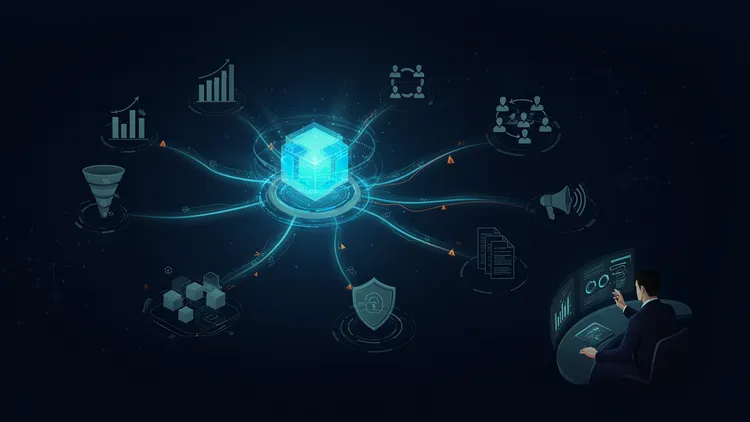
Artificial intelligence is no longer something people encounter only in technology companies or research laboratories. In 2026, AI tools are becoming part of everyday routines, from writing emails and researching topics to creating images, analyzing information and learning new skills.
However, understanding actual AI behavior is more complicated than tracking how many people have access to an AI application. People use these tools in different ways, for different reasons and with very different levels of dependence.
Consequently, the growing discussion around AI adoption is shifting from how powerful the technology is to what people actually do with it.
From Experimentation to Regular Use
Initially, many users approached AI with curiosity. They asked simple questions, experimented with image generation or tested whether AI could complete familiar tasks.
Over time, however, experimentation has increasingly turned into regular usage. Employees may use AI to summarize documents before meetings, students may use it to understand difficult concepts and professionals may rely on it to accelerate research.
This shift is important because regular usage reveals much more about technology adoption than occasional experimentation. When AI becomes integrated into a person’s workflow, it can influence how they organize information, communicate and make decisions.
AI at Work Is Becoming More Practical
The workplace is one of the most important areas for understanding AI usage in 2026. Rather than replacing every job, AI is frequently being used to support specific tasks.
Employees can use AI for drafting content, organizing information, brainstorming ideas, analyzing data and preparing presentations. Meanwhile, developers can use AI assistance during coding, debugging and documentation.
Furthermore, companies are developing internal guidelines around AI because productivity benefits need to be balanced with security, accuracy and responsible use. These changes are closely connected to HR trends and insights, particularly as organizations reconsider job roles and the skills employees need.
AI Is Changing How People Search for Information
Traditional search behavior is also evolving. Instead of opening multiple websites and comparing information manually, some users now ask AI systems to explain a topic, summarize research or provide an initial answer.
Nevertheless, this does not mean traditional search has disappeared. People still visit websites, read original sources and verify important information, especially when decisions involve money, health, law or business.
Therefore, the relationship between search engines and AI assistants is becoming more complementary. Users may discover information through AI and then move to trusted sources for deeper verification.
Creativity Is a Major Use Case
Generative AI has significantly lowered the barrier to creative experimentation. People who previously needed specialized software or technical knowledge can now generate images, draft stories, develop concepts and experiment with different creative styles.
For marketers, this can accelerate content development. Businesses can use AI to brainstorm campaign concepts, rewrite messaging and adapt content for different audiences.
At the same time, Marketing trends analysis increasingly needs to account for AI generated content because the volume of digital material is growing rapidly. As a result, originality, brand identity and human judgment are becoming even more important.
Developers Are Using AI Differently
Software development provides another interesting example of AI adoption. Developers can use AI coding assistants to generate code, explain unfamiliar functions, identify potential errors and create documentation.
However, professional developers generally need to review generated code carefully. AI can produce incorrect assumptions, inefficient implementations or security vulnerabilities.
This makes IT industry news particularly relevant because improvements in AI coding tools can influence development workflows, software teams and the skills expected from technology professionals.
Businesses Are Exploring AI for Revenue
AI is also moving closer to business strategy. Companies are exploring ways to use AI for customer support, sales research, personalization, forecasting and operational efficiency.
Sales teams, for example, can use AI to research prospects, summarize customer interactions and develop personalized communication. This creates a natural connection with Sales strategies and research, where better customer intelligence can support more effective engagement.
Similarly, financial organizations are exploring AI for analytics, fraud detection and customer experiences, making Finance industry updates an important area for tracking broader AI adoption.
The Human Element Still Matters
Despite rapid technological progress, people remain central to how AI is used. Users decide what questions to ask, which answers to trust and how much responsibility to give an AI system.
Moreover, the quality of the result often depends on the quality of the input. Someone who provides detailed context and reviews the response carefully may achieve significantly better results than someone who accepts the first generated answer without checking it.
Therefore, AI literacy is becoming an increasingly valuable professional skill.
Why Measuring AI Usage Is Difficult
One reason the AI landscape remains difficult to understand is that usage is not always visible. A person may use AI occasionally at home but heavily at work. Another person may interact with AI features without even realizing that artificial intelligence is powering them.
Additionally, different tools define active users differently. Some measure conversations, others measure accounts, tasks or generated content.
Because of these differences, headline adoption figures should be interpreted carefully. Numbers can indicate direction, but they do not always explain behavior.
What the Future of AI Adoption Could Look Like
The next stage of AI adoption may be less about people consciously choosing to use AI and more about AI becoming embedded inside the software they already use.
Email platforms, office applications, customer relationship systems, development environments and creative tools can increasingly include AI capabilities directly.
As this happens, the distinction between using software and using AI may become less obvious. Technology insights will therefore need to focus not only on new AI models but also on how these capabilities change everyday workflows.
Actionable Insights for Businesses and Professionals
The most useful way to approach AI is to identify repetitive tasks where assistance can save time without removing important human judgment. Start with manageable workflows, measure the results and gradually expand successful use cases.
Furthermore, organizations should establish clear rules around confidential information, accuracy checks and human approval. Employees should understand both the capabilities and limitations of the tools they use.
For individuals, developing practical AI skills can be more valuable than simply learning about the latest model. Knowing how to provide context, evaluate responses and integrate AI into existing workflows can create lasting advantages.
The bigger opportunity is not simply using more AI. It is learning where AI genuinely improves the quality, speed or accessibility of work.
Stay Informed With InfoProWeekly
Follow InfoProWeekly for practical coverage of AI, technology, business and workplace developments that are reshaping how people and organizations operate. Connect with InfoProWeekly for timely industry insights and thoughtful analysis that can help you understand emerging technologies and turn new opportunities into smarter decisions.