AI agents are moving from experimental prototypes into increasingly practical software systems. Developers now expect agents to reason through complex tasks, use external tools, manage files, execute code, and continue working even when an application is no longer connected to an active request.
Google is expanding its managed agent capabilities in the Gemini API to address these requirements. The latest updates introduce background execution, remote Model Context Protocol support, custom function calling, and credential refresh capabilities. Together, these additions make it easier to create AI systems that can operate across longer workflows and connect with external services.
For developers following Technology insights and IT industry news, the changes represent an important step toward more practical agentic applications.
Managed Agents Move Toward Production Workloads
Managed Agents in the Gemini API provide a configurable agent environment through the Interactions API. A single interaction can provision a remote Linux sandbox where an agent can reason, execute code, manage files, and access web information.
This approach reduces some of the infrastructure work traditionally associated with building autonomous agents. Instead of creating and maintaining the complete execution environment, developers can focus more heavily on instructions, tools, data, and the experience they want their agents to deliver.
Google describes the managed agent environment as an isolated sandbox, while also providing configuration options for network access and external tools.
Background Tasks Enable Longer AI Workflows
One of the most significant additions is background execution. Long running AI tasks can be difficult to handle through a conventional HTTP request because connections can time out while the agent continues working.
With background execution enabled, the application can start an interaction and receive an interaction ID while the task continues on the server. The application can then check the status, stream progress, or reconnect to retrieve the result later.
This model is particularly useful for research, code analysis, data processing, and other multi step workflows that may take considerably longer than a normal API request.
Consequently, developers can design applications around asynchronous work instead of trying to keep an HTTP connection alive until an agent finishes.
Remote MCP Connects Agents With External Tools
Remote Model Context Protocol support is another important development. MCP provides a standardized way for AI applications to interact with external tools and services.
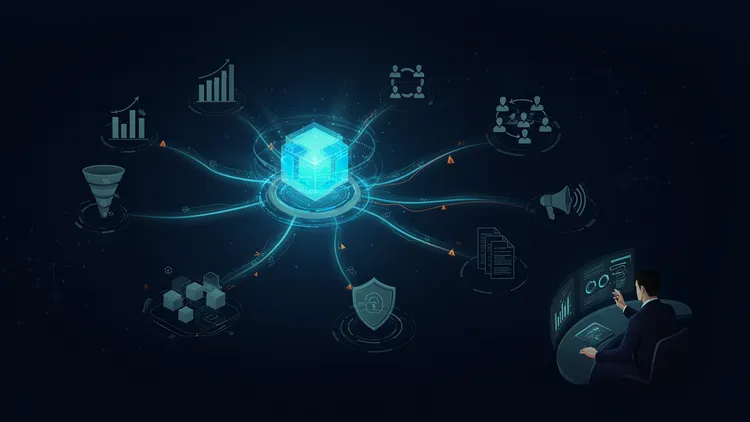
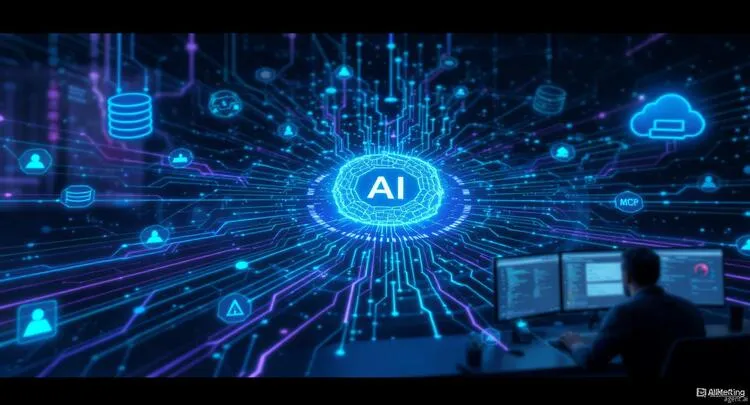
The Gemini Interactions API can connect managed agents directly to remote MCP servers. This allows an agent to work with external APIs, databases, observability platforms, and other services without developers necessarily having to build custom proxy middleware for every integration.
Moreover, developers can combine remote MCP tools with built in capabilities such as search and code execution. Remote MCP currently supports Streamable HTTP servers, while developers can restrict the tools an agent is allowed to call.
This creates a more flexible architecture for organizations that want agents to work with existing enterprise systems.
Custom Functions Expand Agent Capabilities
External services are not always available through an MCP server. For those situations, custom function calling provides another way to connect an agent with application specific capabilities.
Developers can define functions that allow an agent to interact with their own software and services. As a result, the agent can move beyond generating information and begin performing controlled actions within a broader application workflow.
This could support use cases ranging from internal research and software development to operational automation and business intelligence.
For organizations tracking Finance industry updates, Sales strategies and research, or Marketing trends analysis, this type of integration could eventually allow AI agents to work directly with specialized business systems.
Credential Refresh Supports Persistent Workflows
Long running and multi step agents often need access to services whose credentials change over time. The latest managed agent capabilities include credential refresh across interactions, helping developers maintain access without creating entirely new environments for every stage of a workflow.
Google’s documentation describes the ability to reuse an environment while updating authentication information for subsequent interactions. This can be useful when an agent needs to continue working with an external service after an initial credential expires or changes.
However, credential management should remain tightly controlled. Google recommends least privilege credentials, short lived tokens where possible, regular credential rotation, and providing agents only with access that is genuinely required.
Security Becomes More Important as Agents Gain Access
Greater autonomy also creates greater responsibility. Managed agents can interact with tools, networks, files, and external services, meaning developers need to think carefully about what an agent is allowed to access.
Network allowlists can restrict outbound access to approved domains. Developers can also limit which MCP tools are available to an agent and use appropriate credentials for specific workloads.
Human oversight remains important as well. Google recommends reviewing agent outputs and actions before relying on them for sensitive workflows, particularly when agents modify data, generate code, or interact with external systems.
Therefore, agent capabilities should grow alongside governance rather than independently of it.
Why the Interactions API Matters
The broader development is closely connected to the evolution of the Gemini Interactions API. The API is designed as a unified interface for Gemini models and agents, supporting capabilities such as server side conversation state, background execution, tool orchestration, and multimodal workflows.
As of June 2026, Google describes the Interactions API as generally available and recommends it for new projects.
This unified approach could make it easier for developers to move from conventional model calls toward more autonomous applications without completely changing their API architecture.
What Developers Should Watch Next
The expansion of managed agents suggests that AI development is moving toward persistent, tool connected, asynchronous systems. Instead of waiting for a user to provide every instruction, agents can increasingly perform multi step tasks and interact with the software environments around them.
For developers, this means architecture will become just as important as model selection. Reliable background execution, controlled network access, external tools, credentials, monitoring, and human review will all influence whether an agent can safely operate in production.
Meanwhile, organizations following HR trends and insights can explore how these capabilities might support workforce operations, while technology teams can evaluate them for development and infrastructure workflows.
Valuable Insights for AI Developers
The biggest opportunity with these updates is not simply giving agents more capabilities. It is giving them the right capabilities within a controlled environment.
Developers should begin with clearly defined tasks and then determine which tools, network permissions, credentials, and execution time those tasks actually require. Background execution can handle long workflows, while MCP and custom functions can connect agents to the systems where useful actions need to occur.
Ultimately, the strongest implementations will combine autonomy with carefully designed boundaries. As managed agents become more capable, thoughtful architecture and governance will be just as important as the underlying AI model.
For more Technology insights, IT industry news, HR trends and insights, Finance industry updates, Sales strategies and research, and Marketing trends analysis, stay connected with InfoProWeekly. Reach out to InfoProWeekly for expert perspectives on AI agents, emerging technologies, and enterprise innovation.
Connect with our team for practical insights into the technologies shaping the future of intelligent software.