Artificial intelligence is moving deeper into international security discussions. This week, Chinese AI company DeepSeek is expected to participate in a briefing for the United Nations Security Council about risks linked to increasingly capable AI systems.
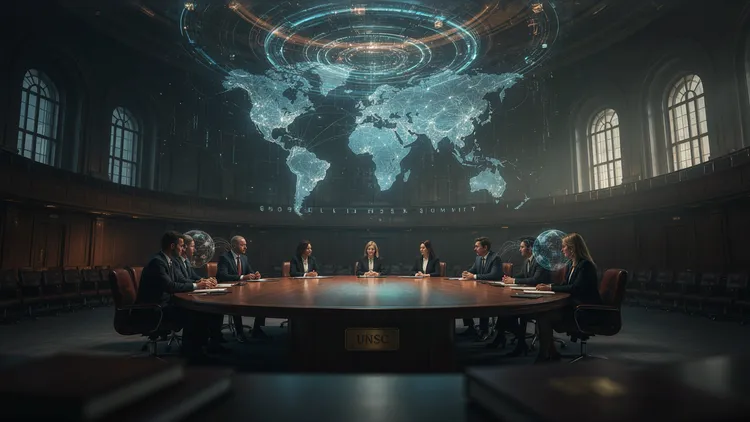
The 15 member council is scheduled to discuss artificial intelligence and international security on Wednesday during the annual United Nations General Assembly gathering in New York. Reuters reported that DeepSeek and other Chinese AI companies have been invited to make statements during the discussion.
The meeting is significant because AI is no longer being discussed only as a technology or business issue. Governments and international organizations are increasingly examining how advanced systems could affect cybersecurity, information security and international stability.
Why the UN Security Council Is Discussing AI
The UN Security Council is responsible for addressing international peace and security. It first held a dedicated discussion about AI risks in 2023.
Since then, AI systems have developed rapidly. Companies now offer models that can write software, analyze information, operate digital tools and perform increasingly complex tasks.
Consequently, policymakers are examining whether existing security frameworks are sufficient for a technology that continues to advance quickly.
The upcoming meeting provides an opportunity for representatives from different parts of the AI industry to discuss the technology directly with diplomats and governments.
DeepSeek Will Join Other AI Companies
DeepSeek is not expected to be the only AI company represented at the meeting.
Reuters reported that OpenAI CEO Sam Altman plans to brief the council, while senior representatives from Anthropic are also expected to participate. Other Chinese AI companies, including Moonshot, have also been invited.
DeepSeek founder Liang Wenfeng is not expected to attend personally, although plans could change before the meeting.
This mix of companies is notable because AI development is increasingly spread across different countries and technology ecosystems. Therefore, discussions about AI safety and security now involve both governments and private technology companies.
AI Risks Are Becoming More Complex
One major concern involves the increasing capabilities of advanced AI systems.
AI can already assist with software development, research, automation and cybersecurity. However, the same capabilities can potentially be used for harmful activities.
Security experts are examining risks such as automated cyber operations, manipulation of information and misuse of increasingly capable AI agents.
There are also concerns about whether future systems could perform complex tasks with limited human supervision.
The exact level of future risk remains debated. Nevertheless, the rapid development of AI has made safety testing, oversight and international cooperation more important areas of discussion.
AI Safety Has Become a Global Technology Issue
The DeepSeek discussion also reflects the growing international nature of AI development.
Companies in the United States, China and other regions are competing to develop advanced models. At the same time, governments are considering how these systems should be evaluated and secured.
Technology insights increasingly focus on this intersection between innovation and responsible development. Similarly, IT industry news is paying greater attention to AI security, model testing and international standards.
As a result, AI governance is becoming an important part of the broader technology conversation.
Different Views Exist About AI Development
Governments and technology companies do not always agree about how AI risks should be addressed.
Reuters reported that several AI industry leaders have recently called for coordinated measures around the development of increasingly powerful systems. Their concerns include the possibility that future systems could become difficult to control.
At the same time, Chinese state media have criticized calls for slowing AI development, describing them as an attempt to maintain technological advantages.
These different positions show why international AI discussions can be complicated. Countries have shared interests in security, but they also have different economic and technological priorities.
AI Security Could Affect Businesses
The discussion at the Security Council may seem distant from everyday business operations. However, AI security already affects companies across many industries.
Businesses are integrating AI into customer service, software development, marketing, finance and internal operations.
That creates new opportunities, but it also introduces new security considerations. Companies need to understand which systems their AI tools can access and how sensitive information is handled.
Finance industry updates, for example, increasingly include discussions about AI risks involving financial data and automated decision systems.
Employees Will Need Better AI Awareness
AI security is also becoming a workforce issue.
Employees who use AI tools need to understand basic security practices. They should know what information can be entered into an AI system and what information should remain protected.
HR teams can support this change through training and clear workplace policies.
HR trends and insights are therefore becoming increasingly connected with AI governance. Employees need both technical awareness and practical judgment as AI becomes part of everyday work.
Marketing and Sales Face Similar Changes
AI is also changing customer facing departments.
Marketing teams use AI to analyze audiences, generate content and improve campaign performance. Sales teams use AI to research prospects and automate parts of customer communication.
However, these systems often work with valuable customer information.
Marketing trends analysis and sales strategies and research will therefore need to consider data protection alongside automation and personalization.
Businesses that use AI responsibly can benefit from automation while reducing unnecessary security exposure.
International Cooperation Could Become More Important
The Security Council meeting comes as the United States and China are also discussing AI safety.
Reuters reported that senior officials from both countries agreed to continue talks on AI safety ahead of planned discussions between their leaders later in the week.
Such discussions highlight the need for communication between countries developing advanced AI systems.
International cooperation does not necessarily mean every country will follow the same rules. Instead, countries may focus on areas where shared standards could reduce security risks.
What Businesses Should Watch
Businesses should pay attention to developments in AI security and international standards because these discussions can eventually influence technology policies and corporate practices.
Companies can begin by reviewing how AI tools access internal systems and sensitive information. They can also establish clear rules for employee use and regularly evaluate third party AI services.
Furthermore, organizations should keep security teams involved when deploying AI agents or connecting AI systems to business applications.
This approach can help companies prepare for changes without slowing useful innovation unnecessarily.
Valuable Insights for Businesses
The DeepSeek briefing shows how quickly AI has moved from a technology sector discussion into the wider international security conversation.
For businesses, the key lesson is practical. AI adoption should include security planning from the beginning. Companies need clear data controls, employee awareness and regular evaluation of AI systems.
At the same time, organizations should follow developments in international AI standards because future rules may influence how advanced systems are developed and deployed.
The discussion at the UN Security Council is another sign that the future of AI will involve technology companies, governments, security experts and businesses working through complex questions together. Stay informed about emerging AI, technology and business developments with InfoProWeekly. Reach out to InfoProWeekly for practical insights that help businesses understand the rapidly changing technology landscape.