
Publicis and the Growing Demand for AI Powered Marketing
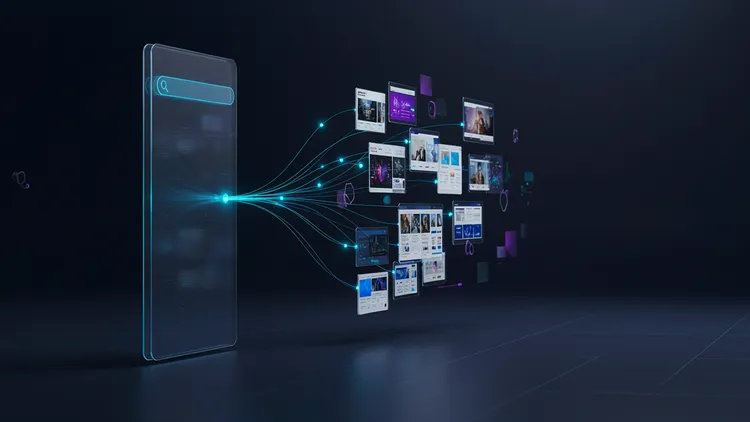
Artificial intelligence is changing how businesses reach customers, understand buying behaviour and measure advertising performance. In 2026, AI powered marketing has become an important area of investment as brands seek more personalized campaigns, faster content production and measurable returns. Publicis Groupe, a major global advertising and communications company, operates at the centre of this transformation.
The growing interest in AI powered marketing reflects a broader shift across the advertising industry. Businesses increasingly expect their marketing partners to combine creative expertise with customer data, automation and intelligent technology. As a result, agencies are expanding their capabilities to help brands compete in a rapidly changing digital environment.
For companies navigating this transition, Publicis represents a useful example of how traditional advertising services are evolving into technology supported marketing solutions.
Why Businesses Are Investing More in Artificial Intelligence
Marketing teams face growing pressure to deliver relevant messages across search engines, social media, websites, email and connected television. However, managing these channels separately can increase costs and make it difficult to understand customer behaviour.
AI powered marketing offers a way to address these challenges. Intelligent systems can analyse large datasets, identify audience patterns, support creative development and help advertisers adjust campaigns based on performance. Consequently, marketing teams can spend less time on repetitive tasks and more time improving strategy.
Moreover, generative AI is changing how businesses produce advertising content. Teams can develop creative variations, test different messages and adapt campaigns for different audiences more efficiently. Nevertheless, human oversight remains essential because inaccurate information, generic messaging and privacy concerns can damage customer trust.
These developments are creating new opportunities for agencies that combine technology with strong creative direction and reliable measurement.
How Publicis Is Positioned in the AI Marketing Market
Publicis Groupe has developed capabilities across advertising, media, data and technology. Its business model brings these services together to help clients coordinate marketing activities and understand their audiences more effectively.
The company’s broader strategy reflects an important industry trend. Rather than treating advertising, customer data and technology as separate functions, agencies are increasingly connecting them through integrated platforms and services.
In this environment, AI powered marketing can support audience segmentation, media planning, content personalization and campaign optimization. For example, a retailer could use customer insights to identify different shopping preferences, create relevant promotional messages and evaluate which advertising channels generate stronger engagement.
However, technology alone does not guarantee commercial success. The real value depends on the quality of the data, the suitability of the strategy and the ability to translate insights into useful customer experiences.
Any specific claim about Publicis’s reported growth rate or financial performance should be checked against its official 2026 financial results before publication.
What AI Adoption Means for the Advertising Industry
The expansion of AI is changing competition across advertising and communications. Agencies are expected to provide more than creative campaigns. Increasingly, clients want connected services that combine technology, data analysis, strategic planning and measurable business outcomes.
This shift also influences hiring and workforce development. Employees need stronger analytical skills, digital expertise and the ability to work effectively with AI tools. These changes connect advertising developments with wider HR trends and insights, particularly around reskilling, creative collaboration and changing job responsibilities.
At the same time, technology insights are becoming more relevant to business leaders outside the marketing department. IT teams must evaluate security, integration and data governance, while finance leaders assess whether technology investments produce sustainable returns.
Similarly, sales strategies and research can benefit from better customer insights. When marketing and sales teams share reliable information, they can improve lead qualification, personalize communications and create more consistent customer journeys.
The Financial and Business Impact of AI Marketing
For businesses, adopting AI is ultimately a commercial decision. Marketing automation may reduce repetitive work, but its financial value depends on implementation costs, operational efficiency and improvements in campaign performance.
Finance industry updates frequently highlight the importance of balancing innovation with accountability. The same principle applies to advertising. Companies need clear performance indicators to determine whether AI investments improve customer acquisition, retention or revenue.
Useful measures include conversion rates, customer acquisition costs, campaign return on investment and customer lifetime value. In addition, businesses should evaluate content quality, brand consistency and customer satisfaction instead of relying exclusively on clicks or impressions.
Therefore, marketing trends analysis should focus on measurable outcomes rather than the number of AI tools a company adopts. A smaller, well integrated system may deliver more value than a collection of disconnected applications.
Challenges Brands Must Consider Before Adopting AI
Despite its advantages, AI powered marketing introduces important challenges. Poor quality data can produce misleading insights, while excessive automation may result in repetitive or impersonal customer experiences.
Privacy is another major consideration. Companies must handle customer information responsibly and follow applicable data protection requirements. Furthermore, AI generated content needs human review to reduce factual errors, protect brand reputation and maintain originality.
There is also a growing need for transparency. Businesses should understand how their systems make recommendations and establish clear accountability when automated decisions affect customers.
Although these challenges require investment and oversight, addressing them early can help organisations build more dependable marketing operations.
Practical Insights for Businesses Planning Their Next Move
Businesses should begin by identifying one marketing problem that AI can realistically improve. This might involve analysing campaign results, personalizing email communication or reducing the time required to create advertising variations.
Next, teams should establish a baseline before introducing new technology. Comparing results before and after implementation makes it easier to identify genuine improvements. In addition, marketing, IT, finance and sales teams should agree on shared objectives so that automation supports wider business priorities.
Companies should also invest in employee training and responsible data practices. Human expertise remains valuable because effective marketing requires creativity, context, empathy and strategic judgement alongside technical capability.
Ultimately, the growth of AI powered marketing points towards a more connected approach to customer engagement. Businesses that combine useful technology with trustworthy data, skilled employees and measurable objectives will be better prepared to adapt as the market evolves.
Stay Ahead With InfoProWeekly
Explore the latest technology insights, marketing developments and business strategies with InfoProWeekly to make more informed decisions in a changing digital economy.
Visit InfoProWeekly.com for fresh industry perspectives, practical research and insights that help your business move forward.