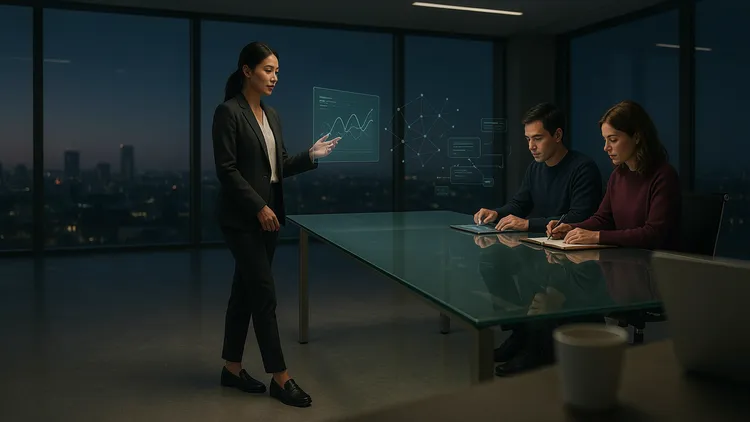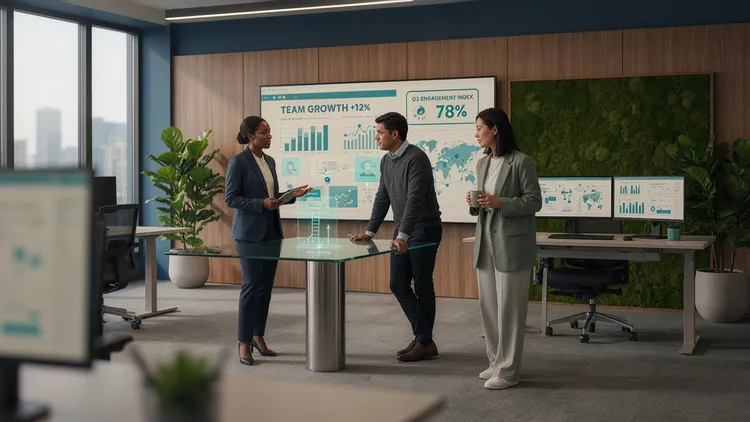
Artificial intelligence is changing how people work. Businesses are no longer using AI only for simple tasks. Today, AI tools can analyze data, write content, support customers, create software and manage parts of complex workflows.
As a result, the workplace is moving toward a new model. People and AI systems are starting to work together as part of the same team.
Microsoft research published in 2026 found that 58 percent of surveyed AI users said AI helped them produce work they could not have produced a year earlier. The figure rose to 80 percent among the most advanced AI users in the study.
This shift points toward a blended workforce where human skills and machine capabilities support each other.
What Is a Blended Workforce
A blended workforce combines human employees with AI tools and AI agents. Each side handles tasks that match its strengths.
People can focus on judgment, creativity, relationships and important decisions. Meanwhile, AI can handle repetitive work, data analysis, research and other digital tasks.
For example, a marketing employee may ask an AI system to analyze campaign data. The employee can then review the results and decide how the next campaign should change.
Therefore, the goal is not simply to replace human workers. Instead, companies can use AI to expand what employees can accomplish.
AI Agents Are Changing Everyday Work
The growth of AI agents is making this model more practical. Unlike basic chat tools, agents can complete several connected steps within a workflow.
For instance, an agent could collect information, organize it, prepare a report and send the result for human review.
Microsoft reported that the number of active agents in its Microsoft 365 ecosystem grew 15 times year over year. The report also found that organizations are using agents across many industries.
Consequently, employees may spend less time completing routine steps. They can instead focus on checking results and making decisions.
Human Skills Become More Important
As AI handles more execution, human judgment becomes even more important.
AI can produce an answer quickly. However, people still need to check whether that answer makes sense. They must also understand the business context and decide what action to take.
Microsoft’s 2026 research found that 66 percent of surveyed AI users said AI allowed them to spend more time on high value work. The same research showed that many advanced users continue to develop human skills rather than handing over all thinking to AI.
This creates an important workplace change. Employees need both digital skills and strong human skills.
Companies Need to Redesign Work
Simply giving employees access to AI may not create major results. Businesses also need to rethink how work gets done.
Suppose an employee uses AI to prepare a report in half the usual time. If the report still follows the same slow approval process, the wider business may see little improvement.
Therefore, leaders need to examine the complete workflow. They should identify where AI can remove delays and where people need to remain involved.
Microsoft’s research found that organizational factors such as workplace culture, manager support and talent practices had a stronger relationship with reported AI impact than individual factors.
This shows why successful AI use depends on more than technology.
The Role of HR in the New Workforce
The growth of AI will change how companies hire, train and develop employees. HR teams will need to understand which skills remain essential and which tasks AI can support.
This connects directly with HR trends and insights. Companies may need to update job descriptions, training programs and performance measures as AI becomes part of daily work.
For example, an employee may once have spent most of the day preparing reports. With AI support, that person may spend more time interpreting results and advising business teams.
As a result, companies may place greater value on communication, critical thinking, creativity and problem solving.
AI Is Changing Technology Teams
Technology teams are already experiencing major changes. Developers can use AI for code generation, testing, documentation and research.
However, human oversight remains important. Developers must review AI generated code and understand how it affects security, performance and system design.
Technology insights and IT industry news increasingly focus on AI agents and automated workflows. Yet organizations still need skilled technology professionals to manage these systems.
In addition, companies must create clear rules for data access, security and AI usage.
Sales and Marketing Are Also Changing
Sales teams can use AI to research prospects, summarize customer information and prepare communication. This can reduce repetitive work and give sales professionals more time for customer conversations.
Sales strategies and research are therefore moving toward a model where AI supports preparation while people manage relationships.
Marketing teams face a similar change. AI can help create content, analyze campaigns and identify customer patterns.
However, marketers still need to understand their audience. They also need creativity and strong brand judgment. Marketing trends analysis increasingly shows that faster content creation does not automatically produce better marketing results.
Finance Teams Will Work Alongside AI
Finance departments can also benefit from this blended model. AI can process large amounts of financial information and identify unusual patterns.
Employees can then review those findings and make important decisions.
Finance industry updates increasingly highlight AI use in forecasting, reporting and financial analysis. Still, financial decisions require careful review because errors can create serious business consequences.
Therefore, companies need clear approval processes when AI supports financial work.
India Is Building a Human and AI Workforce
India provides an important example of this change. Microsoft’s September 2026 India findings reported that 32 percent of Indian AI users qualified as Frontier Professionals. The global figure in the same study was 16 percent.
The report also found that 78 percent of Indian AI users said AI enabled work that was not possible for them a year earlier. At the same time, Indian workers placed strong importance on quality control and critical thinking.
These findings suggest that human skills remain central even as AI capabilities expand.
The Future of Human and AI Collaboration
The workplace of the future will not simply be about having more AI tools. Instead, companies will need to build effective relationships between employees and intelligent systems.
People will set goals, review important decisions and manage relationships. AI will support research, analysis and routine execution.
Furthermore, managers will need to understand how work changes when employees have AI support. They will need to measure outcomes rather than simply counting hours or completed tasks.
This could lead to new job roles, new team structures and different ways of measuring performance.
Valuable Insights for Business Leaders
The rise of the blended workforce creates a clear opportunity for businesses. However, companies should start with business problems rather than technology.
First, identify repetitive tasks that consume employee time. Then determine where AI can provide useful support. After that, create clear review processes so people remain responsible for important decisions.
Companies should also invest in employee training. Workers need to understand how to use AI effectively and how to identify poor or incorrect outputs.
Finally, leaders should redesign workflows instead of simply adding AI to old processes. The strongest results will come when people and AI work together around clear goals.
For more practical technology insights and workplace analysis, connect with InfoProWeekly for timely coverage of AI and business transformation.
Reach out to InfoProWeekly to stay informed about the technologies and workplace trends shaping the future of business.