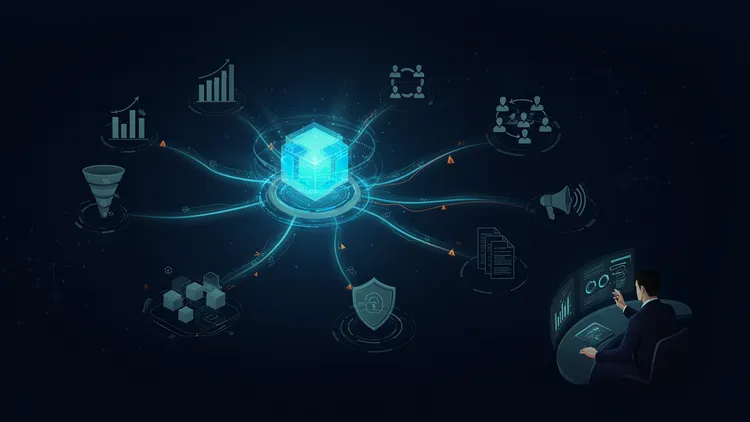
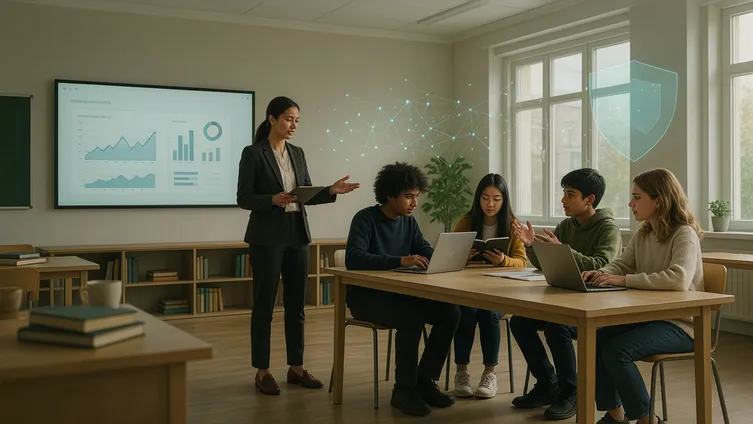
Artificial intelligence is becoming an increasingly visible part of education. Students can use AI tools to explore ideas, receive explanations and practice concepts, while teachers can use them to prepare learning materials and support classroom activities.
However, smart AI use in the classroom is not about allowing technology to replace teachers or independent thinking. Instead, it is about using AI thoughtfully as a learning assistant while keeping educators and students at the centre of the educational experience.
When implemented responsibly, AI can create more flexible and engaging learning environments.
Moving Beyond AI Prohibition
Many educational institutions have initially approached AI with caution because of concerns about plagiarism, inaccurate information and overreliance on technology.
Those concerns are understandable. Nevertheless, completely avoiding AI may prevent students from developing the skills they will need in higher education and future workplaces.
The more useful approach is to teach students how to question AI generated information, verify sources and use technology ethically.
Supporting Personalized Learning
One of the strongest opportunities for AI in education is personalization.
Students learn at different speeds and may struggle with different concepts. AI tools can provide alternative explanations, practice questions and examples based on individual learning needs.
For instance, a student struggling with a mathematical concept could request a simpler explanation and then practice similar problems until the underlying idea becomes clearer.
This can supplement teacher support without replacing direct interaction between educators and students.
Encouraging Critical Thinking
Smart AI use in the classroom should strengthen critical thinking rather than weaken it.
Students should be encouraged to examine AI generated responses and identify assumptions, missing information or factual errors. Teachers can turn AI output into a starting point for discussion rather than treating it as the final answer.
Consequently, students learn an important modern skill which is knowing when technology can be trusted and when further investigation is necessary.
Teachers Remain Essential
AI can automate certain repetitive activities, but education is fundamentally human.
Teachers understand classroom dynamics, student motivation and individual circumstances in ways that automated systems cannot fully replicate.
AI can help educators create lesson ideas, generate practice material or organize information. However, teachers remain responsible for deciding whether the material is appropriate and how it should be presented.
Technology insights therefore need to be considered alongside strong teaching practices.
Improving Teacher Productivity
Educators often spend significant time preparing resources and handling administrative tasks.
AI can assist with drafting lesson plans, creating question variations, summarizing information and adapting educational content for different learning levels.
Used carefully, these capabilities can give teachers more time to focus on mentoring, classroom interaction and student development.
The goal should be productivity rather than replacing professional judgment.
Teaching Students Responsible AI Skills
Students need more than access to AI tools. They need guidance on responsible use.
Classrooms can provide opportunities to discuss accuracy, privacy, copyright, bias and appropriate use of AI generated content.
These conversations can help students understand that technology has limitations and that responsible use requires human judgment.
AI and Academic Integrity
Academic integrity remains one of the most important challenges surrounding educational AI.
Students may be tempted to submit AI generated work without understanding the material themselves. Schools can respond by designing assignments that emphasize reasoning, personal reflection and practical application.
Teachers can also ask students to explain how they reached an answer rather than evaluating only the final submission.
This approach encourages genuine learning while recognizing that AI will remain part of students’ digital environments.
Preparing Students for the Future
AI skills are increasingly relevant across industries. Students entering technology, finance, marketing, healthcare or business careers will likely encounter AI supported workflows.
IT industry news continues to demonstrate how artificial intelligence is changing professional environments.
Education can therefore prepare students by teaching them how to collaborate with AI while maintaining analytical and communication skills.
Protecting Student Privacy
Responsible AI adoption also requires attention to student data.
Schools should understand what information AI tools collect and how that information is stored or processed. Sensitive student information should not be entered into tools without appropriate safeguards.
Privacy policies and institutional guidelines should be clear enough for both teachers and students to understand.
Building Teacher Confidence
Successful AI adoption depends heavily on educator confidence.
Teachers need opportunities to experiment with AI tools, understand their limitations and develop classroom strategies that support learning.
HR trends and insights are relevant here because schools and educational organisations need continuous professional development to help educators adapt to changing technology.
Measuring Learning Outcomes
AI adoption should ultimately be evaluated according to educational outcomes.
A classroom using sophisticated technology is not automatically a better classroom. Schools should examine whether AI improves understanding, engagement, accessibility or teacher productivity.
Finance industry updates may seem distant from education, yet financial planning matters when institutions decide whether technology investments provide meaningful value.
AI Can Support Accessibility
AI can also help make learning more accessible.
Students may benefit from tools that provide alternative explanations, language assistance or different ways of interacting with educational material.
When accessibility is considered from the beginning, AI can support more inclusive learning environments.
The Role of Communication Skills
Technology should not reduce opportunities for students to communicate with one another.
Classroom discussions, presentations and collaborative projects remain essential for developing communication and interpersonal skills.
Sales strategies and research demonstrate the importance of communication in professional environments, while Marketing trends analysis highlights how effectively people communicate ideas to different audiences.
AI should therefore complement human communication rather than replace it.
Creating a Balanced Classroom
The most effective educational approach is likely to combine traditional teaching methods with carefully selected AI tools.
Students can use AI to explore ideas, practice concepts and receive additional explanations while teachers guide them toward deeper understanding.
At the same time, classrooms should preserve activities that require independent reasoning, collaboration, creativity and direct human interaction.
Actionable Insights for Educators
Schools can begin by establishing clear expectations around acceptable AI use and teaching students how to verify AI generated information. Teachers can introduce AI through supervised classroom activities where students compare AI responses with reliable sources and discuss differences.
Educators should also evaluate AI tools based on privacy, accuracy and learning value rather than novelty.
Most importantly, smart AI use in the classroom should always have a clear educational purpose. When technology supports curiosity, critical thinking and personalized learning while teachers retain meaningful oversight, AI can become a valuable addition to modern education.
Stay Informed With InfoProWeekly
For more Technology insights, IT industry news, HR trends and insights, Finance industry updates, Sales strategies and research and Marketing trends analysis, connect with InfoProWeekly for practical coverage of AI, education and emerging technology. Reach out to InfoProWeekly to explore the latest developments shaping artificial intelligence, education and the future of digital learning.