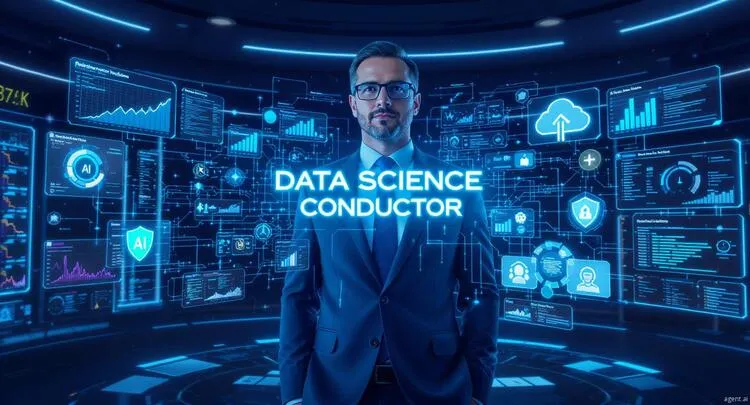
Artificial intelligence has changed how businesses collect, interpret, and use data. As automation becomes more advanced, organizations are no longer relying on one expert to manage every stage of analytics. Instead, they are embracing a collaborative model where technology, business strategy, and human expertise work together. Consequently, the role of the modern data professional is evolving faster than ever before.
The phrase The Data Scientist Is Dead Long Live the Data Science Conductor does not suggest the disappearance of data scientists. Rather, it reflects the emergence of professionals who coordinate people, platforms, and intelligent systems to create meaningful business outcomes. Therefore, companies are shifting their focus from isolated technical expertise to broader leadership capabilities.
Why the Traditional Data Scientist Role Is Changing
For many years, data scientists were expected to collect information, prepare datasets, build machine learning models, and communicate findings. However, business environments have become far more complex. Today, automated platforms can perform many repetitive analytical tasks that once required extensive manual effort.
As a result, professionals now spend less time creating models from scratch and more time interpreting insights, validating outcomes, and aligning technology with business goals. Moreover, organizations need experts who can connect technical teams with executives, making collaboration just as valuable as programming expertise.
The Rise of the Data Science Conductor
The concept of a data science conductor represents someone who coordinates multiple AI tools, data engineers, analysts, domain experts, and business leaders. Instead of performing every technical task personally, this professional ensures that every part of the analytics ecosystem works together efficiently.
Furthermore, the data science conductor understands business priorities while also recognizing the strengths and limitations of artificial intelligence. Consequently, organizations achieve faster innovation without sacrificing governance, quality, or strategic direction.
This evolving leadership model continues to gain attention in Technology insights, where businesses increasingly prioritize orchestration over isolated technical execution.
Artificial Intelligence Is Becoming a Collaborative Partner
Modern AI platforms can generate code, automate data preparation, identify trends, and even recommend predictive models. Nevertheless, technology alone cannot replace business judgment or ethical decision making. Instead, professionals who guide AI systems and validate their outputs are becoming more valuable.
Likewise, companies are encouraging cross functional collaboration between technology specialists, finance professionals, marketing teams, and operational leaders. This integrated approach produces stronger business outcomes while reducing communication gaps across departments.
Business Strategy Now Matters as Much as Technical Skills
Technical knowledge remains essential, yet business understanding has become equally important. Organizations expect analytics leaders to understand customer expectations, operational challenges, and long term strategic objectives before recommending technology solutions.
Meanwhile, departments are becoming increasingly connected through shared data platforms. Insights generated for marketing may also support finance, sales, customer service, and product development. Therefore, professionals who understand the broader business landscape deliver greater organizational value.
This trend also aligns with ongoing Finance industry updates, where data driven decision making supports investment planning, operational efficiency, and financial forecasting.
Collaboration Creates Better Business Results
Successful analytics initiatives rarely depend on one individual. Instead, they require continuous collaboration between data engineers, software developers, cybersecurity professionals, business analysts, and executive leadership.
Similarly, organizations that encourage knowledge sharing often adapt more quickly to changing market conditions. Teams work together to improve customer experiences, optimize operations, and identify new opportunities through intelligent automation.
In addition, regular access to IT industry news helps organizations understand emerging technologies that influence enterprise analytics and digital transformation strategies.
The Workforce Must Adapt to New Expectations
As AI continues to automate repetitive tasks, companies are investing in communication, leadership, and strategic thinking alongside technical development. Employees who combine analytical expertise with collaboration skills are becoming highly sought after across industries.
Moreover, businesses are expanding internal learning programs that prepare professionals for evolving responsibilities. According to recent HR trends and insights, continuous learning remains one of the strongest drivers of workforce resilience and long term organizational success.
Data Leadership Will Influence Every Business Function
The influence of analytics now extends far beyond technology departments. Marketing teams rely on customer intelligence to improve campaign performance, while sales organizations use predictive insights to strengthen customer relationships and improve forecasting accuracy.
Consequently, Marketing trends analysis and Sales strategies and research increasingly emphasize data informed decision making as a competitive advantage. This broader integration highlights why future analytics leaders must understand both technology and business strategy.
Practical Insights for Organizations Preparing for the Future
Businesses should view artificial intelligence as an opportunity to strengthen collaboration rather than replace expertise. Investing in adaptable talent, responsible AI governance, and cross functional communication creates stronger foundations for long term growth.
Equally important, organizations should encourage professionals to expand their business knowledge while continuing to develop technical capabilities. Staying informed through reliable Technology insights, IT industry news, HR trends and insights, Finance industry updates, Sales strategies and research, and Marketing trends analysis enables companies to make confident decisions in an increasingly intelligent business environment.
Stay informed with InfoProWeekly to discover the latest business technology developments, expert analysis, and practical strategies that help organizations succeed in a rapidly evolving digital economy. Connect with InfoProWeekly today for trusted industry knowledge that empowers smarter decisions and drives sustainable business growth.