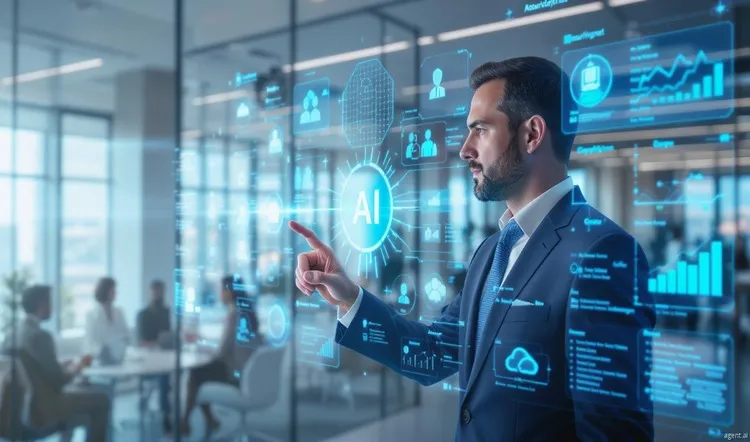
Artificial intelligence is changing how organizations attract, develop, and retain talent. As businesses embrace digital innovation, the role of Chief Human Resources Officers has become more strategic than ever. Today, CHROs are not only responsible for managing people but also for guiding organizations through technology driven workforce transformation. As a result, they play a central role in aligning AI initiatives with business objectives while ensuring that employees remain at the heart of every decision.
Moreover, organizations that successfully adopt AI often benefit from stronger productivity, smarter decision making, and improved employee experiences. Therefore, understanding the evolving responsibilities of HR leaders is essential for businesses preparing for the future of work.
Why AI Is Reshaping Human Resources
Artificial intelligence has moved beyond automation and has become a valuable partner in workforce management. From talent acquisition and employee engagement to learning and performance management, AI enables HR teams to make faster and more informed decisions.
At the same time, businesses continue to generate large volumes of workforce data. Consequently, AI helps HR professionals transform this information into meaningful insights that support strategic planning. Furthermore, organizations can identify skill gaps, predict hiring needs, and improve workforce planning with greater confidence.
These developments continue to dominate Technology insights and frequently appear in IT industry news, highlighting the growing importance of AI across modern enterprises.
The Expanding Leadership Role of CHROs
Modern CHROs have become digital transformation leaders rather than traditional HR managers. Instead of focusing only on operational responsibilities, they now help define how AI supports organizational goals while maintaining ethical and responsible practices.
Additionally, CHROs collaborate closely with technology, finance, operations, and executive leadership to create AI strategies that benefit both employees and business performance. As AI adoption increases, their ability to balance innovation with human values becomes increasingly valuable.
Furthermore, successful HR leaders encourage transparency throughout the transformation process. Consequently, employees gain greater confidence in new technologies and are more willing to embrace organizational change.
Building a Workforce Ready for AI
Technology alone cannot transform an organization without employees who possess the right skills. Therefore, one of the most important responsibilities of CHROs is preparing the workforce for continuous learning.
Rather than viewing AI as a replacement for employees, leading organizations position it as a tool that enhances productivity and supports better decision making. Likewise, training programs help employees understand AI capabilities while strengthening critical thinking, creativity, and collaboration.
These educational initiatives contribute valuable HR trends and insights that help businesses remain competitive in rapidly changing markets.
Creating Responsible AI Governance
While AI delivers impressive business benefits, it also introduces important ethical considerations. Accordingly, CHROs must ensure that AI systems remain fair, transparent, and free from unnecessary bias.
This involves developing clear governance policies, monitoring automated decisions, protecting employee privacy, and maintaining compliance with organizational standards. In addition, regular audits help ensure that AI continues to support diversity, equity, and inclusion objectives.
As a result, organizations build greater trust among employees while reducing potential operational and reputational risks.
Strengthening Employee Experience Through AI
Employee experience remains one of the strongest indicators of organizational success. Fortunately, AI allows HR teams to deliver faster, more personalized support throughout the employee journey.
For example, intelligent assistants can answer HR questions, simplify onboarding, recommend learning opportunities, and provide career development guidance. Meanwhile, managers receive valuable workforce analytics that support better coaching and employee engagement.
Consequently, employees enjoy more meaningful workplace experiences while HR professionals spend more time focusing on strategic initiatives instead of repetitive administrative tasks.
Aligning AI With Business Growth
AI transformation succeeds when HR strategies directly support overall business objectives. Therefore, CHROs work alongside executive leaders to connect workforce planning with long term organizational goals.
By analyzing workforce trends and future skill requirements, HR leaders help businesses remain agile during periods of rapid market change. Similarly, collaboration with finance departments ensures that workforce investments deliver measurable business value, naturally connecting with ongoing Finance industry updates focused on operational efficiency.
Likewise, organizations apply data driven approaches similar to modern Sales strategies and research and Marketing trends analysis, demonstrating that AI creates value across every business function rather than within HR alone.
Developing a Culture That Welcomes Innovation
Technology adoption depends heavily on organizational culture. Even the most advanced AI tools cannot deliver results if employees hesitate to use them. Therefore, CHROs must encourage curiosity, continuous improvement, and open communication.
Moreover, leaders who involve employees early in AI initiatives often experience smoother implementation and stronger engagement. Equally important, celebrating learning achievements helps build confidence while reducing uncertainty surrounding new technologies.
Over time, this culture of innovation creates an adaptable workforce capable of responding to future technological advances with resilience.
Practical Insights for Business Leaders
Organizations preparing for AI transformation should begin with clear business objectives rather than technology alone. Equally important, HR leaders should invest in employee education, establish ethical governance, measure business outcomes, and encourage collaboration across departments. Furthermore, continuous evaluation allows organizations to refine AI strategies while maintaining employee trust and long term business success.
Connect With InfoProWeekly
Stay informed with expert business and technology perspectives that help organizations navigate digital transformation with confidence. Reach out to InfoProWeekly for trusted industry analysis, practical guidance, and the latest professional insights.