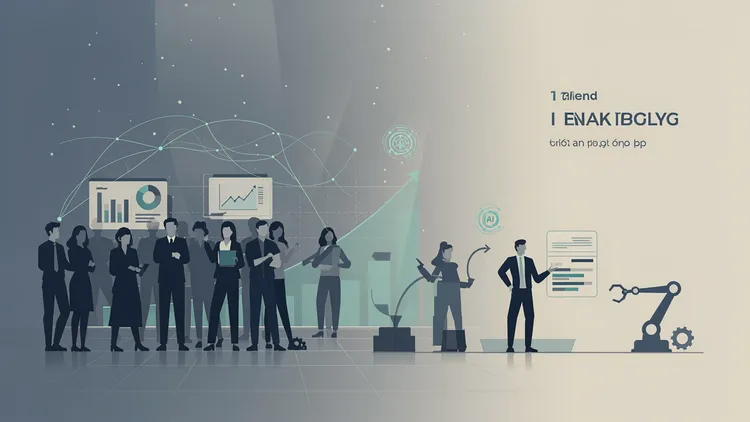
The employment landscape is entering a period where finding enough qualified workers can be just as challenging as finding enough jobs. Demographic changes, evolving worker expectations, skill shortages and technological transformation are reshaping how organizations think about hiring.
For years, businesses could respond to growth by expanding recruitment efforts and increasing available positions. Now, however, many employers face a different challenge. The supply of suitable workers may not grow quickly enough to meet business demand.
As a result, understanding labor market trends has become increasingly important for employers, investors and policymakers.
Why Labor Supply Is Becoming More Constrained
Several forces are contributing to tighter labor supply. Population aging is reducing the number of workers available in some economies, while lower birth rates are gradually changing the demographic structure of the workforce.
At the same time, some industries require highly specialized skills that are difficult to find. Healthcare, technology, engineering and advanced manufacturing are examples where demand for specialized talent can remain strong even when overall employment conditions weaken.
Furthermore, employee expectations have changed. Workers increasingly consider flexibility, career development, workplace culture and compensation when evaluating opportunities.
Consequently, companies cannot rely on traditional recruitment approaches alone.
Businesses Are Competing for Skills
A constrained workforce changes the competitive environment for employers. Instead of competing only for customers, organizations increasingly compete with one another for specialized skills.
This can increase recruitment costs and make employee retention more important. Losing an experienced worker can create significant disruption when finding a replacement takes weeks or months.
Therefore, businesses are paying greater attention to internal mobility, professional development and workforce planning. Investing in existing employees can sometimes be more effective than continuously searching for external candidates.
These developments are closely connected with HR trends and insights, particularly around skills development, employee experience and long term workforce planning.
Technology Is Changing the Workforce Equation
Technology is becoming an important response to labor constraints. Automation and artificial intelligence can help organizations complete repetitive tasks with fewer manual resources.
However, technology does not necessarily eliminate the need for workers. Instead, it can change the skills companies require. Employees may spend less time performing repetitive activities and more time handling judgment based, creative or customer focused responsibilities.
This creates an important opportunity for organizations to redesign jobs around human strengths and technological capabilities.
Technology insights and IT industry news increasingly reflect this shift as businesses experiment with AI assistants, automation platforms and intelligent workflows.
Productivity Becomes More Important
When companies cannot easily increase the number of employees, improving productivity becomes a critical growth strategy.
Organizations can achieve this by simplifying processes, reducing administrative work, improving collaboration and giving employees better tools. Even relatively small improvements can have a meaningful impact when multiplied across a large workforce.
Moreover, productivity should not be viewed simply as making employees work faster. Better systems can reduce unnecessary tasks while allowing employees to focus on activities that create greater value.
This approach can help companies grow without depending entirely on expanding headcount.
Compensation and Retention Are Becoming Strategic
When skilled workers are difficult to replace, employee retention becomes a business priority. Companies may need to reconsider compensation, career progression, flexibility and workplace experience.
Higher salaries can attract talent, but compensation is only one part of the equation. Employees also want opportunities to develop their skills and see a clear future within an organization.
As a result, employers that create strong internal career paths may have an advantage in a competitive hiring environment.
Retention can also protect institutional knowledge. When experienced employees remain with a company, organizations preserve valuable expertise that would otherwise take significant time to rebuild.
The Impact on Business and Finance
A limited supply of workers can influence business costs, pricing decisions and investment strategies. Companies facing persistent wage pressure may need to invest more heavily in automation or redesign their operating models.
Investors should therefore consider workforce availability when evaluating companies and industries. Strong demand alone does not guarantee sustainable growth if organizations cannot find the people required to deliver products and services.
Finance industry updates increasingly intersect with employment conditions because labor costs, productivity and workforce availability can influence corporate profitability.
Sales and Marketing Are Also Affected
Labor constraints can influence customer facing teams as well. Sales organizations may need to improve productivity by using better data, automation and customer intelligence.
Instead of simply increasing the number of sales representatives, companies may focus on improving lead qualification, account prioritization and customer engagement. These changes connect naturally with Sales strategies and research that emphasize efficiency and better use of customer data.
Marketing teams face a similar challenge. When budgets and staffing resources are limited, marketers need to prioritize campaigns that generate measurable business value. Marketing trends analysis therefore increasingly includes automation, personalization and efficient content production.
Education and Reskilling Matter More Than Ever
A constrained labor supply also increases the importance of education and reskilling. Companies cannot always find workers with every required skill in the external market.
Instead, organizations can develop talent internally by providing training and creating pathways into emerging roles. This approach can be particularly valuable when technology changes job requirements faster than traditional education systems can respond.
For employees, continuous learning can provide greater career resilience. Skills that are valuable today may change significantly as AI and automation become more widespread.
How Employers Can Prepare for the Shift
Organizations should begin treating workforce planning as a long term business strategy rather than a recruitment activity. Leaders need to understand which skills will be essential several years from now and determine whether those capabilities can be hired, developed or supported through technology.
At the same time, businesses should examine where automation can improve productivity without reducing the quality of customer or employee experiences.
Most importantly, companies should build flexibility into their workforce strategies. A combination of internal development, selective hiring, automation and improved retention can create a stronger response to changing employment conditions.
Actionable Insights for the Future of Work
The most important lesson from current labor market trends is that workforce availability can become a growth constraint. Companies that recognize this early can redesign their strategies before talent shortages begin affecting expansion.
Employers should focus on retaining valuable employees, developing skills internally and using technology to remove repetitive work. Meanwhile, leaders should monitor demographic changes, wage pressures and emerging skills requirements when planning future investments.
The organizations best positioned for the next phase of the economy will not necessarily be those with the largest workforces. Instead, they may be the companies that combine capable people, effective technology and smarter processes to create more value from every employee. For practical Technology insights, HR trends and insights, and business focused workforce analysis, stay connected with InfoProWeekly.
Reach out to InfoProWeekly for informed perspectives that help leaders understand changing employment, technology and business environments.