Artificial Intelligence Is Changing Workplace Meetings
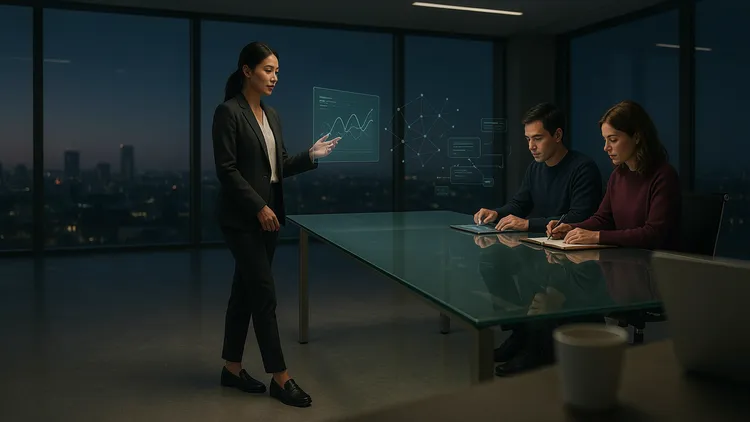
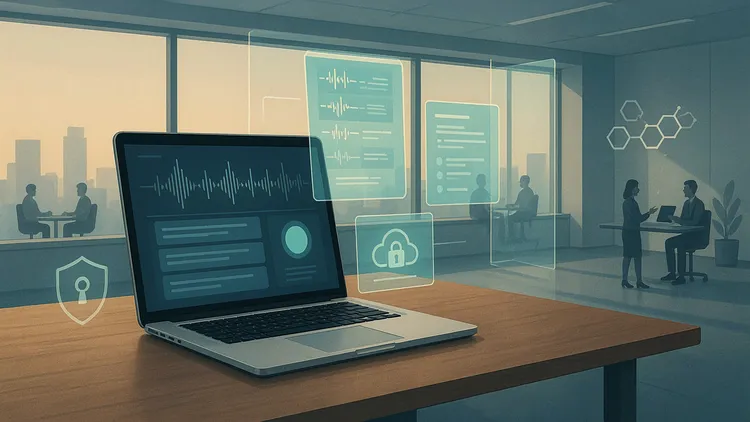
Artificial intelligence is quickly becoming part of everyday workplace communication. Meeting assistants can record conversations, create transcripts, summarize discussions, identify action items, and make information easier to find.
However, these features create new questions for HR teams. The issue is not only whether automated meeting notes save time. Companies must also decide when recording is suitable, who can access the data, how long they should keep it, and whether everyone understands what is happening.
Recent guidance and expert discussions have raised concerns about privacy, employment law, security, and workplace governance.
Why HR Needs Clear Boundaries
HR teams often handle highly sensitive information. Employee complaints, performance reviews, salary discussions, recruitment interviews, workplace investigations, and accommodation requests may contain private details.
When an AI tool records these conversations, it creates another digital record. As a result, information that once stayed within a small group may become searchable, stored, copied, or shared through a technology platform.
Legal experts cited by HR Dive have also warned that recording rules can vary by location. The issue becomes more complex when meetings include people from different states or countries.
Therefore, companies should create clear rules before employees use meeting assistants across the workplace.
Transparency Should Come First
Transparency is one of the simplest principles for responsible AI use. Employees, candidates, clients, and other participants should know when a meeting is recorded or transcribed.
They should also understand why the company collects the information.
SHRM CHRO Jim Link told HR Dive that disclosure and participant consent should play a central role when companies use these technologies.
Moreover, transparency can help build trust. People may lose confidence when they discover that someone recorded an important conversation without telling them.
For this reason, companies should create a clear communication process. Employees should not have to decide on their own when they need to inform participants.
Recruitment Requires Extra Care
Recruitment creates another area that needs careful oversight. Candidate interviews can include personal information, employment history, salary expectations, and other private details.
The risk can increase when companies use automated transcripts during hiring decisions. HR Dive reported that experts view recording and transcription during recruitment as a higher risk use case.
Employment related AI rules are also developing across different jurisdictions. Therefore, companies should treat recruitment conversations differently from routine administrative meetings.
Sensitive HR Meetings Need Stronger Controls
Not every workplace meeting carries the same level of risk. A routine project meeting may contain limited sensitive information. In contrast, an employee investigation can involve highly private details.
Disciplinary meetings, accommodation discussions, legal consultations, and confidential leadership meetings also require greater care.
Legal guidance from Mayer Brown notes that automated records can create additional privacy, confidentiality, and legal discovery concerns.
Consequently, companies can classify meetings by sensitivity. Routine discussions may allow approved tools, while sensitive meetings can follow stricter rules.
Understand Where the Data Goes
Choosing an AI meeting tool requires more than checking transcription accuracy. HR and technology teams should understand how the provider handles recordings, transcripts, metadata, and other information.
They should ask important questions about storage, retention, deletion, security, third party access, and data transfers.
Furthermore, vendor agreements should explain how the provider processes customer information. Companies should know whether the provider uses meeting content to improve its AI models.
They should also check whether administrators can control data retention and user access.
As workplace AI grows, these questions will become even more important.
Protect Confidential Business Information
Workplace meetings can contain more than employee information. Teams may discuss product plans, financial results, customer information, intellectual property, security incidents, and business strategies.
Once a conversation becomes searchable text, employees can copy and share the information more easily. The Electronic Frontier Foundation has highlighted this concern because text can be easier to search and store than large collections of video.
Therefore, companies should follow data minimization principles. They should avoid creating permanent records when a short summary can meet the same business need.
HR and IT Should Work Together
HR cannot manage workplace AI alone. IT teams understand security systems, access controls, authentication, integrations, and vendor settings.
At the same time, HR teams understand employment processes, employee concerns, and workplace policies.
By working together, both teams can create practical rules for approved applications, user permissions, data retention, security checks, and employee communication.
This collaboration also connects with Technology insights and IT industry news. Workplace AI is quickly becoming an operational issue rather than a simple technology experiment.
AI Should Support Human Decisions
Automated summaries can help employees process information faster. However, they should not become the final authority in employment decisions.
AI transcription tools can misunderstand speech, miss context, identify speakers incorrectly, or create inaccurate summaries.
Therefore, HR professionals should review important information before using it for decisions.
Human judgment remains especially important during recruitment, performance reviews, disciplinary processes, employee relations, and workplace investigations.
Build a Practical AI Policy
A workplace AI policy should clearly explain which meeting tools employees can use. It should also explain when recording is allowed and how participants should receive notice.
The policy should cover sensitive information, data storage, access rights, retention periods, and deletion procedures.
Companies should also explain what employees should do when an unapproved AI tool appears during a meeting.
Moreover, organizations should review these policies regularly. AI tools and workplace practices continue to change. Regulatory expectations can change as well.
The International Bar Association has emphasized the importance of updating contracts and workplace policies as AI becomes more common at work.
The Wider Business Impact
Responsible AI governance affects more than HR. Sales teams can use meeting summaries to document customer conversations. Marketing teams can use meeting insights to understand customer needs and support Marketing trends analysis.
Finance teams must also consider whether meetings contain confidential financial information. This becomes particularly important when teams discuss Finance industry updates or sensitive business decisions.
Similarly, Sales strategies and research can benefit from better meeting documentation when companies protect customer information.
Meanwhile, HR trends and insights increasingly focus on how employees experience AI at work. Companies must determine whether new technology improves productivity while maintaining trust.
Actionable Insights for HR Leaders
Companies adopting workplace AI should first identify meetings where automation provides clear value. They should also identify situations where privacy risks may outweigh the benefits.
Next, HR teams should work with legal, security, and IT professionals. Together, they can review vendors, establish consent practices, restrict sensitive uses, and create clear retention rules.
Employees also need practical training. A policy document alone is not enough. Workers should understand what approved tools can do and what information they should never enter into an AI system.
They should also know when a meeting should not be recorded.
Ultimately, responsible workplace AI requires controlled use. Companies can gain the benefits of automation while protecting privacy, security, transparency, and human oversight.
For more Technology insights, HR trends and insights, and practical workplace analysis, stay connected with InfoProWeekly.
Reach out to InfoProWeekly for informed perspectives that help organizations understand emerging technology and build responsible workplace strategies.