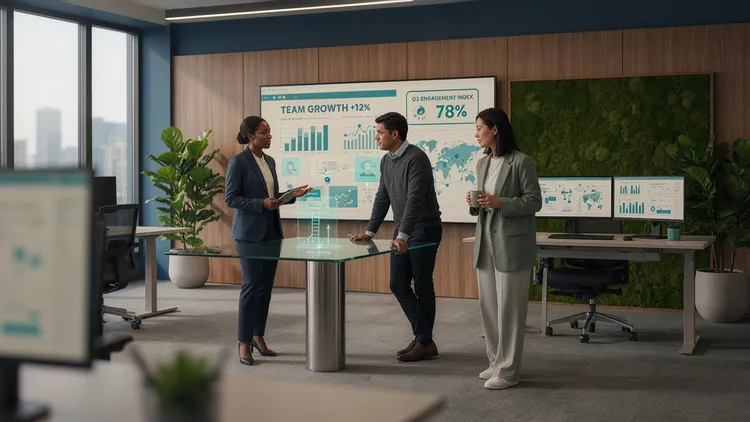
Walk into almost any modern workplace and you will see the change. People are using AI to write reports, analyze data, create presentations, answer customer questions and automate routine work.
However, the bigger change is not the technology itself. It is the skills people need to use it well.
Recent research from the World Economic Forum shows that employers expect 39 percent of workers’ core skills to change by 2030. AI and big data are among the fastest growing skills, while creative thinking, resilience, flexibility and curiosity are also becoming more important.
That shift gives employers a clear message. Hiring someone with yesterday’s skills may not be enough for tomorrow’s workplace.
Employers Are Looking Beyond Technical Skills
It is easy to assume that AI will create demand only for programmers and data scientists. The reality is broader.
Employees in sales, finance, marketing, HR and customer service are already finding ways to use AI in their daily work. As a result, basic digital knowledge is becoming useful across almost every department.
At the same time, human skills are gaining importance. Communication, judgment, curiosity and the ability to work with others remain difficult to automate.
The World Economic Forum recently highlighted learning agility, emotional intelligence and other human qualities as increasingly valuable for people entering the workforce.
In other words, employers are not simply looking for people who know how to use AI. They need people who know when to use it, how to question its output and how to turn that output into something useful.
The Skills Gap Is Becoming a Business Problem
For many companies, the challenge is no longer whether to adopt AI. It is whether their employees have the skills needed to make the technology useful.
The World Economic Forum found that half of surveyed executives identify a lack of skills as a major barrier to AI adoption. The same research shows that 77 percent of employers expect to focus on reskilling and upskilling their existing workforce by 2030.
This matters because buying an AI tool does not automatically improve a business.
Employees still need to understand the problem they are solving. They need to check results, protect sensitive information and make sensible decisions. Without those skills, expensive technology can become another unused software subscription.
AI Literacy Is Becoming a Workplace Skill
AI literacy is quickly moving beyond specialist roles.
An employee does not necessarily need to understand how a large language model is trained. However, they should understand basic concepts such as prompting, verification, privacy, bias and responsible use.
LinkedIn’s 2026 labor market research reports strong growth in jobs requiring AI literacy. It also describes the emergence of AI enabled roles that combine technical knowledge with human strengths.
Therefore, companies can benefit from making AI literacy part of everyday professional development rather than treating it as a niche technical course.
This is especially relevant to technology insights and IT industry news because digital skills are increasingly becoming part of jobs that were once considered nontechnical.
Human Judgment Still Matters
There is an interesting twist in the current AI discussion.
As machines become better at producing information, people may need to become better at judging it.
An AI system can generate a sales email in seconds. It cannot fully understand every relationship behind that message. It can summarize financial information. It may still miss an important business context. It can suggest a marketing idea. A human still needs to decide whether that idea fits the brand.
Microsoft’s 2026 Work Trend Index describes a growing role for human agency as AI agents take on more execution.
Consequently, critical thinking is becoming just as important as technical ability.
Hiring May Become More Skills Focused
Traditional hiring often puts heavy emphasis on degrees, job titles and years of experience. AI is helping accelerate a shift toward demonstrable skills.
Research highlighted by the World Economic Forum found that candidates with AI related skills received stronger hiring outcomes in a study of more than 10 million UK job postings and related hiring research.
For employers, this means job descriptions may need to change. Instead of asking only for experience with a particular tool, companies can describe the actual capability they need.
For example, a marketing employer may need someone who can analyze customer data and use AI to identify patterns. A finance team may need someone who can automate reports while checking financial accuracy.
The skill matters more than the software name.
Reskilling Could Be More Practical Than Replacing People
When technology changes a job, replacing the entire team is not always the most practical answer.
Existing employees already understand the customers, products and internal processes. With the right training, they can often learn new tools faster than a completely new hire can learn the business.
The World Economic Forum reports that many employers are planning to transition workers from declining roles into growing positions as technology changes the workplace.
This approach also connects with current HR trends and insights. Employees are more likely to adapt when companies provide clear learning paths and show how new technology can support their careers.
Different Departments Need Different AI Skills
The skills required will vary from one department to another.
Finance teams may need stronger data analysis and automation skills. Sales professionals may use AI for customer research, account planning and personalized communication. Marketing teams can apply AI to audience research, content development and campaign analysis.
Meanwhile, HR teams may use AI for workforce planning and skills mapping. Technology teams may focus on AI systems, cybersecurity and data infrastructure.
These changes connect technology insights with finance industry updates, sales strategies and research, and marketing trends analysis. AI is not creating one universal job profile. It is changing the way different professions work.
India Has an Important Opportunity
India is also becoming an important part of this transformation.
Microsoft’s 2026 Work Trend Index found that 32 percent of Indian AI users surveyed qualified as Frontier Professionals, meaning they were actively redesigning work around AI agents. The report also found strong emphasis on human judgment and critical thinking among Indian AI users.
This creates an opportunity for Indian businesses and professionals.
Companies can invest in practical training, while employees can build skills that combine AI knowledge with communication, problem solving and industry expertise.
What Employers Should Focus on Now
The most useful starting point is understanding how work is actually changing.
Employers can examine daily tasks and identify which activities AI can automate, which require human review and which could become more valuable with AI assistance.
From there, training can become more targeted. Instead of sending every employee through the same generic AI course, companies can create learning paths based on real responsibilities.
Managers also have an important role. Employees need space to experiment, ask questions and learn from mistakes without treating every AI output as automatically correct.
Valuable Insights for the Future Workforce
AI is not simply changing the tools people use. It is changing the combination of skills that makes someone valuable at work.
Technical knowledge will matter. Yet it will work best alongside communication, creativity, critical thinking and continuous learning.
For employers, the practical lesson is straightforward. Start with the work, identify the skills that are changing and then train people around those needs. For professionals, building AI literacy while strengthening human skills can create a more adaptable career path.
The workplace is moving toward a model where people and intelligent systems work together. Companies that prepare their employees for that relationship will be better positioned to respond as technology continues to evolve. Stay informed with practical technology insights, HR trends and business developments through InfoProWeekly.
Explore more timely industry analysis and workforce insights with InfoProWeekly.