
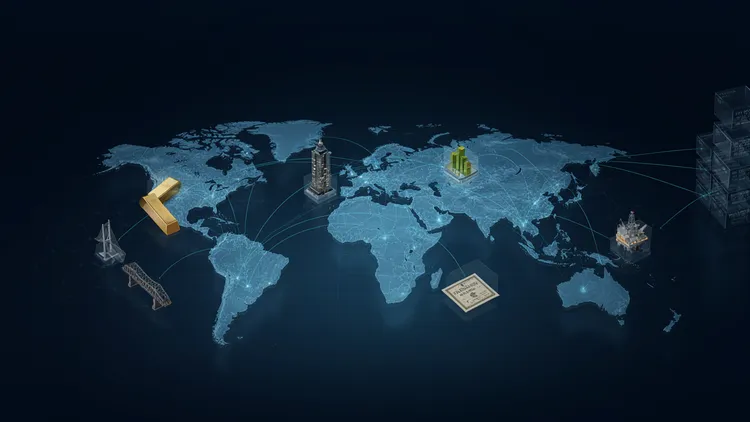
The Rise of Tokenized Assets
Financial markets are entering a new phase as blockchain technology moves beyond cryptocurrencies and into traditional investment products. Tokenized assets are emerging as a significant development, allowing ownership rights to real world assets to be represented digitally on a blockchain.
From real estate and private equity to bonds, commodities, and investment funds, almost any asset with recognizable ownership rights could potentially be represented through digital tokens. As financial institutions explore this model, the concept is gaining attention across global markets.
For investors, the attraction goes beyond technology. Tokenization could make certain investments easier to access, transfer, track, and manage while creating new opportunities for financial institutions and businesses.
How Tokenization Is Changing Investment
At its core, tokenization involves creating a digital representation of an asset or an ownership interest on a blockchain network. Instead of relying entirely on traditional records and intermediaries, transactions can be recorded through programmable digital systems.
Consequently, investors could potentially gain access to investment opportunities that were previously difficult to enter. For example, ownership in a property or private investment vehicle could be divided into smaller digital units. This could lower entry barriers and allow a wider range of participants to engage with markets.
Furthermore, blockchain based records can improve visibility into ownership and transaction history. Although tokenization does not automatically eliminate financial risk, it can introduce new infrastructure for managing ownership and settlement.
Greater Access to Global Investment Opportunities
One of the most important possibilities surrounding tokenized assets is broader market accessibility. Traditional investments can sometimes involve high minimum investments, complicated documentation, geographic restrictions, and lengthy settlement procedures.
Tokenization could simplify parts of this process. Therefore, investors may eventually be able to participate in selected markets through digital platforms with fewer operational barriers.
This development could be particularly important for international investment. As platforms become more connected, tokenized markets could make it easier to transfer certain forms of ownership across jurisdictions, subject to local regulations and compliance requirements.
In addition, this transformation aligns with wider Technology insights as financial organizations increasingly integrate blockchain, automation, artificial intelligence, and digital identity systems into their operations.
Liquidity Could Become a Major Advantage
Liquidity remains a major challenge for several traditional asset classes. Real estate, private company shares, collectibles, and certain debt instruments can take considerable time to buy or sell.
Tokenization could create new mechanisms for transferring fractional ownership. As a result, assets that were historically difficult to trade might become more flexible within regulated digital marketplaces.
However, tokenization alone does not guarantee liquidity. A digital token still needs active buyers and sellers, appropriate market infrastructure, regulatory support, and investor confidence. Nevertheless, the possibility of continuous or more efficient trading represents an important area of financial innovation.
These developments are also relevant to current Finance industry updates because banks, asset managers, fintech companies, and payment providers are increasingly examining digital asset infrastructure.
Transparency and Operational Efficiency
Another potential benefit is improved transparency. Blockchain based systems can create records that are easier to verify and synchronize across participants.
For financial institutions, this could reduce certain administrative processes associated with reconciliation, ownership verification, reporting, and settlement. Smart contracts may also automate predefined actions when specific conditions are satisfied.
Consequently, businesses could potentially reduce operational friction while improving transaction visibility. At the same time, organizations must carefully consider cybersecurity, privacy, governance, and regulatory obligations.
The impact could extend beyond finance as well. Technology insights increasingly show how digital infrastructure is influencing business operations, while IT industry news continues to highlight the growing importance of secure and scalable financial technology.
Regulation Will Shape the Market
Despite its potential, tokenization faces significant challenges. Financial markets operate within complex regulatory frameworks, and digital representation does not remove those requirements.
Governments and regulators must determine how tokenized securities, funds, property interests, and other assets should be classified and supervised. Businesses also need reliable systems for identity verification, taxation, compliance, custody, and investor protection.
Therefore, the future of tokenization will depend not only on technological innovation but also on regulatory clarity. Markets that establish practical rules while protecting investors could become important centers for digital asset development.
What Tokenized Markets Could Mean for Businesses
Businesses may eventually benefit from new ways to raise capital, manage ownership, and engage investors. Asset managers could explore digitally native investment products, while financial institutions could develop new custody, settlement, and trading services.
Moreover, marketing and sales teams may need to understand how digital ownership changes customer expectations. This connects with Marketing trends analysis and Sales strategies and research as companies adapt their communication and commercial strategies to increasingly digital financial products.
At the same time, HR trends and insights may become relevant as financial organizations seek professionals with expertise in blockchain, cybersecurity, compliance, data science, and digital finance.
Actionable Insights for Investors and Businesses
Anyone exploring tokenized assets should first understand the underlying asset rather than focusing solely on the technology. Investors should examine ownership rights, regulatory status, issuer credibility, liquidity conditions, fees, and the risks associated with the underlying investment.
Businesses considering tokenization should begin with a clear commercial purpose. Improving settlement, expanding investor access, reducing administrative complexity, or creating new financial products can provide stronger justification than adopting blockchain simply because it is emerging technology.
Most importantly, tokenization should be viewed as financial infrastructure rather than a guaranteed investment opportunity. Careful research, regulatory awareness, and strong risk management will remain essential as digital markets mature.
Stay Ahead of Financial Innovation
The growth of tokenized assets could redefine how ownership, investment, and financial transactions work across global markets. While adoption will depend on regulation, infrastructure, liquidity, and trust, the potential impact deserves close attention. For more Technology insights, IT industry news, Finance industry updates, HR trends and insights, Sales strategies and research, and Marketing trends analysis, connect with InfoProWeekly.
Reach out to InfoProWeekly for timely perspectives that help you understand emerging trends and make better informed business decisions.