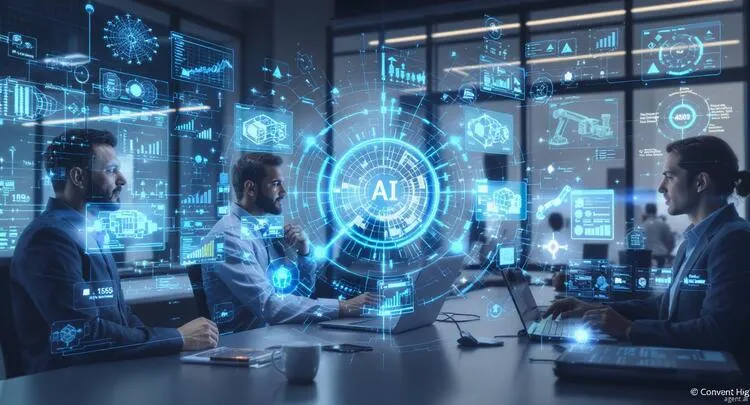
Artificial intelligence is moving from an emerging technology into an important part of modern engineering. From design and simulation to testing and maintenance, intelligent tools are changing how engineers approach everyday responsibilities.
As companies adopt automation and advanced software, engineering professionals are facing a workplace where technical knowledge alone may no longer be enough. Engineers increasingly need to understand data, automation, AI systems, and digital collaboration alongside their traditional expertise.
This shift does not necessarily mean that technology will replace engineers. Instead, it is changing the nature of engineering work and creating new expectations around creativity, decision making, and continuous learning.
Artificial Intelligence Is Reshaping Engineering Work
Artificial intelligence is changing engineering careers by automating repetitive activities that once required significant amounts of manual effort. Engineers can now use intelligent systems to analyze large datasets, identify patterns, generate design alternatives, detect potential faults, and support complex calculations.
Consequently, engineers can spend more time on activities that require human judgment and creative thinking. Rather than manually reviewing every piece of information, professionals can increasingly focus on evaluating results, solving unusual problems, and making strategic decisions.
This transformation is particularly visible across software, manufacturing, automotive, aerospace, construction, and energy industries. Each sector is adopting AI differently, yet the broader direction remains similar. Engineering roles are becoming increasingly connected to digital technologies.
New Skills Are Becoming Essential
The rise of AI is creating demand for a broader combination of engineering and digital capabilities. Engineers do not necessarily need to become machine learning specialists, but understanding how AI systems work can provide an important career advantage.
Data interpretation, programming, automation, model evaluation, and digital system management are becoming increasingly valuable. At the same time, communication and problem solving remain essential because engineers must explain technical findings and collaborate with professionals from different disciplines.
Technology insights can help engineers understand where these changes are heading. Following developments in IT industry news can also provide useful context about emerging tools, software platforms, cybersecurity requirements, and evolving technical roles.
AI Is Creating New Engineering Opportunities
Although disruption can create uncertainty, it can also open new career paths. Artificial intelligence is generating demand for professionals who can connect engineering knowledge with intelligent technologies.
Engineers may increasingly work with AI driven design systems, robotics, autonomous machines, predictive maintenance platforms, digital twins, and intelligent manufacturing systems. These opportunities require professionals who understand both the physical or technical environment and the digital systems supporting it.
Therefore, learning AI does not have to mean abandoning traditional engineering expertise. In many cases, combining established engineering knowledge with modern digital capabilities can create a stronger professional profile.
Engineering Education Must Keep Evolving
The transformation is also affecting universities and professional training programs. Traditional engineering education remains important, but students may need greater exposure to programming, data analysis, automation, AI fundamentals, and technology ethics.
Employers are also likely to place greater emphasis on practical experience. Engineers who can demonstrate how they have applied new technologies to real problems may have an advantage over candidates who rely solely on academic qualifications.
HR trends and insights show why this development matters beyond engineering departments. Organizations increasingly need hiring and development strategies that recognize changing skill requirements. Companies that fail to update their expectations could struggle to find professionals prepared for technology driven workplaces.
Human Skills Still Matter
Despite rapid technological progress, engineering remains a human centered profession. AI can process information quickly, but engineers still need to understand business requirements, safety considerations, ethical implications, and real world constraints.
Creativity is another important factor. Intelligent systems can generate possibilities, but deciding which solution is practical requires experience and judgment.
Communication is equally valuable. Engineers frequently work with executives, customers, designers, technicians, and other specialists. The ability to explain complex concepts clearly can become even more important as technology becomes more sophisticated.
The Impact Across Business Functions
Engineering does not operate in isolation. Changes in engineering capabilities can influence product development, finance, sales, and marketing.
Finance industry updates increasingly reflect the importance of technology investment and automation when companies evaluate operational efficiency. Sales strategies and research can also be affected when technical products become more advanced and customers expect greater digital capabilities.
Meanwhile, marketing trends analysis increasingly focuses on explaining complex technologies in ways that customers can understand. This means engineers may find themselves contributing more directly to product strategy and customer conversations.
Engineers Need a Continuous Learning Mindset
The pace of technological change means that engineering careers are becoming less dependent on mastering one fixed set of skills. Professionals who remain curious and adaptable can respond more effectively as tools and expectations evolve.
Learning does not always require a complete career transformation. Engineers can begin by understanding how AI is being applied within their specific industry. From there, they can explore relevant software, data concepts, automation techniques, and practical projects.
This approach can make technological change feel more manageable while helping professionals build capabilities that remain relevant.
Actionable Insights for Engineering Professionals
Engineers should view artificial intelligence as a capability to understand rather than simply a threat to employment. Building familiarity with AI tools, strengthening data literacy, and improving communication skills can help professionals remain competitive as responsibilities evolve.
Organizations should similarly invest in training rather than expecting employees to adapt independently. Combining technical education with practical projects, mentoring, and cross functional collaboration can create a workforce that is better prepared for technological change.
The most valuable engineering professionals of the future may not be those who know every AI tool. Instead, they may be those who understand how to combine engineering judgment, technology, creativity, and human insight to solve problems effectively.
For more Technology insights and informed perspectives on changing careers and industries, connect with InfoProWeekly today. Stay informed with InfoProWeekly for practical perspectives on AI, engineering, business transformation, and the future of work.