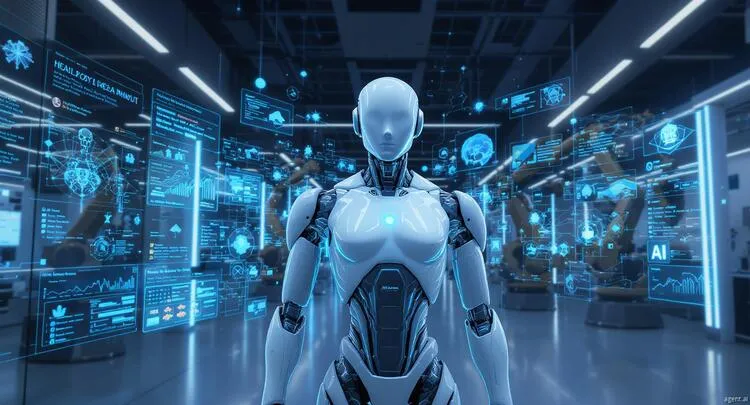
Google Unveils Gemini Robotics 2 With Whole Body Intelligence, marking another significant milestone in the evolution of artificial intelligence and robotics. The latest advancement reflects Google’s growing commitment to creating machines that can understand, reason, and interact with the physical world more naturally. Rather than focusing only on language or visual understanding, the new system aims to combine perception, movement, and decision making into a unified intelligence framework.
As industries continue investing in smarter automation, this development highlights how AI is gradually moving beyond digital tasks into real world environments. Consequently, businesses across manufacturing, healthcare, logistics, retail, and research are paying close attention to how advanced robotics could reshape everyday operations.
What Makes Gemini Robotics 2 Different
Unlike earlier robotic systems that relied heavily on predefined instructions, Gemini Robotics 2 is designed to coordinate movements across the entire body while responding intelligently to changing surroundings. As a result, robots powered by this technology can process multiple streams of information simultaneously before executing complex physical actions.
Furthermore, the integration of multimodal AI enables these robots to understand spoken language, recognize visual objects, evaluate spatial relationships, and perform coordinated movements with greater accuracy. Instead of treating each capability separately, the platform connects them into one continuous reasoning process.
Because of this approach, robots become more adaptable when handling unfamiliar situations, reducing dependence on repetitive programming while improving operational efficiency.
The Importance of Whole Body Intelligence
Whole body intelligence represents an important step toward creating robots that move and react more like humans. Rather than controlling individual limbs independently, the system coordinates the entire body while considering balance, force, movement, and environmental conditions.
Moreover, this coordinated intelligence allows robots to perform delicate actions, navigate crowded environments, and complete tasks requiring precision. Therefore, organizations can expect improved reliability in workplaces where flexibility matters as much as speed.
Equally important, these capabilities could expand robotic applications into areas previously considered too unpredictable for automation.
Expanding Opportunities Across Industries
The arrival of more capable robotic systems opens new opportunities across several industries. Manufacturing facilities may benefit from machines that quickly adapt to changing production requirements. Similarly, logistics companies could improve warehouse operations through intelligent material handling and inventory management.
Healthcare providers may eventually use advanced robots to assist medical professionals during routine procedures or patient support activities. Meanwhile, research institutions can leverage intelligent robotics for laboratory automation and scientific exploration.
In addition, the broader technology ecosystem is likely to experience accelerated innovation as developers build new software, sensors, and AI applications around increasingly capable robotic platforms.
Why Businesses Should Pay Attention
Although robotics has traditionally been associated with industrial automation, modern AI is changing business expectations. Organizations now seek systems capable of learning continuously while collaborating safely with human workers.
Consequently, business leaders evaluating future investments should monitor developments in intelligent robotics alongside broader technology insights. Understanding emerging innovations today may create competitive advantages tomorrow as automation becomes more accessible across multiple sectors.
Likewise, executives following IT industry news recognize that advancements in robotics often influence cloud computing, cybersecurity, edge computing, and enterprise AI adoption.
The Connection Between AI and Workforce Evolution
As robotics technology advances, workforce transformation becomes equally important. Instead of replacing every human role, intelligent machines are more likely to complement existing employees by handling repetitive or physically demanding tasks.
Therefore, organizations should focus on workforce development, continuous learning, and digital skills. HR trends and insights increasingly emphasize reskilling employees so they can collaborate effectively with AI driven systems rather than compete against them.
Meanwhile, companies investing in employee education are expected to adapt more successfully as automation technologies mature.
Innovation Creates Economic Momentum
Emerging robotics platforms also attract attention from investors and business strategists. New AI technologies often stimulate additional research funding, startup activity, and enterprise partnerships.
Consequently, finance industry updates continue highlighting artificial intelligence as one of the fastest growing investment sectors. Increased spending on robotics infrastructure may influence hardware manufacturing, semiconductor production, cloud services, and software development over the coming years.
At the same time, organizations must balance innovation with responsible implementation to maximize long term returns.
The Future of Intelligent Business Growth
As intelligent robotics becomes more practical, companies will need stronger communication strategies to explain AI adoption to customers, employees, and stakeholders. This growing demand creates opportunities for professionals specializing in marketing trends analysis, helping businesses communicate technological innovation with greater clarity and trust.
Similarly, sales teams can benefit from sales strategies and research that identify industries most prepared to adopt advanced robotic solutions. Better market understanding allows organizations to position new technologies where they deliver the greatest value.
What This Means Going Forward
Google’s latest robotics initiative demonstrates that artificial intelligence is steadily expanding from digital assistants into capable physical systems. While widespread commercial deployment will take time, the pace of innovation suggests that businesses should begin preparing for a future where intelligent robots become an everyday part of operations.
Organizations that stay informed, invest in workforce readiness, and evaluate emerging technologies strategically will be better positioned to benefit from the next wave of AI powered automation.
Key Insights for Business Leaders
Business leaders should view intelligent robotics as more than an engineering achievement. It represents a strategic opportunity to improve productivity, enhance workplace safety, and unlock new business models. At the same time, success will depend on responsible AI governance, employee development, and thoughtful implementation.
Keeping pace with technology insights, IT industry news, HR trends and insights, finance industry updates, sales strategies and research, and marketing trends analysis will help organizations make informed decisions as robotics continues shaping the future of global industries.
Connect with InfoProWeekly to stay informed about the latest innovations shaping technology and business worldwide.Reach out to InfoProWeekly for expert analysis, industry updates, and practical insights that help your organization stay ahead in a rapidly evolving digital landscape.