
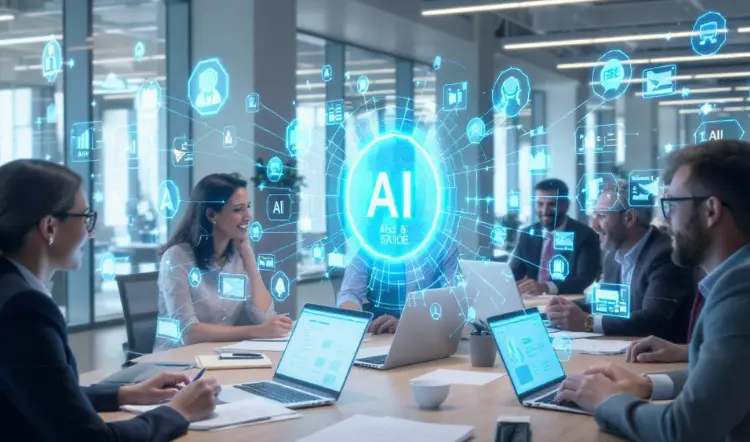
Artificial intelligence is evolving at an extraordinary pace, reshaping industries, workplaces, and customer experiences across the globe. While innovation often takes center stage, there is a growing recognition that technology must remain deeply connected to human needs and values. This idea lies at the heart of humanizing rapid AI development, a concept increasingly emphasized by Microsoft as organizations navigate the next phase of digital transformation.
As businesses race to adopt advanced AI capabilities, the challenge is no longer just about building smarter systems. It is about ensuring those systems empower people, support creativity, and foster trust. Microsoft’s perspective highlights the importance of balancing technical progress with human centered design, creating a future where innovation serves individuals rather than overshadowing them.
Why Human Centered AI Matters More Than Ever
The speed of AI advancement has sparked excitement across industries, yet it has also raised concerns regarding ethics, transparency, and workforce adaptation. Humanizing rapid AI development addresses these concerns by placing people at the core of technological decision making.
Microsoft believes that AI should enhance human potential rather than replace it. By focusing on collaboration between people and intelligent systems, organizations can unlock productivity gains while preserving creativity, empathy, and critical thinking. Furthermore, this approach helps businesses build trust among employees, customers, and stakeholders.
Consequently, companies that embrace human centered innovation are better positioned to create meaningful and sustainable value in an increasingly digital economy.
Microsoft’s Vision for Responsible Innovation
Microsoft has consistently advocated for responsible AI practices. The company emphasizes transparency, accountability, fairness, and security throughout the development lifecycle. Rather than treating these principles as optional considerations, Microsoft views them as essential components of successful AI deployment.
Moreover, rapid technological advancement requires organizations to adapt governance frameworks alongside innovation strategies. As AI capabilities become more sophisticated, businesses must establish clear guidelines that ensure ethical usage and responsible outcomes.
This perspective reflects broader Technology insights that highlight the growing importance of balancing innovation with social responsibility. Businesses that prioritize both objectives are likely to gain stronger competitive advantages while maintaining public confidence.
Empowering Employees Through AI
One of the most significant aspects of humanizing rapid AI development is its impact on the workforce. AI tools are increasingly being integrated into everyday workflows, enabling employees to automate repetitive tasks and focus on higher value activities.
Microsoft’s approach encourages organizations to view AI as a partner rather than a threat. Employees can leverage intelligent systems to improve productivity, generate ideas, and make better decisions. As a result, workplace transformation becomes an opportunity for growth instead of disruption.
In addition, this shift aligns closely with emerging HR trends and insights. Human resources leaders are placing greater emphasis on upskilling, reskilling, and continuous learning programs that prepare employees for AI enhanced work environments.
Building Trust Through Transparency
Trust remains one of the most critical factors influencing AI adoption. Customers and employees alike want to understand how AI systems operate and how decisions are made.
Microsoft advocates for transparency by encouraging organizations to explain AI driven outcomes in ways that are understandable and accessible. This commitment helps reduce uncertainty while fostering confidence in technology powered solutions.
At the same time, transparency strengthens customer relationships. Businesses that communicate openly about their AI practices often experience greater engagement and loyalty, particularly as consumers become more aware of digital ethics and data privacy issues.
The Business Impact Across Industries
Humanizing rapid AI development extends beyond technology companies. Its influence can be seen across finance, marketing, sales, and other sectors where intelligent automation is transforming operations.
Within financial services, organizations are using AI to improve risk assessment, fraud detection, and customer support. These developments are driving significant Finance industry updates that demonstrate the growing role of intelligent technologies in modern banking and investment strategies.
Similarly, sales teams are leveraging predictive analytics and customer intelligence platforms to refine engagement efforts. This evolution supports more effective Sales strategies and research by helping organizations identify opportunities and personalize interactions.
Marketing professionals are also benefiting from AI powered tools that analyze consumer behavior and optimize campaigns. As a result, Marketing trends analysis increasingly focuses on the intersection of automation, personalization, and customer experience enhancement.
Furthermore, AI continues to shape IT industry news as businesses accelerate digital transformation initiatives and explore innovative ways to integrate advanced technologies into their operations.
Creating a Culture of Continuous Learning
Technology alone cannot drive successful transformation. Organizational culture plays an equally important role in determining how effectively AI is adopted and utilized.
Microsoft emphasizes the need for continuous learning environments where employees feel empowered to experiment, adapt, and grow alongside emerging technologies. When organizations invest in education and skill development, they create a foundation for long term success.
Likewise, leaders who encourage curiosity and collaboration help reduce resistance to change. Employees are more likely to embrace new tools when they understand how those tools contribute to their professional development and overall effectiveness.
Therefore, cultivating a learning mindset becomes a critical component of human centered innovation.
Balancing Speed With Responsibility
Rapid innovation often creates pressure to move quickly. However, Microsoft’s perspective suggests that speed should not come at the expense of responsibility. Organizations must evaluate the broader implications of AI deployment while maintaining momentum.
This balance requires thoughtful planning, cross functional collaboration, and ongoing evaluation of outcomes. By integrating ethical considerations into development processes from the outset, businesses can reduce risks and improve long term performance.
Meanwhile, responsible innovation enables organizations to remain agile while addressing stakeholder expectations and regulatory requirements.
Valuable Insights for Organizations Embracing AI
Organizations seeking to humanize their AI initiatives can begin by prioritizing transparency, investing in workforce development, and fostering collaboration between technical and nontechnical teams. Additionally, leaders should focus on building trust through clear communication and ethical governance practices.
Equally important, businesses should view AI as a tool for amplifying human capabilities rather than replacing them. When technology is designed to support people, innovation becomes more impactful, sustainable, and widely accepted. These principles provide a practical roadmap for organizations looking to thrive in an AI driven future while maintaining a strong human connection.
InfoProWeekly delivers expert perspectives, industry developments, and forward thinking analysis that help professionals stay ahead in a rapidly changing world.