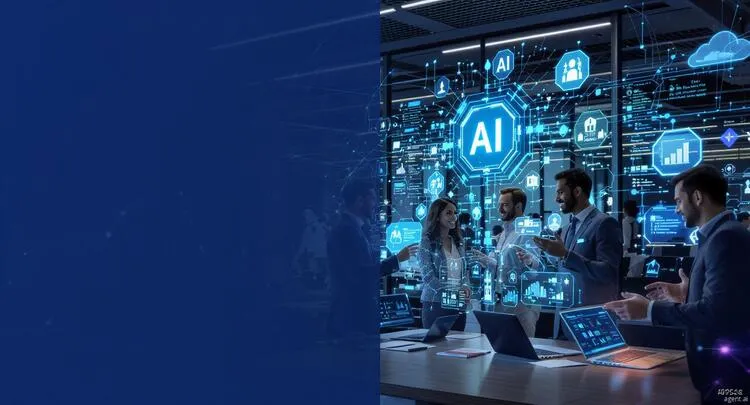
Artificial intelligence is rapidly transforming how organizations operate, make decisions, and deliver services. Across industries, businesses are adopting intelligent technologies to automate repetitive tasks, improve productivity, and uncover new opportunities for growth. However, while companies continue investing heavily in AI solutions, workforce readiness has not always kept pace with technological progress.
Consequently, many employees are entering a period of uncertainty as job responsibilities evolve faster than workplace training programs. Rather than viewing artificial intelligence as a distant challenge, organizations must recognize that preparing employees for continuous change has become a strategic priority.
The Skills Gap Continues to Expand
As AI technologies become more capable, employers increasingly require workers who can collaborate with intelligent systems instead of simply performing routine tasks. Nevertheless, many organizations still rely on traditional training methods that do not adequately address emerging digital skills.
Furthermore, employees often receive limited opportunities to develop expertise in areas such as data literacy, AI assisted decision making, automation management, and critical problem solving. Therefore, the gap between business expectations and workforce capabilities continues to widen.
At the same time, industries experiencing rapid digital transformation require adaptable professionals who can learn continuously as technologies evolve.
Why Upskilling Matters More Than Ever
Successful AI adoption depends not only on advanced technology but also on people who understand how to use it effectively. Accordingly, organizations that invest in employee development are often better positioned to maximize the value of intelligent systems.
Moreover, continuous learning helps employees remain confident while adapting to changing responsibilities. Instead of fearing automation, workers who receive practical AI education are more likely to identify new opportunities for innovation and productivity.
As a result, businesses create stronger cultures of collaboration where technology enhances human expertise rather than replacing it.
Leadership Plays a Critical Role
Business leaders have an important responsibility in preparing their organizations for AI driven transformation. Simply introducing new software or automation tools is rarely enough to achieve sustainable success.
Instead, leadership teams should establish long term learning strategies that encourage curiosity, experimentation, and knowledge sharing. Likewise, managers should provide employees with practical guidance on integrating AI into daily workflows while maintaining ethical standards and responsible decision making.
Consequently, organizations can reduce uncertainty and improve employee confidence throughout the transition.
Workforce Development Creates Competitive Advantage
Companies that prioritize workforce development often experience benefits extending beyond improved technical skills. Employees who understand AI technologies are generally better equipped to identify operational improvements, deliver stronger customer experiences, and support innovation initiatives.
Similarly, organizations investing in continuous education frequently strengthen employee engagement and retention because workers recognize clear opportunities for professional growth.
Therefore, workforce development should be viewed as a strategic investment rather than an operational expense.
AI Is Transforming Every Business Function
Artificial intelligence now influences nearly every department within modern organizations. Human resources teams increasingly rely on intelligent recruitment platforms, while finance departments automate reporting and forecasting processes. Marketing professionals leverage predictive analytics to improve customer engagement, and sales teams use AI driven insights to identify new opportunities.
Consequently, technology insights continue demonstrating that AI is no longer limited to technical departments. Businesses following IT industry news recognize that successful digital transformation depends on preparing every function for intelligent automation.
Meanwhile, HR trends and insights consistently emphasize reskilling initiatives as organizations redefine future workforce requirements.
Strategic Learning Supports Long Term Growth
Organizations preparing for AI adoption should align workforce development with broader business objectives. Rather than offering isolated training sessions, companies benefit from structured learning programs that evolve alongside technological innovation.
Furthermore, finance industry updates increasingly highlight that investments in employee capability often generate stronger long term returns than technology spending alone. Skilled employees maximize the value of AI systems while helping organizations remain agile in competitive markets.
Likewise, marketing trends analysis demonstrates that businesses with digitally confident workforces communicate innovation more effectively. In addition, sales strategies and research reveal that knowledgeable employees build greater customer trust when presenting AI enabled products and services.
Preparing for the Future Starts Today
Artificial intelligence will continue changing industries at an accelerated pace, making workforce readiness more important than ever. Organizations that delay employee development may struggle to adapt as business requirements become increasingly technology driven.
Conversely, businesses that embrace continuous learning, responsible AI adoption, and practical skills development will be better prepared for future challenges. By combining technological innovation with human expertise, companies can create resilient workplaces capable of thriving in an evolving digital economy.
Practical Insights for Business Leaders
Business leaders should regularly assess workforce skills, identify future capability gaps, and create structured learning pathways that support continuous improvement. Encouraging collaboration between employees and intelligent technologies will help organizations build adaptable teams prepared for long term success.
Keeping up with technology insights, IT industry news, HR trends and insights, finance industry updates, sales strategies and research, and marketing trends analysis enables organizations to make informed decisions while preparing their workforce for the next phase of artificial intelligence.
Stay connected with InfoProWeekly for trusted coverage of artificial intelligence, workforce innovation, and the latest developments shaping global business.Reach out to InfoProWeekly for expert analysis, practical guidance, and industry insights that help your organization confidently navigate the future of work.