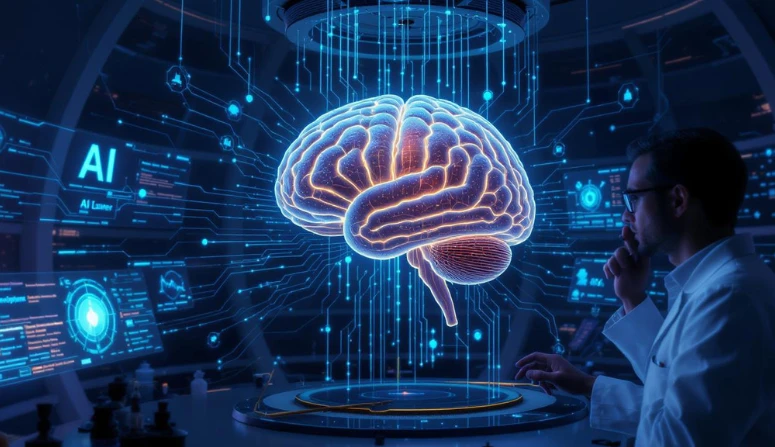
Artificial intelligence has transformed the way people search for answers, solve problems, and consume information. From students using AI for homework to professionals relying on automated insights at work, the speed and convenience of modern technology are changing human behavior at an unprecedented pace. However, recent concerns raised by the Royal Observatory suggest that instant AI responses may gradually weaken critical thinking and reduce the ability to analyze information independently.
The discussion has sparked global debate across education, business, and the broader technology sector. While AI continues to deliver remarkable efficiency, experts are questioning whether constant dependence on automated answers could limit creativity, reasoning, and long term cognitive development. As a result, this conversation has become one of the most important technology insights shaping the future of digital innovation.
The growing dependence on AI generated answers
Artificial intelligence tools are now integrated into everyday life. Students use chatbots for assignments, employees depend on AI driven summaries, and businesses automate communication and research tasks. Consequently, people are spending less time thinking through complex problems on their own.
According to experts connected with the Royal Observatory, instant AI systems may encourage users to seek quick solutions instead of engaging in deeper analysis. Although technology improves productivity, overreliance can reduce the habit of questioning information, comparing viewpoints, and developing independent conclusions. Furthermore, easy access to automated responses may weaken memory retention and problem solving abilities over time.
At the same time, many educators believe AI should function as a support tool rather than a replacement for human reasoning. They argue that balancing technology with active learning is essential to maintaining intellectual growth in the digital era.
Why critical thinking still matters in the digital age
Critical thinking remains one of the most valuable human skills despite rapid advances in artificial intelligence. Businesses, schools, and governments continue to rely on people who can evaluate complex situations, identify risks, and make thoughtful decisions. Even the most advanced AI systems still depend on human oversight to interpret results accurately.
Moreover, critical thinking helps individuals recognize misinformation and bias online. As AI generated content becomes more widespread, distinguishing between accurate and misleading information is becoming increasingly difficult. Therefore, people who actively question and analyze information will remain highly valuable across industries.
This issue is especially important in education. Teachers are already observing changes in how students approach learning tasks. Instead of researching topics independently, many learners immediately turn to AI tools for ready made answers. Consequently, some educators worry that curiosity and analytical reasoning could gradually decline if students stop engaging deeply with subjects.
These concerns are also influencing HR trends and insights as employers increasingly prioritize soft skills such as communication, adaptability, and independent thinking during recruitment.
Businesses face both opportunities and challenges
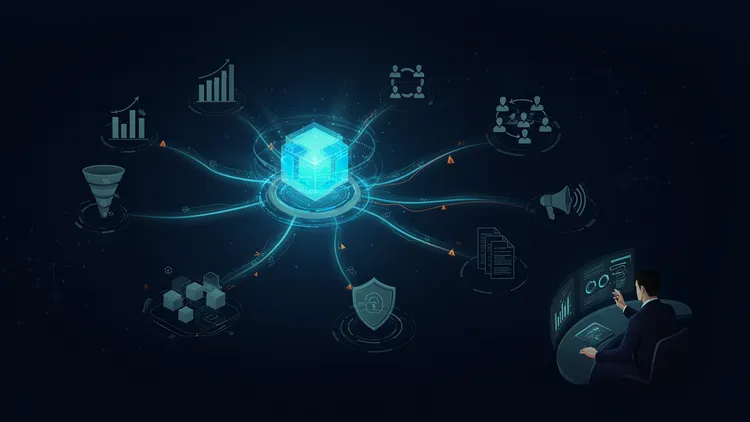
Despite concerns surrounding human thinking, artificial intelligence continues to provide enormous advantages for organizations worldwide. Companies are using AI to improve efficiency, automate repetitive tasks, and deliver personalized customer experiences. In fact, many recent finance industry updates highlight how AI powered analytics are helping firms make faster investment and risk management decisions.
Similarly, sales teams are benefiting from AI driven customer insights and predictive forecasting. Businesses now use advanced data analysis to improve engagement and strengthen customer relationships. Consequently, sales strategies and research are evolving rapidly as organizations seek to combine automation with human expertise.
However, industry leaders are increasingly recognizing the importance of maintaining a balance between technology and human intelligence. While AI can process large amounts of data quickly, human creativity, emotional understanding, and ethical judgment remain irreplaceable. Therefore, companies are encouraging employees to use AI responsibly instead of depending on it completely.
This balance is becoming a central theme in modern IT industry news as organizations explore ethical technology practices and long term workforce development.
The psychological impact of instant digital convenience
The human brain adapts according to behavior and repetition. When individuals repeatedly depend on technology for instant answers, the brain may gradually reduce the effort used for memory building and analytical reasoning. Psychologists often compare this to how people rely on smartphones to remember phone numbers or navigation routes.
Additionally, instant digital gratification can shorten attention spans and reduce patience for deeper learning. Instead of exploring multiple perspectives, users may accept the first AI generated response without further investigation. Consequently, independent research habits may weaken over time.
Nevertheless, experts emphasize that artificial intelligence itself is not the problem. The real challenge lies in how society chooses to use these tools. AI can support education, innovation, and productivity when used thoughtfully. On the other hand, excessive dependence without active thinking may create long term cognitive risks.
As a result, many technology leaders are now encouraging responsible AI literacy programs that teach users how to evaluate AI outputs critically rather than accept them blindly.
Education systems are adapting to the AI era
Schools and universities around the world are already adjusting teaching strategies to address the rise of AI powered learning tools. Educators are redesigning assignments to focus more on creativity, discussion, and real world problem solving instead of simple information recall.
Furthermore, institutions are emphasizing collaboration, critical analysis, and ethical technology use. These changes aim to ensure that students continue developing strong intellectual abilities even while using advanced digital tools.
At the same time, parents and teachers are encouraging balanced screen habits and more active learning experiences. Reading books, engaging in discussions, and solving problems independently are becoming increasingly important in preserving cognitive skills.
Meanwhile, marketing trends analysis shows that audiences are also becoming more aware of AI generated content online. Consumers now value authenticity and human connection more than ever, especially as automated content becomes increasingly common across digital platforms.
Building a healthier relationship with AI
Artificial intelligence is likely to remain a permanent part of modern society. Therefore, the goal should not be to reject AI completely but to use it in a way that strengthens human intelligence instead of replacing it.
Experts recommend approaching AI as a collaborative tool rather than a shortcut for every task. For example, users can ask AI for guidance while still performing their own research and evaluation. Similarly, businesses can combine automation with human creativity to achieve better results.
Encouraging curiosity, discussion, and independent learning will also help people maintain strong thinking skills in an increasingly automated world. Moreover, developing digital literacy and ethical awareness can ensure that technology supports human progress responsibly.
Valuable insights for navigating the future of AI
The concerns raised by the Royal Observatory highlight an important reality about modern technology. Convenience should never replace curiosity, reasoning, or creativity. AI can improve productivity and unlock innovation, yet human intelligence remains essential for interpretation, ethics, and meaningful decision making.
Individuals and organizations that combine advanced technology with critical thinking will be better prepared for future challenges. By using AI responsibly, society can benefit from innovation while still preserving the cognitive abilities that drive progress, leadership, and human connection.
Connect with InfoProWeekly today to stay informed with expert coverage on innovation, AI developments, and the future of global industries.