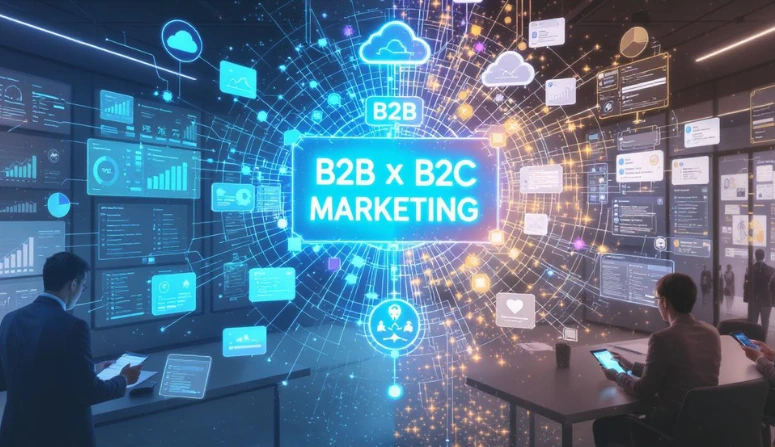
For years, marketers viewed business to business and business to consumer marketing as two completely different disciplines. One focused on logic, long sales cycles, and multiple decision makers. The other relied on emotion, quick purchasing decisions, and mass appeal. However, the gap between these approaches is shrinking rapidly.
Today, buyers expect the same seamless experiences regardless of whether they are purchasing enterprise software or shopping for personal products. As a result, brands are increasingly adopting shared strategies that blend the best elements of both worlds. This shift is reshaping how companies communicate, build trust, and drive growth.
As digital transformation accelerates, understanding why B2B and B2C marketing are becoming one playbook has become essential for businesses looking to stay competitive.
The Rise of Human Centered Marketing
One of the biggest reasons for this convergence is the growing emphasis on human behavior. Although organizations make purchasing decisions, people still make the final choices. Decision makers in companies are influenced by emotions, experiences, and brand perceptions just like everyday consumers.
Consequently, many organizations have started creating more personalized and engaging campaigns. Rather than focusing exclusively on technical specifications or product features, they are telling stories that connect with audiences on a deeper level.
Furthermore, digital platforms have made it easier to reach audiences with relevant content, allowing brands to build relationships that feel more personal and authentic.
Customer Experience Has Become a Universal Priority
Modern buyers expect convenience at every stage of the journey. Whether someone is purchasing software for a corporation or ordering products online, they want fast access to information, intuitive interfaces, and responsive support.
As a result, customer experience has emerged as a critical success factor across industries. Companies are investing heavily in user friendly websites, personalized recommendations, and seamless digital interactions.
Meanwhile, data driven insights help marketers understand audience behavior more accurately. This allows businesses to deliver experiences that meet customer expectations while strengthening loyalty and trust.
Digital Channels Are Creating Common Ground
The growth of digital marketing has significantly blurred traditional boundaries. Social media platforms, email campaigns, search engine optimization, and content marketing are now essential tools for both business focused and consumer focused organizations.
In addition, buyers increasingly conduct independent research before making purchasing decisions. They read reviews, compare options, and engage with educational content long before speaking with a sales representative.
Because of this behavior, companies are adopting similar strategies that prioritize valuable content and thought leadership. These efforts not only attract prospects but also position brands as trusted authorities within their industries.
Content Is Driving Modern Engagement
Content marketing has become a powerful force behind this transformation. Businesses now recognize that valuable information can influence purchasing decisions regardless of audience type.
For example, detailed guides, case studies, webinars, and educational articles help organizations build credibility. At the same time, engaging videos, interactive experiences, and storytelling techniques create stronger emotional connections.
Moreover, content strategies increasingly align with broader marketing trends analysis, helping companies stay relevant in rapidly evolving markets. By combining education with engagement, brands can reach audiences more effectively than ever before.
Personalization Is Reshaping Expectations
Personalization was once associated primarily with consumer marketing. Today, it plays a crucial role across every sector.
Advanced analytics and customer data allow businesses to tailor messages based on behavior, interests, and preferences. Therefore, prospects receive content that feels relevant and timely rather than generic and promotional.
Additionally, personalized experiences improve engagement rates and strengthen relationships. Organizations that understand individual needs are more likely to earn trust and encourage long term loyalty.
This trend continues to influence broader sales strategies and research, enabling teams to create more meaningful interactions throughout the buying process.
Technology Is Accelerating the Shift
Technology remains a major catalyst behind the merging of marketing approaches. Artificial intelligence, automation platforms, predictive analytics, and customer relationship management systems enable brands to deliver highly targeted campaigns at scale.
Furthermore, companies rely on technology insights to better understand changing customer expectations and emerging digital opportunities. These innovations allow marketers to create experiences that feel both efficient and personalized.
At the same time, access to real time data helps organizations refine their strategies continuously, ensuring that campaigns remain relevant in competitive environments.
Changing Workforce Dynamics Influence Marketing
Another factor driving convergence is the evolution of workplace culture. Younger professionals who grew up in digital environments now hold decision making roles across industries.
These buyers expect transparency, authenticity, and engaging experiences similar to those offered by leading consumer brands. Consequently, organizations are adapting their communication styles to align with modern expectations.
Additionally, HR trends and insights reveal that employee experiences increasingly impact brand reputation. Companies that invest in positive workplace cultures often strengthen both recruitment efforts and customer perceptions.
Industry Knowledge Builds Stronger Connections
Successful marketers understand that audiences value expertise and credibility. Whether targeting consumers or corporate buyers, businesses must demonstrate a deep understanding of industry challenges and opportunities.
For this reason, organizations frequently publish content related to IT industry news, market developments, and emerging innovations. Likewise, sharing finance industry updates helps businesses establish authority while providing practical value to readers.
As audiences become more informed, educational content continues to play a central role in building trust and supporting decision making.
Practical Insights for Marketers Navigating the New Landscape
Businesses that want to succeed in this evolving environment should focus on creating customer centric experiences that combine emotional connection with practical value. Additionally, investing in personalization, high quality content, and data driven decision making can improve engagement across diverse audiences.
Moreover, organizations should embrace cross functional collaboration between marketing, sales, customer service, and human resources teams. This integrated approach creates consistent experiences that strengthen relationships and improve outcomes.
Finally, staying informed through reliable sources of technology insights, marketing trends analysis, sales strategies and research, IT industry news, HR trends and insights, and finance industry updates can help businesses adapt quickly to changing market conditions.
At InfoProWeekly, we deliver timely insights that help professionals stay informed and make smarter business decisions.