
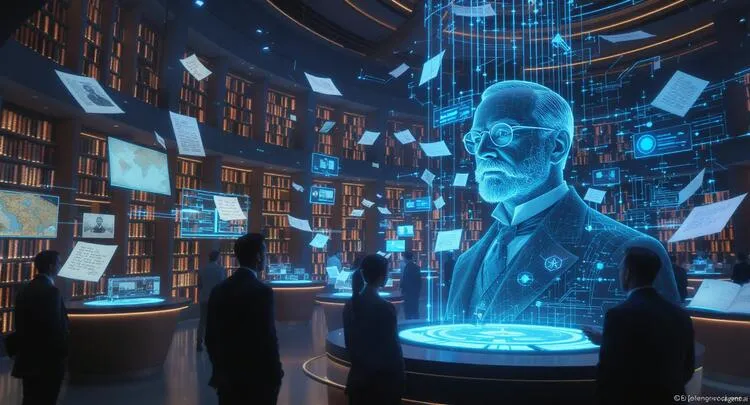
Artificial intelligence is changing the way people discover information, and education is among the fields experiencing the greatest transformation. Instead of simply reading books or browsing static exhibits, learners can now engage with interactive digital experiences that make history more accessible and memorable.
One of the latest examples is a new AI powered library that enables visitors to explore the life and legacy of Theodore Roosevelt through conversational technology. Consequently, this innovation offers a more engaging approach to historical education while demonstrating how AI can reshape cultural institutions.
A More Interactive Way to Explore History
Traditional libraries and museums have always played an important role in preserving knowledge. However, digital technologies are expanding how visitors interact with historical collections.
Rather than relying solely on written information, AI powered systems can answer questions, explain historical events, and provide contextual information in a conversational format. As a result, visitors enjoy a more personalized learning experience that encourages curiosity and deeper exploration.
Furthermore, conversational AI allows users to investigate topics at their own pace, making complex historical events easier to understand.
Bringing Theodore Roosevelt Closer to Modern Audiences
Theodore Roosevelt remains one of the most influential figures in American history because of his contributions to conservation, public policy, military leadership, and national development. Nevertheless, younger generations often prefer interactive digital experiences over traditional educational formats.
By using artificial intelligence, the new library creates a more immersive environment where visitors can explore Roosevelt’s speeches, decisions, achievements, and historical context through natural conversations. Consequently, historical learning becomes more engaging without replacing authentic historical records.
Moreover, the experience encourages users to ask thoughtful questions, compare historical perspectives, and better understand the challenges of Roosevelt’s era.
The Growing Role of AI in Libraries and Museums
Libraries and museums around the world are increasingly adopting digital technologies to improve accessibility and visitor engagement. Artificial intelligence supports searchable archives, multilingual assistance, personalized recommendations, and interactive educational tools.
Additionally, AI helps institutions organize vast collections more efficiently while enabling visitors to locate relevant information quickly. Therefore, technology strengthens rather than replaces the educational mission of cultural organizations.
Meanwhile, digital innovation also allows remote audiences to access valuable historical resources regardless of their physical location.
Balancing Innovation With Historical Accuracy
Although artificial intelligence creates exciting educational opportunities, maintaining historical accuracy remains essential. Institutions developing AI powered experiences must ensure that information comes from reliable archival sources and established historical research.
Furthermore, transparency helps users distinguish documented historical facts from AI generated explanations. Consequently, responsible implementation builds public trust while preserving educational integrity.
Likewise, ongoing review by historians, researchers, and subject experts ensures that digital experiences remain informative, balanced, and academically credible.
Educational Benefits Beyond Museums
Interactive AI learning extends well beyond museums and libraries. Schools, universities, research institutions, and online education platforms are increasingly exploring conversational technology to improve student engagement.
For example, learners can explore historical events through simulated conversations, receive contextual explanations, and investigate primary sources more efficiently. As a result, education becomes more interactive while encouraging critical thinking and independent learning.
Moreover, personalized learning experiences allow students to explore subjects based on their individual interests and pace of study.
Technology Continues Shaping Modern Education
Artificial intelligence is influencing multiple industries beyond education. Readers following Technology insights continue to observe rapid innovation in AI powered knowledge platforms and digital learning environments.
Similarly, professionals monitoring IT industry news recognize the growing importance of cloud computing, machine learning, and intelligent search technologies that support interactive educational systems. Meanwhile, organizations reviewing HR trends and insights understand that continuous learning technologies are becoming increasingly valuable for employee development and professional training.
In addition, experts tracking Finance industry updates note growing investment in educational technology as institutions modernize digital infrastructure. Likewise, businesses implementing effective Sales strategies and research increasingly use AI powered learning platforms to improve employee knowledge and customer engagement.
Furthermore, professionals studying Marketing trends analysis recognize that immersive digital experiences create stronger audience engagement while encouraging deeper interaction with educational content.
What This Means for the Future of Learning
Artificial intelligence is gradually transforming how knowledge is preserved, shared, and experienced. Rather than replacing books, archives, or historical experts, AI serves as an additional tool that makes valuable information more accessible to broader audiences.
As conversational technologies continue improving, educational institutions will likely create richer digital experiences that encourage lifelong learning. Consequently, learners of every age can benefit from more engaging, interactive, and personalized educational opportunities.
The future of education will depend on combining technological innovation with scholarly accuracy, ensuring that digital experiences remain both informative and trustworthy.
Practical Insights for Educators and Organizations
Educational institutions, libraries, and museums should view artificial intelligence as a tool that enhances learning rather than replacing traditional educational methods. Furthermore, combining expert historical research with interactive technology can create meaningful experiences that appeal to modern audiences while preserving academic integrity.
Organizations investing in digital education should prioritize reliable content, transparent AI implementation, and continuous collaboration with subject matter experts to ensure long term educational value and public trust.
Stay informed with InfoProWeekly for expert coverage of artificial intelligence, education, technology innovation, and emerging digital trends shaping the future of learning.
Connect with InfoProWeekly today for trusted analysis, in depth research, and valuable insights that help you understand the technologies transforming education and society.