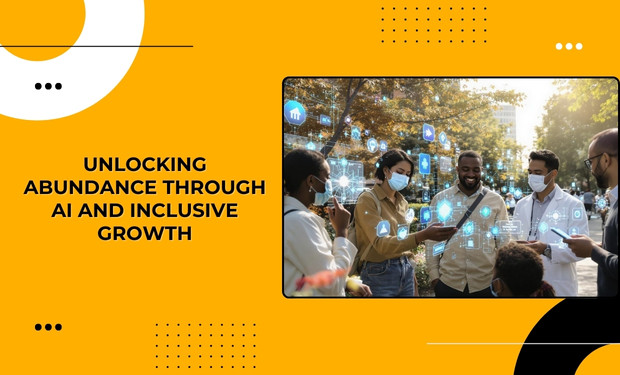
The global understanding of growth and progress is evolving as AI transforms how value is created, shared, and sustained. For generations, societies operated under scarcity-driven thinking where resources, opportunities, and access were limited. Today, intelligent technologies challenge that assumption by enabling scale, efficiency, and innovation at levels never seen before. Stretching abundance in the age of AI is about expanding opportunity thoughtfully and ensuring technological progress benefits everyone, not just a few.
Abundance is no longer defined only by economic output. It includes access to education, healthcare, digital tools, environmental protection, and meaningful employment. AI has the potential to support all of these areas when aligned with inclusive values and ethical frameworks.
Moving Beyond Scarcity Thinking
Scarcity-based economic models framed progress as competitive and exclusive. AI disrupts this idea by lowering operational costs and increasing efficiency across industries. Digital platforms powered by AI can deliver services at scale, reaching communities previously excluded from economic participation.
However, abundance is not automatic. Without careful design, AI can deepen inequality by concentrating wealth, decision-making power, and data ownership. Stretching abundance means shifting focus from speed and profit to inclusion, fairness, and shared outcomes.
Expanding Access Through AI Innovation
AI plays a crucial role in improving access to essential services. In education, adaptive learning systems adjust content based on individual needs, learning styles, and language preferences. In healthcare, AI-powered diagnostics assist professionals in delivering faster and more accurate care, even in underserved regions.
These applications stretch abundance by reducing barriers and increasing reach. Rather than replacing human expertise, AI enhances human capability, allowing professionals to focus on creativity, judgment, and empathy. When implemented responsibly, AI becomes a powerful tool for social progress.
Economic Inclusion and the Changing Workforce
Concerns about job displacement dominate conversations about AI, but the technology also creates new opportunities. Entirely new roles are emerging in data analysis, AI governance, system training, and ethical oversight. Stretching abundance requires preparing people for these changes rather than resisting them.
AI-driven learning platforms support reskilling and upskilling by offering personalized education pathways. Workers gain access to real-time feedback and targeted skill development, helping them adapt to evolving job markets. When people are equipped to grow alongside technology, AI strengthens economic resilience.
Data as a Collective Asset
Data fuels AI systems, yet it is often controlled by a small number of organizations. Stretching abundance in the age of AI requires treating data as a shared resource rather than a purely commercial asset.
Open data initiatives, ethical data-sharing frameworks, and community-led data governance models allow broader participation in AI-driven value creation. Inclusive data ecosystems improve model accuracy, reduce bias, and ensure AI reflects diverse realities rather than narrow perspectives.
Responsible Innovation and Ethical Design
Rapid AI adoption raises concerns around bias, surveillance, and accountability. Stretching abundance demands that innovation be guided by responsibility and transparency. Ethical design principles must be embedded from development through deployment.
Explainable AI systems, fairness audits, and regulatory oversight help build trust between technology providers and users. Collaboration among policymakers, technologists, and civil society ensures that AI enhances human dignity instead of eroding it.
AI and Climate Sustainability
Climate change remains one of the greatest challenges to global abundance. AI contributes powerful tools for environmental protection, resource optimization, and climate resilience. Intelligent systems analyze complex data to predict environmental risks, optimize renewable energy use, and improve agricultural outcomes.
Farmers use AI-powered insights to adapt to changing climate patterns, increasing food security. Smart energy systems reduce waste and expand access to clean power. When aligned with sustainability goals, AI helps preserve abundance for future generations.
Bridging the Digital Divide
While AI offers immense potential, access remains uneven. Stretching abundance requires investment in digital infrastructure, affordability, and digital literacy. Without these foundations, AI risks reinforcing existing inequalities.
Community-centered innovation is essential. Local organizations and entrepreneurs are best positioned to adapt AI tools to cultural, linguistic, and regional needs. Supporting grassroots adoption ensures that technological progress is inclusive and context-aware.
Redefining Value in the Age of AI
AI encourages societies to rethink how value is measured. Economic profit alone is no longer sufficient. Well-being, social equity, environmental health, and access to opportunity must be part of progress metrics.
Impact-focused organizations use AI to measure outcomes more accurately, identify gaps in service delivery, and allocate resources where they are needed most. These efforts show how AI can support empathy, insight, and purpose-driven growth.
Leadership for Shared Abundance
Leadership in the age of AI requires collaboration, foresight, and ethical responsibility. Governments, businesses, and communities must work together to shape systems that distribute benefits fairly.
AI is not destiny. It reflects the values and priorities of those who design and deploy it. Leaders who prioritize inclusion, accountability, and participation can ensure that AI-driven growth leads to shared abundance rather than concentrated power.
Measuring What Truly Matters
Stretching abundance means measuring progress in ways that reflect real human experiences. AI enables more nuanced analysis of well-being, access, and resilience across populations.
These insights allow decision-makers to move beyond traditional growth metrics toward models that emphasize sustainability and equity. When measurement aligns with human values, AI becomes a strategic ally in building adaptive and inclusive systems.Explore deeper insights on technology, innovation, and the evolving role of AI by visiting Infoproweekly