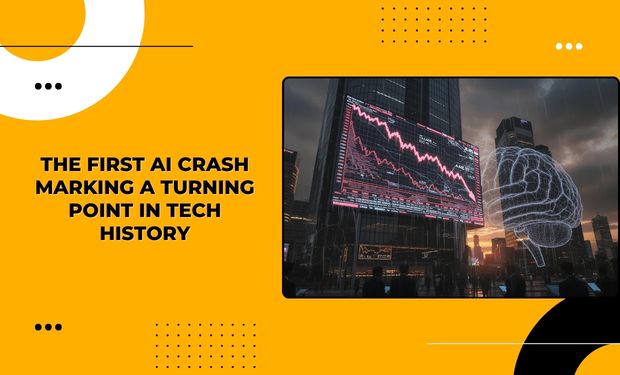
In the midst of the whirlwind growth of AI, conversations about breakthroughs and disruption dominate nearly every industry. From finance to healthcare, AI is positioned as the defining force of this decade. Yet history shows that every technological boom carries the seeds of correction. The real question is not whether a major AI bust will happen, but what we will call it when it does. The phrase Great AI Pop has begun circulating as a symbolic label for that potential turning point when AI hype meets economic gravity.
Technology has always moved in cycles. Rapid innovation fuels optimism, investors pour in capital, and companies promise transformation at scale. Eventually, expectations outpace reality. When that gap widens too much, markets adjust. In the case of AI, valuations are climbing, startups are multiplying, and corporate strategies are rapidly pivoting toward AI integration. If a downturn emerges, it could reshape the AI landscape for years.
The Pattern of Innovation Cycles
Every transformative wave of innovation follows a recognizable pattern. First comes excitement, then acceleration, and finally evaluation. AI is currently in its acceleration phase. Businesses are racing to embed AI tools into products and services. Investors are backing AI ventures at unprecedented levels. Media narratives reinforce the idea that AI will solve productivity challenges, automate complex tasks, and unlock entirely new industries.
However, market enthusiasm can inflate expectations beyond what AI systems can consistently deliver. If companies struggle to generate measurable returns from AI investments, confidence could erode. That shift in sentiment often marks the beginning of a correction. The Great AI Pop would symbolize that moment when inflated AI valuations and assumptions are recalibrated.
What Could Trigger the First Major AI Bust
Several factors could ignite a significant AI downturn. Understanding them helps frame how the AI ecosystem might evolve.
Performance Gaps
AI systems are powerful, but they are not infallible. If large scale AI deployments fail to outperform traditional systems in cost efficiency or reliability, skepticism will grow. Enterprises investing heavily in AI expect tangible gains. If those gains are inconsistent, funding momentum could slow.
Regulatory Pressure
Governments worldwide are drafting frameworks to manage AI risks. Stricter data protection rules, transparency mandates, and compliance requirements could increase operational costs. While regulation strengthens responsible AI development, it may also temper investor enthusiasm in the short term.
Ethical Concerns
AI related controversies involving bias, misinformation, or misuse can erode public trust. Trust is a foundational element for widespread AI adoption. A series of high profile ethical failures could accelerate caution in markets already sensitive to risk.
Economic Downturn
During economic contractions, speculative investments often decline first. AI startups that rely on continuous funding rounds could face challenges if capital markets tighten. Consolidation across the AI sector would likely follow.
The Power of Naming a Bust
When a technological correction happens, its name shapes its legacy. Names carry emotional weight and influence public perception. The dot com crash and crypto winter are examples of terms that define eras beyond financial metrics.
If the AI sector experiences a dramatic contraction, the name chosen will frame how society interprets the event. Great AI Pop suggests a sudden burst of overinflated expectations. AI Winter Redux would imply a return to slowed progress and funding challenges. Automation Backlash would emphasize social and labor concerns rather than purely financial factors.
The narrative attached to the AI bust will influence policymaking, investment strategy, and even academic research. A name focused on ethics might encourage stronger governance frameworks. A name centered on market dynamics might push investors toward more disciplined evaluation of AI ventures.
Human Decisions Behind AI Momentum
AI is often portrayed as an autonomous force reshaping the world. In reality, every AI system reflects human decisions. Developers design algorithms. Executives allocate capital. Policymakers craft regulations. Users determine adoption rates.
If a correction unfolds, it will not be because AI technology suddenly loses its capabilities. It will occur because expectations, investments, and outcomes fall out of balance. Recognizing the human element behind AI expansion provides clarity. Markets do not pop in isolation. They respond to collective behavior.
Preparing for a Potential AI Correction
Organizations that view AI strategically rather than speculatively are better positioned to withstand volatility. Preparation does not require pessimism. It requires discipline.
Prioritize Measurable Impact
Companies integrating AI should focus on specific use cases with quantifiable returns. Clear metrics strengthen resilience if broader market enthusiasm cools.
Maintain Transparent Communication
Openly discussing both strengths and limitations of AI builds credibility. When stakeholders understand realistic timelines and risks, sudden corrections feel less dramatic.
Invest in Responsible AI Practices
Ethical AI development reduces the likelihood of backlash. Transparent models, bias mitigation, and strong governance frameworks create sustainable growth conditions.
Diversify Innovation Strategies
While AI is transformative, overreliance on a single technological trend increases exposure to market shifts. Balanced portfolios and diversified research investments can cushion downturns.
Cultural Memory and the AI Era
If the Great AI Pop becomes reality, it will be remembered as a defining chapter in digital transformation. It may mark the end of unchecked enthusiasm and the beginning of a more mature AI phase. Corrections often refine industries rather than destroy them. The strongest AI companies will likely emerge more disciplined, more transparent, and more focused on delivering real value.
The first AI bust will not signal the end of AI innovation. Instead, it will represent a recalibration. Markets may shrink temporarily, funding may tighten, and unrealistic ventures may fade. Yet foundational AI research and practical applications will continue evolving.
History shows that periods of correction frequently lay groundwork for stronger, more sustainable growth. The naming of the event will capture how society interprets that lesson. Whether it becomes known as the Great AI Pop or another phrase entirely, the label will symbolize a moment when ambition met accountability.
The conversation around AI should therefore include not only excitement but foresight. Responsible development, realistic expectations, and strategic investment can reduce the severity of any future downturn. Even if the AI market experiences turbulence, thoughtful leadership can transform a potential bust into a constructive turning point.
For deeper insights into the evolving landscape of AI and technology innovation, visit Infoproweekly and stay informed with expert driven analysis and forward looking perspectives.