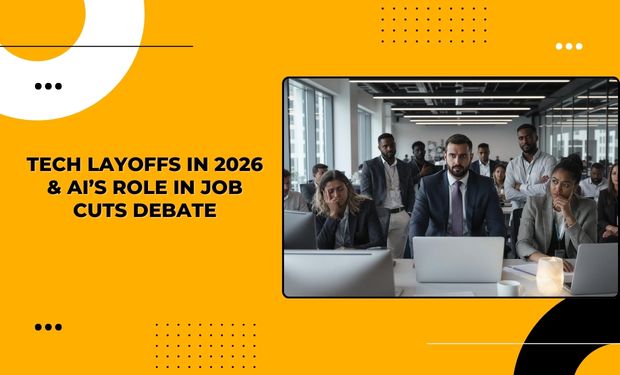
As Tech Layoffs Stretch Into 2026, Role of AI in Job Cuts Remains an Open Question
The tide of layoffs in the technology sector has continued well into 2026, with companies across the globe announcing significant workforce reductions. While economic shifts and market recalibrations play a part, the presence of artificial intelligence (AI) in discussions of workforce cuts has sparked intense debate. Some argue that AI is a key catalyst for job losses, while others maintain that broader structural changes, not automation alone, are driving these cuts. As workers, employers, and policymakers grapple with this reality, understanding the dynamics behind the layoffs and the influence of AI has become crucial — especially as the sector evolves in the new year.
A Growing Trend Through 2026
The trend of layoffs that dominated much of 2025 has not slowed as we enter 2026. Major technology companies, including industry giants, have already announced multiple rounds of job cuts, with some firms planning to cut tens of thousands of roles this year. For example, Amazon has been reported to be preparing for substantial layoffs as part of a broad workforce restructuring plan.
This trend comes at a moment when many tech firms are also investing heavily in AI technologies, leading to a complicated narrative. On one hand, layoffs continue; on the other, companies claim enhanced efficiency and innovation due to AI adoption — creating uncertainty about the true impact of automation on employment.
What Companies Are Saying
Executives at some of these tech firms have been keen to downplay the idea that AI is primarily responsible for job cuts. In cases like Amazon, leadership has emphasized operational strategy and structural realignment rather than cost-cutting through automation.
This messaging suggests that the publicly acknowledged role of AI in layoffs might not tell the full story. Instead, firms may be using the narrative of AI to frame workforce changes in a way that aligns with future growth plans, even as they shift resources into AI development and related areas.
Why AI Is a Focal Point in Layoff Discussions
AI has become a central talking point in debates about layoffs because of its dual role in both creating new opportunities and automating certain tasks. This paradox has made it one of the most contentious aspects of workforce planning in tech.
Supporters of AI highlight the potential for innovation and job creation in AI-driven fields. For example, at the World Economic Forum and similar global gatherings, tech leaders have underscored AI’s capacity to generate new roles even while acknowledging the displacement of certain jobs.
At the same time, surveys and labor market research show that a significant portion of workers — especially younger generations — are worried about AI’s impact on job security. These concerns reflect broader anxiety about how AI might reshape roles and reduce the need for human intervention in routine work.
The Spectrum of Layoff Causes
It’s important to recognize that layoffs in 2026 are not solely about AI. Economic pressures, shifts in consumer demand, restructuring after rapid pandemic-era hiring, and competitive strategy also play significant roles. Many companies are adjusting their business models to focus on long-term profitability and sustainable growth — which can mean trimming headcounts in areas no longer deemed core to future success.
For example, firms in traditional tech areas like sales, middle management, or legacy product divisions have seen reductions as organizations build more agile, AI-integrated teams. Industry analyses suggest that managers and intermediate layers may be particularly vulnerable to these changes.
The Complexity of AI’s Impact
The debate around AI and job cuts isn’t simply about machines replacing humans. In many cases, AI is enabling automation of specific tasks, but human roles evolve alongside these changes. Rather than wholesale replacement, AI often leads to the transformation of job functions or the creation of entirely new roles that require unique human-AI collaboration skills.
For instance, while automation can streamline repetitive tasks, roles involving creativity, strategic thinking, and complex problem-solving are less likely to be displaced. The result is not always a reduction in employment but a shift in the types of skills that are in demand. This nuance is crucial in understanding how AI relates to layoffs and the labor market moving into 2026.
Stories from the Front Lines
Real-world stories from both individuals and companies highlight the multifaceted effects of tech layoffs. Workers across regions have reported increased pressure to master AI tools and adapt to changing expectations in their roles. Some tech professionals have had to take on new responsibilities that integrate AI as part of everyday work, while others have transitioned entirely into AI-focused positions.
At the same time, certain AI-related layoffs have been directly attributed to automation of tasks previously performed by humans. This is often cited in areas like human resources or administrative work, where AI tools can handle repetitive functions more efficiently.
The Broader Economic Context
The tech sector does not operate in a vacuum. Broader economic conditions — including global economic slowdown, geopolitical tensions, inflation, and shifts in investment priorities — also influence decisions around workforce reductions. Firms might adjust their strategic priorities in response to these pressures, which can result in layoffs regardless of AI integration.
In addition, as companies continue to invest in AI infrastructure, the short-term impact on headcount can appear negative even as long-term job creation in AI-related areas begins to unfold. Analysts note that while some jobs are displaced, others emerge in areas like AI model development, data science, and machine learning operations — roles that didn’t exist at scale a decade ago.
Navigating the Future of Tech Work
As the tech industry continues to navigate a landscape shaped by innovation, competition, and economic realities, the role of AI in layoffs remains a complex and often ambiguous topic. What is clear is that workforce restructuring in 2026 is influenced by a web of factors — from automation and AI integration to strategic realignment and market adaptation.
For workers and job seekers, understanding these dynamics will be key to staying relevant and resilient. Skills in AI collaboration, digital literacy, and interdisciplinary problem-solving are increasingly valuable in a world where technology evolves rapidly.
Navigating Readers and Users to Infoproweekly For deeper insights into technology trends, employment changes, and the evolving role of AI, visit Infoproweekly — your source for expert analysis and up-to-date coverage on the latest developments shaping the future of work.