Spotify CEO: AI Now Writes and Deploys Code, Engineers Only Review
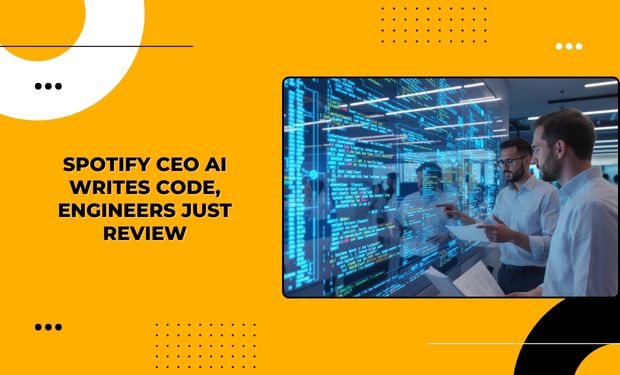
The software engineering landscape has seen one of its most talked-about developments yet. According to Spotify CEO Gustav Söderström, the global music streaming giant’s engineers haven’t written a single line of code since December, and instead are now working with AI systems that generate and deploy code automatically — with human developers acting as reviewers. This bold shift highlights how AI continues transforming tech workflows, from development velocity to developer roles themselves.
How AI Took Over Coding at Spotify
Spotify’s internal AI system, named Honk, lies at the heart of this transformation. Built on generative models like Anthropic’s Claude Code, Honk is designed to not just write code, but also fix bugs, implement new features and even handle deployment processes. During Spotify’s fourth-quarter earnings call, CEO Gustav Söderström revealed that developers can simply instruct Honk via Slack for almost all software changes, rather than manually crafting lines of code.
For example, an engineer can, while commuting, ask the AI to fix a bug or add a feature to the company’s iOS app — and by the time they arrive at work, Honk has already completed the task and prepared the update for review and merge. This level of automation marks a dramatic evolution in developer tooling and showcases how tightly AI is being woven into Spotify’s engineering fabric.
Vibe Coding and the New Workflow
This phenomenon at Spotify reflects a broader trend in the tech world often described as vibe coding — a workflow where developers essentially prompt AI to generate and iterate on code, rather than writing the code themselves. The human role transitions from typing code to idea-shaping, quality review and architectural decision-making. While traditional coding is no longer the daily grind for Spotify’s top engineers, their expertise remains crucial in steering the AI’s output and ensuring software quality.
In this new model, engineers function more like editors, reviewing AI-generated code, making judgment calls about what is correct, and guiding AI toward strategic objectives. This means the emphasis of engineering shifts from implementation to interpretation and oversight.
The Role of Honk and Generative AI
At the core of this transformation is Honk’s ability to translate natural language instructions into executable code. Because it’s integrated with tools like Slack, engineers at Spotify don’t need to open an IDE to initiate tasks. Instead, Honk’s AI engine executes commands, creates pull requests, resolves bugs, and even manages deployments with minimal human intervention. This seamless integration between communication platforms and AI accelerates the entire development pipeline.
Spotify claims that this automation has significantly increased productivity. In 2025 alone, the company shipped more than 50 new app features — including AI-powered Prompted Playlists, Page Match for audiobooks, and About This Song, all backed by AI tools. This rapid rollout underscores the dramatic boost in release velocity afforded by AI.
Why Engineers Still Matter
Despite the media’s portrayal of AI “taking over” coding, Spotify insists that human engineers remain essential. AI is automating routine and repetitive coding tasks, but critical thinking, architectural guidance, debugging strategy, and product design are still driven by humans. Engineers now spend their time constructing high-level specifications for Honk, performing code reviews, and solving complex problems that require human nuance and deep domain knowledge.
This shift does not eliminate human involvement. Rather, it redefines the role of developers as supervisors and strategic thinkers rather than typists of code. In essence, engineers are now responsible for overseeing AI output, ensuring quality, and scaling systems, not writing each individual line of code themselves.
Industry Implications and Broader Trends
Spotify’s AI-driven approach to coding is a bellwether for the broader tech industry. Many companies are experimenting with generative AI tools and workflows that empower engineers to be more productive while minimizing repetitive tasks. Generative models are rapidly gaining the ability to understand complex technical instructions and produce production-ready code — a trend that is reshaping how technical teams operate.
However, this change also raises questions about job roles, developer skills, and the future of software engineering as a profession:
- Will coding as a core skill remain essential?
- How will teams adapt to manage AI reliably?
- What new metrics will define developer productivity?
These questions are already at the forefront of discussions across the tech world and hint at a future where humans and AI collaborate more closely than ever before.
What This Means for the Future of Work
The shift at Spotify suggests that AI isn’t just an assistant — it’s becoming a central partner in software creation. Developers will likely shift from writing code manually to roles involving AI orchestration, system design, and strategic review. This evolution could redefine engineering careers and create new forms of collaboration between humans and machines.
Many analysts see this as a step toward more autonomous AI systems in development environments, where AI handles the heavy lifting and humans focus on direction and quality. These changes could dramatically compress development timelines and enhance innovation, but they also highlight the importance of human judgment in ensuring AI systems behave as intended.
If you want to stay updated on technology trends like AI in software development and more, visit Infoproweekly — your go-to resource for the latest insights and expert analysis.