
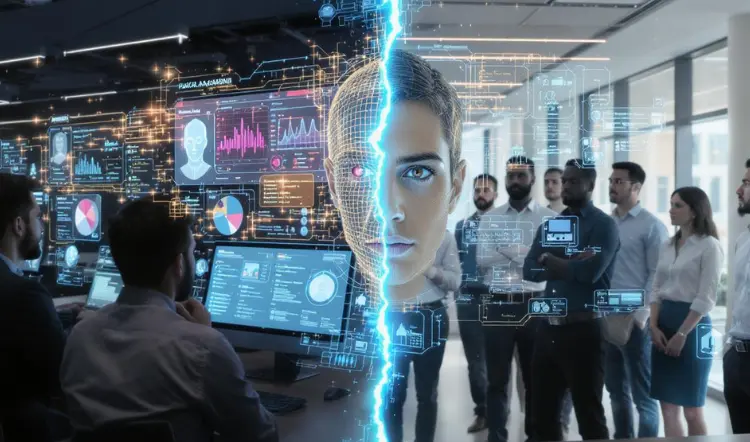
The rapid rise of artificial intelligence in recruitment is reshaping how companies hire and how candidates experience the job search. As businesses scale automation to filter resumes assess skills and predict candidate success, a noticeable divide is emerging. The AI hiring surge widens trust gap between employers and jobseekers, creating a complex environment where efficiency improves yet confidence declines.
Across industries, recruiters are embracing AI driven tools to manage large applicant pools and speed up hiring cycles. At the same time, candidates are becoming increasingly aware of how algorithms influence their chances. This shift is not just a technological change. It reflects broader HR trends and insights that highlight the tension between innovation and transparency in the hiring process.
Growing Dependence on AI in Recruitment
Organizations are leaning heavily on automation to streamline recruitment workflows. From resume screening to video interview analysis, AI tools promise faster decisions and reduced bias. This transformation aligns closely with current technology insights, where data driven decision making is becoming central to business operations.
However, the reliance on algorithms raises important questions. Jobseekers often feel disconnected from the process, unsure of how decisions are made or what factors influence outcomes. As the AI hiring surge widens trust gap between employers and jobseekers, companies must rethink how they communicate the role of technology in hiring.
Transparency Challenges in the Hiring Process
One of the key concerns driving the trust gap is the lack of clarity around AI systems. Candidates rarely understand how their profiles are evaluated or why they are rejected. This uncertainty fuels skepticism and reduces engagement.
Employers, on the other hand, view AI as a tool to enhance objectivity. Yet without clear communication, even well intentioned systems can appear opaque. Within IT industry news, discussions around ethical AI and explainable algorithms are gaining traction, signaling a need for better alignment between innovation and user trust.
Impact on Candidate Experience and Employer Brand
A poor candidate experience can have long term consequences for employer branding. When applicants feel they are being judged by an impersonal system, their perception of the company shifts. The AI hiring surge widens trust gap between employers and jobseekers, making it harder for organizations to attract top talent.
At the same time, businesses are under pressure to maintain efficiency. Balancing speed with personalization is becoming a critical challenge. Insights from marketing trends analysis suggest that authenticity and communication are key to building trust, even in automated environments.
Bias Concerns and Fairness Debate
While AI is often promoted as a solution to human bias, it is not immune to flaws. Algorithms trained on historical data can replicate existing inequalities if not carefully managed. This issue is frequently highlighted in HR trends and insights, where fairness in hiring remains a top priority.
Candidates are increasingly questioning whether AI systems are truly unbiased. As the AI hiring surge widens trust gap between employers and jobseekers, addressing these concerns is essential. Companies must invest in regular audits and ensure their systems are designed with inclusivity in mind.
Business Implications Across Industries
The effects of AI driven hiring extend beyond HR. In finance industry updates, firms are using predictive analytics to identify high performing candidates, linking hiring decisions directly to business outcomes. Similarly, in sales strategies and research, organizations are leveraging AI to recruit talent with specific performance indicators.
This integration highlights the strategic importance of recruitment technology. However, it also reinforces the need for trust. When candidates doubt the fairness of the process, it can impact overall talent acquisition and retention.
Bridging the Gap Through Better Communication
To address the growing divide, companies must prioritize transparency. Clear explanations of how AI tools are used can help demystify the process. Providing feedback to candidates, even in automated systems, can significantly improve trust.
Employers should also combine AI with human judgment. A hybrid approach ensures that technology enhances rather than replaces human interaction. As the AI hiring surge widens trust gap between employers and jobseekers, this balance becomes critical for sustainable hiring practices.
The Role of Regulation and Ethical Standards
Governments and industry bodies are beginning to introduce guidelines for AI use in recruitment. These frameworks aim to ensure fairness accountability and data privacy. Keeping up with IT industry news reveals a growing emphasis on ethical AI adoption.
Organizations that proactively align with these standards are likely to gain a competitive advantage. Trust is becoming a key differentiator in the hiring landscape, influencing both candidate perception and business success.
Actionable Insights for Employers and Jobseekers
Employers should focus on building transparent hiring processes that clearly explain the role of AI. Regular audits of algorithms and open communication with candidates can reduce uncertainty and build confidence. Integrating human oversight into automated systems can also improve decision quality and fairness.
Jobseekers can adapt by optimizing their profiles for AI screening while also seeking clarity during the hiring process. Understanding how these systems work and asking informed questions can improve outcomes and reduce frustration. Staying updated with technology insights and HR trends and insights can help candidates navigate this evolving landscape more effectively.
Connect with InfoProWeekly to explore deeper perspectives on evolving workplace dynamics and technology driven change.