
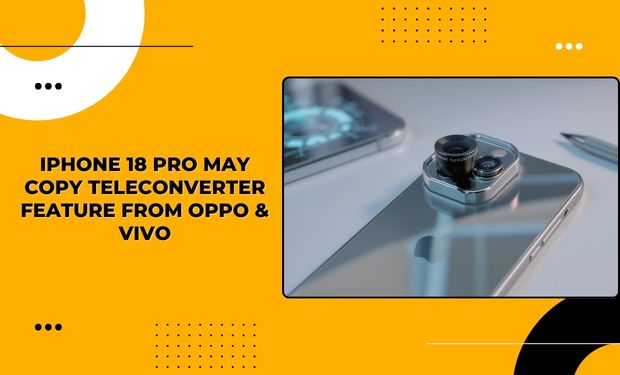
iPhone 18 Pro to Copy the Teleconverter Feature on Oppo and Vivo Phones
Apple’s next-generation iPhone 18 series may be set to adopt a popular camera capability already familiar to Android users — the teleconverter style zoom — marking a possible shift in how Apple approaches smartphone photography. Rumors suggest the iPhone 18 Pro could include support for a teleconverter-style optical zoom system similar to what OPPO and vivo have integrated into their flagship devices, expanding the photographic potential and pushing Apple closer to photo-centric smartphone competition in 2026.
What Is the Teleconverter Feature and Why It Matters
In traditional photography, a teleconverter is an optical accessory that increases the effective focal length of a camera lens, allowing users to zoom closer to distant subjects without sacrificing significant image quality. Typically, teleconverters are added between a camera body and lens in professional systems such as DSLR and mirrorless setups. In the smartphone world, brands like OPPO and vivo have adapted this idea by offering attachable teleconverter lenses or integrated teleconverter systems that enhance the existing telephoto lens performance, giving users stronger optical zoom without resorting solely to digital enhancement.
For the iPhone 18, incorporating a similar teleconverter system could signify Apple’s intent to offer users more advanced optical zoom capabilities and compete directly with Android rivals in mobile photography.
How OPPO and vivo Pioneered Teleconverter-Style Zoom
Over the past few years, OPPO and vivo have led the smartphone camera zoom evolution with teleconverter-style optics. For instance, OPPO’s flagship models have featured Hasselblad-branded teleconverter attachments that boost optical zoom from standard periscope lenses to more powerful focal lengths — in some cases reaching up to 10x optical zoom without losing detail. Meanwhile, vivo’s X series devices, including the X200 Ultra and X300 Ultra, also introduced Zeiss-branded teleconverter accessories that extend telephoto reach significantly beyond traditional phone lenses.
These innovations highlight how Android manufacturers have experimented with modular and attachable solutions to push the boundaries of smartphone photography. Instead of relying purely on computational tricks or digital zoom, teleconverter solutions give tangible gains in real-world optical reach — a boon for wildlife shots, sports photography, and distant subjects where clarity matters.
Why the iPhone 18 May Adopt This Feature
According to recent leaks from the supply chain and industry insiders, Apple is reportedly evaluating a teleconverter-style feature alongside the iPhone 18 Pro’s existing telephoto hardware. Although this teleconverter capability is still “under evaluation,” it reflects Apple’s awareness of trends set by OPPO, vivo, and other Android competitors.
Historically, Apple has not rushed to adopt features simply because they exist elsewhere. Instead, the company usually waits until it believes it can refine and integrate them in a way that enhances the user experience. If Apple does choose to bring a teleconverter-style system to the iPhone 18, it could leverage its deep optimization between hardware and software to offer photographers a camera system that feels more cohesive and intuitive.
The Teleconverter’s Role With Variable Aperture and Zoom
In addition to the teleconverter rumors, the iPhone 18 Pro is also expected to include other camera upgrades, such as a variable aperture system — a mechanism that allows the lens opening to change dynamically based on lighting conditions and scene requirements. Unlike fixed apertures, a variable aperture can help balance exposure and depth-of-field control, benefiting both stills and video capture.
Pairing a teleconverter-style zoom enhancement with variable aperture could give the iPhone 18 series unprecedented flexibility in photography. Users may gain improved optical reach for distant subjects while maintaining better control over lighting and exposure — a combination that could challenge existing limitations in smartphone imaging.
Potential Implementation and Challenges
While rumors about the iPhone 18 adopting teleconverter tech are compelling, they also raise questions about how Apple will implement this feature. Unlike Android phones that offer detachable teleconverter accessories, Apple might integrate the teleconverter system internally or provide it as a modular add-on designed specifically for iPhone optics. Either approach will require careful engineering, given Apple’s focus on sleek device design and reliability.
One technical consideration is how Apple would balance the teleconverter’s optical benefits with potential light loss. Traditional teleconverters can reduce the amount of light reaching the sensor, which might affect night performance and low-light photography unless compensated by sensor and software improvements. Apple’s approach to this trade-off will be critical in determining the real-world performance advantages of such a system.
Additionally, Apple strives for seamless user experience. Integrating a teleconverter capability — whether through hardware or accessory — will require ensuring that consumers find it easy to use and that it works reliably across various shooting scenarios. Apple’s history of software-driven photography enhancements could help smooth out potential usability challenges, giving the iPhone 18 a competitive edge.
What This Means for Mobile Photography
If the iPhone 18 series adopts a teleconverter-style feature inspired by OPPO and vivo phones, it could reshape expectations around smartphone camera versatility. Historically, Apple’s iPhones have been leaders in computational photography, with features like Smart HDR, Night Mode, and cinematic video. Adding enhanced optical zoom capabilities would strengthen the camera suite by giving users more creative control over distant shots without relying solely on digital zoom enhancements.
This shift also signifies how competitive the smartphone market has become, with manufacturers borrowing and building upon each other’s innovations to meet ever-higher consumer expectations. For photographers who value portability without compromise, the emergence of teleconverter technology on the iPhone 18 could offer a bridge between smartphone convenience and more advanced optical performance.
Consumer Expectations and Anticipation
Consumers are buzzing with anticipation about what the iPhone 18 Pro might offer. On forums and social media, users often speculate not only about enhanced zoom capabilities but also about how Apple will differentiate its implementation from the competition. Some express excitement at the idea of Apple refining teleconverter technology to make it more user-friendly, while others wonder if it will arrive as an optional accessory rather than a built-in feature.
Enthusiasts also expect Apple to integrate smart software enhancements that make teleconverter use more intuitive — for example, automatic switching between optical and digital zoom depending on scene requirements, or enhanced computational processing to preserve image quality at extended focal lengths. This blending of hardware and software is where Apple has often set itself apart, and it could prove decisive in how widely adopted the teleconverter feature becomes.
iPhone 18’s Competitive Position in 2026
With Android competitors pushing boundaries in camera hardware — including teleconverter lenses and advanced sensors — Apple’s potential adoption of this feature on the iPhone 18 series highlights how fast smartphone photography continues to evolve. If Apple integrates teleconverter-style zoom along with variable aperture and other imaging upgrades, the iPhone 18 could solidify its reputation as a top choice for mobile photographers in 2026, offering a blend of computational intelligence and expanded optical capability.
This move would also reflect Apple’s willingness to assimilate successful innovations from other ecosystems and refine them in a way that aligns with its design principles, emphasizing performance, quality, and seamless user experience.
Navigating Readers and Users to Infoproweekly
For more tech insights, upcoming smartphone trends, and expert reviews from the world of mobile innovation, visit Infoproweekly — your go-to source for cutting-edge technology coverage.