
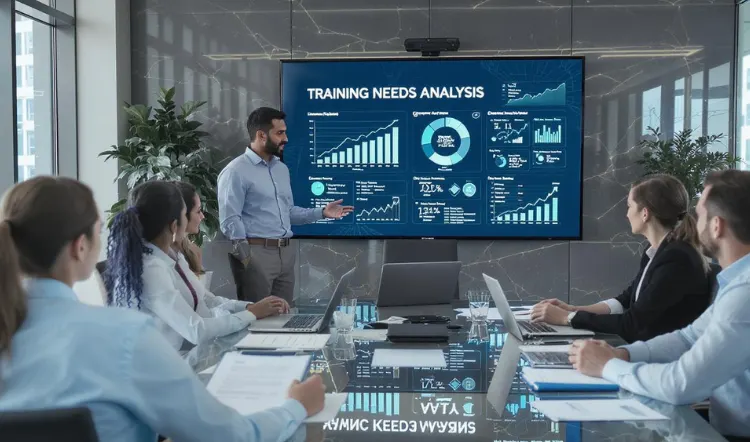
Organizations invest heavily in employee development, yet many training programs fail to deliver meaningful results. In many cases, the issue is not the training itself but the lack of proper planning beforehand. This is where training needs analysis becomes essential. It helps businesses identify skill gaps, align learning initiatives with organizational goals, and ensure that resources are used effectively.
As workplace expectations continue to evolve, companies are placing greater emphasis on data driven learning strategies. Consequently, training needs analysis has become a valuable tool for organizations seeking stronger performance, higher productivity, and improved employee engagement.
Understanding Training Needs Analysis
Training needs analysis is a structured process used to determine whether employees require additional knowledge, skills, or competencies to perform their roles effectively. Rather than making assumptions, organizations gather information to identify specific areas where improvement is needed.
In addition, this process helps leaders understand the difference between performance issues caused by a lack of skills and those resulting from other workplace factors. As a result, training efforts become more targeted and impactful.
Why Organizations Need a Clear Assessment Process
Businesses operate in increasingly competitive environments. Therefore, employee development must support both individual growth and organizational objectives. A well executed assessment process ensures that learning investments address genuine business challenges.
Furthermore, organizations can improve workforce readiness, strengthen leadership pipelines, and adapt more effectively to industry changes. This is particularly important as companies navigate evolving HR trends and insights that influence talent management and workforce development.
At the same time, many businesses rely on Technology insights to understand emerging tools and digital capabilities that employees must master to remain productive.
Common Types of Training Needs Analysis
Organizations typically evaluate learning requirements at several levels. First, they examine company wide objectives and strategic priorities. Next, they assess departmental performance and operational requirements. Finally, they review individual employee competencies and development needs.
This layered approach creates a comprehensive understanding of workforce capabilities. Consequently, training programs become more relevant and measurable.
Practical Examples in the Workplace
A customer service department may notice declining satisfaction scores despite strong product knowledge among employees. Through assessment, managers discover that communication and conflict resolution skills require improvement. In this case, targeted soft skills training becomes the solution.
Similarly, a technology company introducing new software systems may identify gaps in digital proficiency. Employees receive specialized instruction that enables smoother adoption and increased efficiency.
Another example involves sales teams struggling to achieve revenue targets. After evaluating performance data, organizations may uncover weaknesses in negotiation techniques and customer engagement practices. Training can then support stronger Sales strategies and research that directly contribute to business growth.
Likewise, marketing departments frequently use skill assessments to identify knowledge gaps related to data analytics, consumer behavior, and Marketing trends analysis.
A Step by Step Guide to Conducting the Process
The first stage involves identifying business goals. Organizations should clearly define what they want employees to achieve and how learning can support those objectives.
Next, information must be collected through surveys, interviews, performance reviews, and workplace observations. This stage provides valuable insights into current competency levels.
Afterward, the collected data should be analyzed to identify gaps between existing skills and desired performance standards. Once these gaps are identified, priorities can be established based on business impact.
Finally, learning solutions can be designed and implemented. Equally important, organizations should measure outcomes to determine whether performance improvements have been achieved.
Free Templates That Simplify the Process
Templates can make workforce assessments more efficient and consistent. Many organizations use employee skills assessment forms to evaluate current competencies. Others rely on manager feedback templates that capture observations about performance challenges and development opportunities.
Gap analysis worksheets are also widely used because they help compare existing capabilities against desired outcomes. In addition, training request forms provide employees with a structured way to communicate learning needs.
When used together, these resources create a streamlined framework for identifying priorities and planning effective development initiatives.
The Growing Importance Across Industries
Modern organizations recognize that employee learning is closely connected to business success. Consequently, assessment driven training strategies are gaining attention across multiple sectors.
For example, companies following IT industry news often encounter rapid technological changes that require continuous workforce upskilling. Similarly, businesses monitoring Finance industry updates must ensure employees remain informed about regulations, compliance requirements, and market developments.
Because industries evolve quickly, organizations that proactively evaluate workforce capabilities are often better positioned for long term success.
Measuring Success After Training
Completing a training program is only one part of the journey. Organizations must also evaluate whether employees are applying newly acquired skills in their daily work.
Performance metrics, productivity improvements, customer satisfaction scores, and employee feedback can all provide valuable indicators of success. Moreover, ongoing evaluation helps leaders refine future learning initiatives and maximize return on investment.
Valuable Insights for Better Results
The most successful organizations view workforce development as a continuous process rather than a one time event. Therefore, assessments should be conducted regularly to ensure employee capabilities remain aligned with business objectives.
Additionally, combining performance data with employee feedback often reveals opportunities that might otherwise be overlooked. As workplace demands continue to change, organizations that prioritize strategic learning are more likely to attract talent, improve retention, and strengthen overall performance.
Stay informed with expert analysis, emerging business developments, and practical workforce strategies from InfoProWeekly. Reach out today to discover valuable insights that can help your organization grow with confidence and clarity.