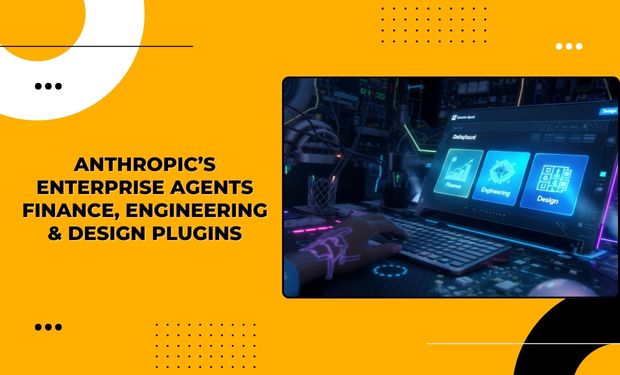
Anthropic Launches New Push for Enterprise Agents with Plugins for Finance, Engineering, and Design
Artificial intelligence is undergoing a transformative shift, and one of the biggest developments this year comes from Anthropic, the AI research lab focused on safe and scalable models. Anthropic has just announced a bold expansion of its enterprise agents offering, rolling out a suite of specialized plugins designed for finance, engineering, and design teams. This strategic initiative aims to make AI agents more practical for daily business operations and unlock a new era of productivity across corporate functions.
At its core, Anthropic’s new enterprise agents program builds on Claude — the company’s powerful large language model — and extends its capabilities with plugins that embed deep domain knowledge into customizable AI agents. These agents aren’t just conversational models anymore; they’re highly focused assistants capable of driving real workflows in specialized fields like financial modeling, engineering specifications, and design collaboration.
In this comprehensive blog post, we’ll explore why this enterprise agent launch matters, how the new plugins are structured, their potential impact on various business teams, and what this means for the future of AI in the enterprise.
Why Anthropic Is Betting Big on Enterprise Agents
For years, enterprises have experimented with AI-powered tools designed to assist with specific tasks — from customer support bots to code assistants — yet these tools often fell short of transforming business workflows at scale. Anthropic’s latest push marks a significant evolution: instead of treating AI as a feature or add-on, the company is positioning AI agents as integrated collaborators that can function within existing enterprise systems.
According to insiders, Anthropic’s enterprise agent initiative is a response to widespread demand for practical, reliable AI solutions that do more than answer questions. Today’s announcement aims to make AI agents context-aware, workflow-oriented, and deeply embedded into business technology stacks. For example, instead of simply generating text, an agent can now analyze financial data across apps like Excel and build comprehensive presentations in PowerPoint without losing context.
The emergence of plugins focused on finance, engineering, and design signals a shift toward vertical specialization — a trend many analysts believe is key to long-term AI adoption in organizations where general-purpose AI tools often struggle to deliver significant ROI.
How Plugins Elevate Enterprise AI Capabilities
Plugins in Anthropic’s ecosystem are more than just extensions; they act as domain-specific skill sets that define and constrain an AI agent’s behavior in specialized contexts. These plugins provide Claude with predefined workflows, access to structured data sources, and best-practice logic that help the model perform complex business tasks accurately and efficiently.
Here’s how plugins enhance AI capabilities across major enterprise domains:
🔹 Finance Plugins — Smarter Financial Research & Insights
Financial teams often juggle multiple data sources and software systems — from market feeds to internal models. Anthropic’s finance plugins bridge these silos by allowing AI agents to:
- Access real-time financial data from platforms like FactSet and MSCI.
- Perform end-to-end analysis, from building models in Excel to creating presentation slides.
- Conduct structured research for investment banking, equity research, and wealth management.
These finance plugins give agents the ability to carry context across applications, meaning work done in one tool (like Excel) continues to be relevant when generating a PowerPoint deck or crafting a narrative summary.
For financial analysts and portfolio managers, this translates into faster execution cycles and fewer manual handoffs — improving both speed and accuracy in decision-making.
🔹 Engineering Plugins — Design Specification & Development Workflows
Engineering teams are no strangers to complexity. Writing specifications, reviewing architecture documents, and debugging workflows can be time-intensive. With Anthropic’s engineering-focused plugins, AI agents can now:
- Understand technical requirements and provide tailored engineering summaries.
- Assist with code scaffolding and documentation tasks.
- Streamline collaboration across cross-functional engineering teams.
Instead of treating AI as a simple coding assistant, Anthropic’s framework enables models to act as knowledgeable technical partners, capable of integrating structured engineering rules and context into their guidance.
This shift can significantly reduce task friction in areas where precise domain knowledge and technical accuracy are crucial.
🔹 Design Plugins — Better Creative Collaboration and UX Workflows
Design involves an interplay of creativity, structure, and iterative feedback. Anthropic’s design plugins help AI agents:
- Generate UX/UI insights based on design norms.
- Interpret user feedback data to suggest improvements.
- Help prepare structured design briefs or deliverables tailored to product requirements.
Design teams benefit from agents that understand not only human language but design intent, visual logic, and usability patterns. These plugins enable faster ideation and help designers move more fluidly from concept to prototype.
Enterprise Control: Private Plugin Marketplaces and Admin Tools
One of the standout features of Anthropic’s enterprise agents is customization at scale. Businesses aren’t limited to public-facing plugins — they can create private plugin marketplaces within their organizations. Admins can control deployment, security, and governance, ensuring that agents operate within the company’s compliance framework.
This is especially critical in fields like finance and engineering, where data privacy, regulatory compliance, and internal standards are non-negotiable. With admin controls, enterprises gain:
- Role-based access and security policies.
- Custom skill definitions for internal workflows.
- Plugin versioning and lifecycle management.
By offering granular control, Anthropic is addressing enterprise hesitance around AI adoption and building trust in agentic workflows.
The Broader Impact on Enterprise AI Adoption
Anthropic’s expansion of enterprise agents comes at a time of intense competition in AI for business applications. Rivals such as OpenAI and Microsoft are also pursuing enterprise-grade offerings, aiming to embed AI into core workflows. Anthropic’s strategy stands out because it emphasizes flexibility, deep domain integration, and workflow continuity across business systems.
The implications are far-reaching:
- Increased operational efficiency as AI agents handle multi-step tasks more effectively.
- Reduced context-switching for professionals across departments.
- Enhanced decision-making with integrated analytics, insights, and execution capabilities.
If enterprises embrace these capabilities, we could see a new generation of AI workflows where models aren’t just tools but active collaborators in complex business operations.
Ready to Explore the Future of Enterprise AI?
If you’re excited about Anthropic’s enterprise agents and want to stay updated on AI innovation, business transformation, and next-gen technology trends, visit Infoproweekly — your go-to destination for cutting-edge insights and expert analysis.