The rapid advancement of artificial intelligence is redefining how organizations manage people, processes, and performance. In the HR domain, AI Integration is no longer a future concept but a present-day necessity. Companies across industries are adopting intelligent systems to improve hiring accuracy, enhance employee experience, and support data-driven decision-making. As HR evolves from administrative support to strategic leadership, AI Integration plays a central role in shaping modern workforce management.
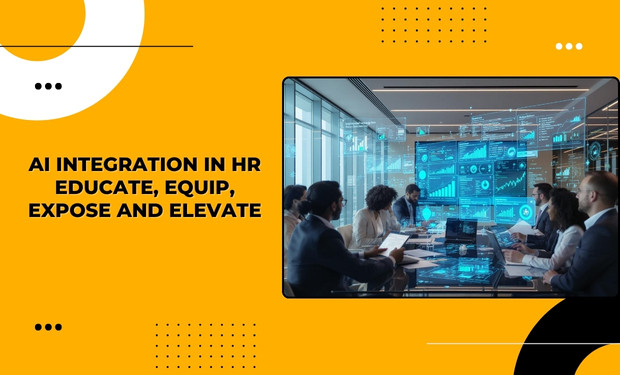
AI Integration in HR is not about replacing human judgment but augmenting it. When applied responsibly, it enables HR professionals to focus on strategic initiatives while automating repetitive tasks. To unlock its full potential, organizations must follow a structured approach built on four pillars: Educate, Equip, Expose, and Elevate.
Understanding AI Integration in HR
AI Integration in HR refers to embedding artificial intelligence technologies into HR processes such as recruitment, onboarding, performance management, learning, and workforce planning. These technologies include machine learning, natural language processing, predictive analytics, and automation tools.
Unlike traditional HR software, AI-driven systems learn from data and improve over time. AI Integration allows HR teams to analyze large datasets, identify patterns, and generate insights that were previously difficult to obtain. This shift empowers HR to act proactively rather than reactively.
Key areas influenced by AI Integration include talent acquisition, employee engagement, retention analysis, skills mapping, and compliance monitoring. As organizations grow more complex, AI Integration helps HR maintain efficiency and accuracy at scale.
Educate: Building AI Awareness and Literacy in HR
The first step toward successful AI Integration is education. HR professionals must understand what AI can and cannot do. Without foundational knowledge, organizations risk misusing tools or resisting adoption altogether.
Educating HR teams involves developing AI literacy across all levels. This includes understanding basic AI concepts, ethical considerations, data privacy, and bias mitigation. AI Integration is most effective when HR leaders can critically evaluate AI outputs rather than blindly relying on them.
Training programs, workshops, and continuous learning initiatives help HR teams build confidence in using AI-powered tools. Education also extends to employees, ensuring transparency around how AI Integration affects hiring, evaluations, and career development.
By prioritizing education, organizations create a culture that embraces AI Integration as a support system rather than a threat.
Equip: Providing the Right Tools and Infrastructure
Once HR teams are educated, the next step is equipping them with the right technology. AI Integration requires robust digital infrastructure, quality data, and reliable platforms that align with organizational goals.
HR technology stacks now include AI-powered applicant tracking systems, chatbots for employee queries, predictive analytics platforms, and personalized learning systems. Effective AI Integration depends on selecting tools that integrate seamlessly with existing HR systems.
Equipping HR also means ensuring data readiness. Clean, unbiased, and well-structured data is essential for AI Integration to deliver accurate insights. Organizations must invest in data governance, security, and compliance to support AI-driven HR processes.
When HR teams are properly equipped, AI Integration enhances productivity, reduces manual workload, and improves the overall employee experience.
Expose: Creating Transparency and Ethical AI Practices
Exposure is a critical yet often overlooked aspect of AI Integration. Employees and stakeholders must understand how AI is used within HR processes. Transparency builds trust and reduces resistance to change.
AI Integration in HR raises ethical questions related to bias, fairness, and data usage. Exposing AI decision-making processes helps organizations identify and address potential risks. Clear communication about how algorithms influence recruitment, promotions, or performance reviews is essential.
Organizations should establish ethical AI guidelines as part of their AI Integration strategy. Regular audits, bias testing, and human oversight ensure that AI supports inclusive and fair HR practices.
By exposing AI processes and outcomes, HR reinforces accountability and strengthens employee confidence in AI Integration.
Elevate: Transforming HR into a Strategic Function
The ultimate goal of AI Integration is to elevate HR’s role within the organization. When routine tasks are automated, HR professionals can focus on strategic priorities such as leadership development, workforce planning, and organizational culture.
AI Integration enables predictive insights that help HR anticipate talent shortages, identify high-potential employees, and design targeted development programs. These capabilities elevate HR from operational execution to strategic partnership.
Elevated HR functions use AI Integration to align people strategies with business objectives. Data-driven insights support better decision-making and demonstrate HR’s value to executive leadership.
By leveraging AI Integration effectively, HR becomes a catalyst for innovation, agility, and long-term growth.
Key Applications of AI Integration in HR
AI Integration has transformed several core HR functions. In recruitment, AI-driven tools screen resumes, match candidates to roles, and improve hiring speed and accuracy. This reduces bias and enhances candidate experience when used responsibly.
In learning and development, AI Integration enables personalized training paths based on skills, performance, and career goals. Employees receive relevant content at the right time, improving engagement and retention.
Performance management also benefits from AI Integration through continuous feedback systems and predictive analytics. These tools provide real-time insights into employee performance and engagement trends.
Workforce planning is another area where AI Integration delivers value. Predictive models help HR forecast future workforce needs and align talent strategies with business growth.
Challenges and Considerations in AI Integration
Despite its benefits, AI Integration in HR comes with challenges. Data privacy regulations, ethical concerns, and change management are key considerations. HR leaders must ensure that AI Integration complies with legal requirements and respects employee rights.
Another challenge is over-reliance on technology. AI Integration should support human decision-making, not replace it. Maintaining a balance between automation and human judgment is essential for sustainable HR practices.
Change management is critical for successful AI Integration. Employees and HR professionals must be supported through training, communication, and leadership engagement to ensure smooth adoption.
Measuring the Impact of AI Integration in HR
To maximize value, organizations must measure the effectiveness of AI Integration. Key metrics include hiring quality, time-to-hire, employee engagement scores, retention rates, and learning outcomes.
Continuous evaluation helps HR refine AI Integration strategies and address gaps. Feedback from employees also plays a vital role in improving AI-driven HR initiatives.
By tracking outcomes, HR demonstrates the tangible impact of AI Integration on organizational performance.
The Evolving Role of HR in an AI-Driven Workplace
As AI Integration becomes more advanced, HR’s role continues to evolve. HR professionals must develop analytical skills, ethical awareness, and strategic thinking to lead in an AI-driven environment.
The future of HR lies in collaboration between humans and intelligent systems. AI Integration enhances efficiency and insight, while human empathy, creativity, and leadership remain irreplaceable.
Organizations that approach AI Integration thoughtfully will build resilient, inclusive, and future-ready workforces.
Explore expert insights, emerging technologies, and practical strategies at Infoproweekly and stay ahead in the evolving world of AI Integration and modern HR.