

AI Is Changing the Skills Employers Need
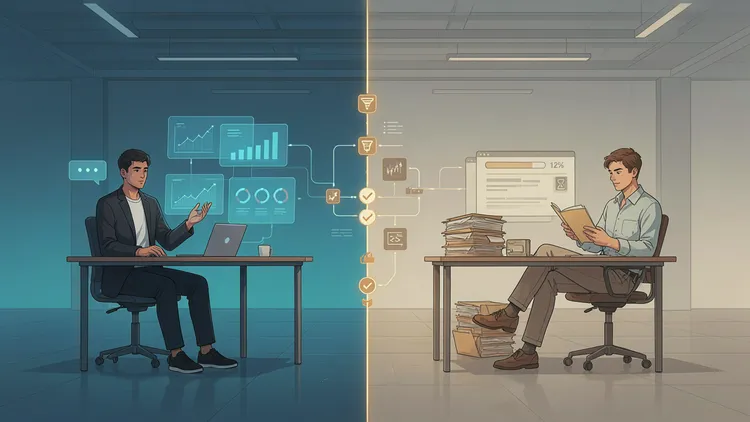
Artificial intelligence is changing how businesses work, hire and develop employees. Tasks that once required hours of manual effort can now be completed faster with AI tools. At the same time, new responsibilities are appearing across technology, finance, marketing, sales and human resources.
The change is not simply about replacing existing tasks. Instead, companies are redesigning jobs around collaboration between people and intelligent software. As a result, employers need to think differently about skills, training and career development.
The World Economic Forum expects major changes in workplace skills through 2030, with technology related skills growing alongside creative thinking, resilience and other human capabilities.
Digital Skills Are Becoming Essential
Basic digital knowledge is no longer enough for many modern roles. Employees increasingly need to understand AI tools, data, automation and digital workflows.
For example, a marketing employee may use AI to study customer behavior and create campaign ideas. A finance professional can use intelligent software to identify patterns in financial data. Similarly, a developer can use AI coding assistants to review code and speed up routine development work.
Therefore, digital skills are becoming part of many jobs rather than remaining limited to technology teams.
This shift is also visible in Technology insights and IT industry news, where AI adoption is creating demand for employees who can work comfortably with modern software systems.
Human Skills Still Matter
AI can process large amounts of information quickly. However, it cannot remove the need for human judgment.
Communication, creativity, critical thinking, leadership and problem solving remain important. In many situations, employees must decide whether an AI generated answer is accurate, useful or appropriate.
Moreover, people still need to communicate decisions to customers, colleagues and business leaders. They must understand context and handle situations where there is no simple answer.
Consequently, employers are increasingly looking for a combination of technical knowledge and human skills rather than focusing on technology alone.
AI Literacy Is Becoming a Workplace Skill
AI literacy means understanding what AI can do, where it can fail and how to use it responsibly. Employees do not necessarily need to become AI engineers. However, they should understand how to work with AI tools effectively.
For instance, an employee using an AI assistant should know how to provide clear instructions, check the output and protect confidential information. These basic abilities can improve productivity while reducing avoidable mistakes.
Microsoft research has highlighted the growing importance of AI skills as organizations integrate AI into everyday work.
Therefore, AI literacy is becoming similar to other workplace skills that employees are expected to develop over time.
Employers Are Rethinking Hiring
The growth of AI is also changing recruitment. Employers are beginning to place greater value on adaptability and continuous learning.
A candidate may not have experience with every AI tool used by a company. However, someone who learns quickly and understands digital workflows may adapt faster.
As a result, traditional job descriptions may need to change. Instead of focusing only on years of experience with a particular software product, employers can also consider problem solving ability, learning capacity and technology awareness.
HR trends and insights are therefore becoming closely connected with AI adoption.
Reskilling Can Close the Skills Gap
Hiring new employees is only one way to address changing skill requirements. Reskilling existing teams can also help companies prepare for new workflows.
Employees already understand their business processes and customers. With suitable training, they can learn how AI can improve those processes.
For example, a customer service employee can learn how to supervise AI generated responses. A sales professional can use AI for customer research and preparation. A finance team can use automation to improve reporting and analysis.
Furthermore, reskilling can help employees adapt without forcing companies to rebuild entire teams.
Different Departments Need Different AI Skills
AI adoption does not look the same across an organization. Technology teams may need stronger knowledge of AI development, cloud systems and cybersecurity. Finance teams may focus on automated analysis and forecasting.
Sales teams can use AI to research prospects, personalise communication and identify opportunities. Marketing teams can apply AI to content analysis, customer segmentation and campaign measurement.
Therefore, Sales strategies and research and Marketing trends analysis are increasingly connected with AI skills.
Finance industry updates also matter because financial professionals must understand how automation, AI analysis and digital financial systems affect business decisions.
Employers Need Stronger AI Governance
More AI use also creates new risks. Employees may accidentally share confidential information with external tools. AI systems can produce incorrect results or reflect bias in their training data.
Consequently, companies need clear rules for responsible AI use. Employees should know which information can be entered into AI systems and when human approval is required.
Cybersecurity, privacy and data governance should therefore become part of AI training rather than separate concerns.
The Role of Continuous Learning
The pace of AI development means that workplace training cannot remain a one time activity. New tools and capabilities appear frequently.
Companies can encourage employees to learn through practical projects, internal workshops and regular technology updates. Managers can also identify repetitive tasks that could benefit from automation and give employees opportunities to experiment safely.
This approach creates a culture where learning becomes part of everyday work.
AI Can Create New Career Opportunities
Although AI can automate certain tasks, it can also create new roles. Companies need people who can manage AI systems, evaluate outputs, design workflows and connect technology with business goals.
New opportunities can emerge in AI operations, data analysis, AI governance, automation management and technology enabled customer experience.
Therefore, employees should not view AI only as a threat to existing jobs. It can also create opportunities for people who develop relevant technical and human capabilities.
What Employers Should Focus On
The most practical approach is to connect AI adoption with business needs. Companies should first identify where AI can improve productivity, customer service or decision making. Then they can determine which skills employees need to support those changes.
Training should be practical rather than purely theoretical. Employees learn faster when they can apply new skills to real business problems.
Moreover, managers should measure whether AI tools actually improve outcomes. Greater technology use does not automatically create greater productivity.
Valuable Insights for the Road Ahead
The workplace is moving toward a model where employees and AI systems work together. Therefore, the most valuable workforce strategy is not simply hiring more technical specialists. It is building teams that combine digital confidence, business knowledge and strong human judgment.
Employers should review job descriptions regularly, invest in reskilling and establish clear AI usage policies. At the same time, employees can strengthen their careers by learning AI tools, improving analytical thinking and developing communication skills.
Technology insights, IT industry news, HR trends and insights, Finance industry updates, Sales strategies and research, and Marketing trends analysis can help businesses understand how these changes are spreading across different functions.
The companies that adapt successfully will be those that treat AI as a workforce transformation rather than simply another software purchase.
Stay Ahead With InfoProWeekly Follow InfoProWeekly for practical coverage of AI, technology, business and workforce developments shaping the modern workplace.
Reach out to InfoProWeekly for clear insights that help organizations understand changing skills and prepare for the future of work.