
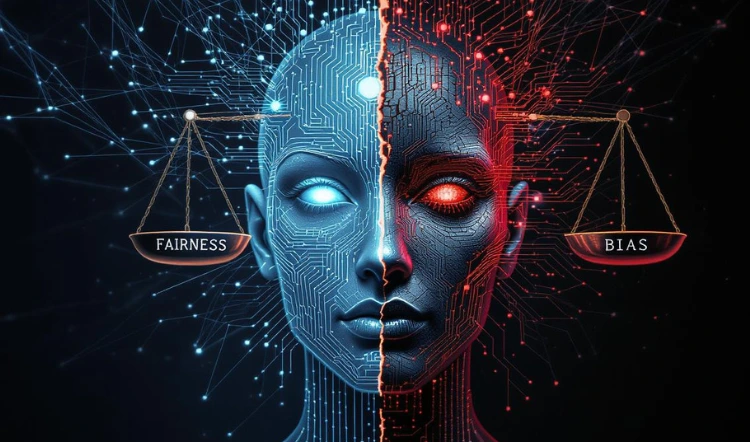
Artificial intelligence has moved from experimental labs into everyday business operations. From hiring platforms to credit scoring systems machine learning now influences decisions that shape careers finances and opportunities. What Is AI Bias Understanding Risks in Machine Learning, As adoption accelerates conversations around fairness have become central within technology insights and IT industry news. Organizations are no longer asking only how powerful AI can be but also how fair and accountable it should be.
Understanding bias in intelligent systems begins with recognizing that algorithms learn from data created by humans. When that data reflects social or historical inequalities the outcomes generated by machines may repeat or even amplify those patterns. This is where the discussion around responsible innovation becomes both urgent and complex.
Defining Bias in Machine Learning Systems
Bias in machine learning refers to systematic errors that lead algorithms to produce unfair or skewed results. These outcomes may advantage certain groups while disadvantaging others even when the system appears technically accurate. Because models rely on patterns within training datasets they can inherit imbalances embedded in those datasets.
For instance hiring algorithms trained on historical workforce data may favor profiles that resemble past hires. In sectors tracking HR trends and insights this risk has raised concerns about diversity equity and inclusion. Companies increasingly audit AI tools to ensure recruitment decisions remain balanced and merit driven rather than historically conditioned.
How Bias Enters the AI Lifecycle
Bias does not originate from a single source. It can emerge during data collection model design or deployment. If datasets lack demographic diversity the resulting system may struggle to generalize fairly. Likewise engineers may unintentionally encode assumptions into feature selection or evaluation metrics.
Moreover feedback loops can reinforce distortions over time. When biased predictions influence real world decisions the new data generated reflects those same outcomes. Consequently the system becomes more confident in flawed reasoning. This cyclical effect has been widely discussed across marketing trends analysis and sales strategies and research where recommendation engines shape consumer visibility and purchasing behavior.
Real World Consequences Across Industries
The impact of biased AI extends far beyond technical performance. Financial institutions using automated risk assessment tools have faced scrutiny when loan approvals disproportionately exclude certain communities. Such cases often appear in finance industry updates where regulators examine transparency and accountability in algorithmic lending.
Healthcare offers another critical lens. Diagnostic systems trained primarily on limited population samples may underperform for underrepresented groups. Similarly predictive policing technologies have sparked debate regarding surveillance equity and civil rights. Each example underscores how algorithmic bias can influence safety wellbeing and economic mobility.
Business Reputation and Regulatory Pressure
Organizations deploying AI solutions now operate under growing public and legal scrutiny. Stakeholders expect transparency in how automated decisions are made. Governments worldwide are drafting compliance frameworks that require explainability fairness testing and risk disclosure.
Failure to address bias can erode customer trust and damage brand credibility. On the other hand companies that proactively invest in ethical AI governance strengthen market confidence. This shift is frequently highlighted in IT industry news where responsible innovation becomes a competitive differentiator rather than a regulatory burden.
The Technical Challenge of Measuring Fairness
Detecting bias is not always straightforward. Fairness can be defined in multiple ways depending on context. A model optimized for accuracy may still produce unequal error rates across demographic groups. Engineers must therefore balance statistical performance with ethical responsibility.
Advanced auditing techniques now evaluate datasets feature weighting and outcome distribution. Explainable AI frameworks attempt to reveal how models arrive at decisions. These tools allow organizations to refine systems before large scale deployment. As technology insights evolve fairness metrics are becoming standard practice rather than optional safeguards.
Strategies to Reduce Algorithmic Bias
Mitigating bias requires intervention at every stage of the AI lifecycle. Diverse data sourcing improves representational balance while synthetic augmentation can fill demographic gaps. Model training techniques may incorporate fairness constraints that adjust weighting to reduce discriminatory outcomes.
Equally important is human oversight. Cross functional review teams combining technical legal and domain expertise provide broader evaluation perspectives. In fields analyzing HR trends and insights this collaborative governance ensures hiring technologies align with workplace equity goals.
Continuous monitoring also plays a crucial role. Algorithms must be reassessed as societal patterns market dynamics and user behaviors evolve. Without periodic recalibration even well designed systems may drift toward inequity.
Ethical AI as a Business Imperative
Beyond compliance ethical AI is increasingly tied to long term enterprise value. Consumers prefer brands that demonstrate accountability in digital practices. Investors evaluate governance frameworks when assessing technology risk exposure.
Responsible deployment also unlocks innovation opportunities. Fair systems expand accessible markets improve customer engagement and enhance decision quality. Insights drawn from marketing trends analysis reveal that inclusive algorithms often produce more accurate segmentation because they capture broader behavioral diversity.
The Future Direction of Fair Machine Learning
As artificial intelligence matures the conversation is shifting from detection to prevention. Developers are embedding fairness testing directly into development pipelines. Regulatory bodies are collaborating with technology providers to standardize accountability benchmarks.
Education is another driving force. Universities and corporate training programs now integrate ethics into data science curricula. This multidisciplinary approach ensures future engineers design systems with social awareness from inception rather than retrofitting safeguards later.
Practical Insights for Organizations Navigating AI Bias
Businesses seeking to operationalize fair AI should begin with internal awareness. Leadership alignment on ethical standards sets the tone for responsible deployment. Establishing data governance policies ensures datasets remain representative secure and transparent.
Investment in audit tools and explainability frameworks strengthens oversight capabilities. Collaboration with external reviewers adds impartial validation. Companies monitoring finance industry updates or sales strategies and research can benchmark fairness practices across competitors to refine their own governance models.
Embedding fairness objectives into performance metrics further institutionalizes accountability. When ethical outcomes influence success measurements teams prioritize responsible innovation alongside technical advancement.
Stay informed with deeper technology insights and industry intelligence through InfoProWeekly. Connect with our experts to explore research driven strategies shaping the future of responsible AI.