
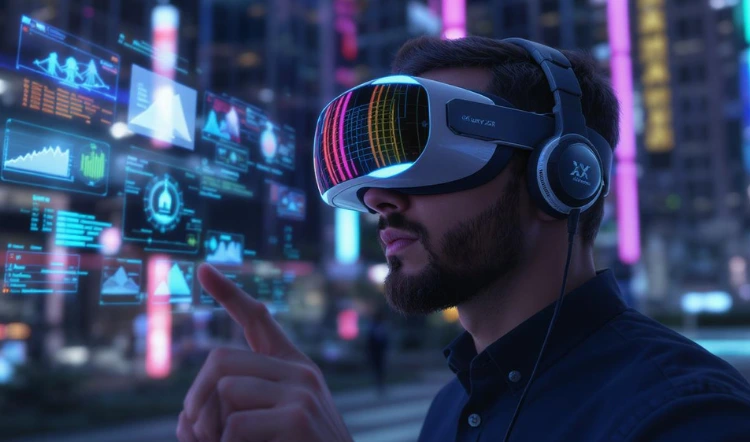
The extended reality space has entered a new phase of ambition, and Samsung push into immersive hardware reflects how seriously the industry views spatial computing. Galaxy XR Shines Technologically but Faces Real World Limits as a statement that captures both excitement and hesitation surrounding this device. While the engineering achievement is undeniable, the path to everyday relevance remains uncertain.
Consumers, enterprises, and analysts are all watching closely. On one hand, the headset demonstrates how far immersive interfaces have evolved. On the other, practical usage scenarios still feel limited when compared to smartphones, laptops, or even tablets. This contrast defines the current conversation across technology insights and IT industry news.
Design Innovation Meets Engineering Precision
From the moment users interact with the device, the craftsmanship becomes evident. The display clarity, motion tracking accuracy, and interface responsiveness create an experience that feels fluid and futuristic. Samsung has clearly invested in premium optics and ergonomic balance to ensure extended usability.
Moreover, the integration of AI assisted controls enhances navigation. Users can switch environments, manage applications, and interact with digital objects in ways that feel intuitive. As a result, Galaxy XR Shines Technologically but Faces Real World Limits not because of capability gaps, but because everyday dependency has not formed yet.
The hardware proves what is technologically possible. However, mass adoption depends on habitual utility rather than novelty.
Software Ecosystem Still Finding Its Footing
Even the most advanced hardware relies heavily on software depth. Currently, the Galaxy XR platform offers immersive media, virtual collaboration, and simulation experiences. These are impressive demonstrations, yet they remain niche for the average consumer.
Developers are exploring enterprise training modules, healthcare simulations, and design visualization tools. Consequently, IT industry news frequently highlights partnerships aimed at expanding XR ecosystems. Still, the app library lacks the scale that drove smartphone adoption years ago.
Until developers see consistent user demand, large scale software investment may remain cautious. This creates a cycle where innovation exists but widespread usage grows slowly.
Enterprise Use Cases Show Stronger Momentum
While consumer adoption feels gradual, enterprise sectors reveal stronger traction. Organizations are testing XR for onboarding, remote assistance, and technical training. In fact, HR trends and insights increasingly point toward immersive learning environments that improve retention and engagement.
Similarly, manufacturing firms use XR overlays for maintenance workflows. Financial institutions experiment with virtual data visualization, tying into broader finance industry updates around digital transformation. These applications demonstrate measurable productivity gains.
Therefore, Galaxy XR Shines Technologically but Faces Real World Limits primarily in consumer markets, whereas enterprise ecosystems show clearer return on investment.
Marketing Hype Versus Everyday Reality
Product launches often generate excitement that outpaces real world practicality. Marketing trends analysis shows that immersive tech campaigns rely heavily on futuristic storytelling. While this builds anticipation, it can also create expectation gaps.
For many buyers, daily routines still revolve around mobile devices. Checking emails, attending meetings, browsing content, and managing finances remain faster on traditional screens. Consequently, XR becomes an enhancement rather than a replacement.
Sales strategies and research suggest that positioning XR as a productivity companion rather than a device replacement may accelerate adoption. Framing matters as much as functionality.
Pricing and Accessibility Considerations
Cost remains a decisive factor in emerging technology adoption. Premium XR hardware requires advanced components, which elevates retail pricing. For early adopters and enterprises, this investment is justifiable. For mainstream consumers, hesitation persists.
Additionally, long term comfort, battery endurance, and portability influence purchase decisions. Even though Galaxy XR Shines Technologically but Faces Real World Limits in perception, improvements in affordability and wearability could shift momentum quickly.
Historically, technology becomes indispensable only after crossing accessibility thresholds. Smartphones followed this trajectory, and XR may do the same over time.
Competitive Landscape and Industry Direction
Samsung is not operating in isolation. Major technology firms are racing to define spatial computing standards. This competition accelerates innovation while also fragmenting ecosystems.
Technology insights indicate that interoperability and content portability will shape the next phase of XR growth. Users want seamless transitions between devices and platforms. Without that continuity, adoption friction increases.
Nevertheless, competition drives rapid iteration. Each product cycle brings lighter designs, sharper visuals, and broader software compatibility. As a result, the industry continues progressing even if consumer demand grows gradually.
Cultural and Behavioral Adoption Barriers
Beyond hardware and software, behavioral psychology plays a role. People adopt technology that integrates effortlessly into daily life. Wearing a headset still feels intentional rather than habitual.
Workplace acceptance is improving, especially in remote collaboration settings. However, social environments and public usage remain limited. This cultural hesitation reinforces why Galaxy XR Shines Technologically but Faces Real World Limits despite its innovation.
Over time, normalization may occur just as wireless earbuds and smartwatches once felt unusual before becoming mainstream.
Practical Insights for Businesses and Tech Leaders
Organizations evaluating XR should begin with targeted pilot programs rather than large scale deployment. Training simulations, virtual product demos, and remote diagnostics offer measurable entry points. Aligning XR initiatives with existing digital transformation goals ensures strategic value rather than experimental spending.
Leaders across HR, finance, sales, and marketing should collaborate when assessing immersive technology. Cross functional alignment reveals broader productivity opportunities. Monitoring IT industry news and marketing trends analysis also helps decision makers time investments wisely as ecosystems mature.
Galaxy XR Shines Technologically but Faces Real World Limits today, yet early strategic adoption can position companies ahead of future demand curves.
Stay ahead with deeper technology insights, market intelligence, and future ready business research.
Reach out to InfoProWeekly to explore how emerging innovations can shape your strategic growth.
Source : technewsworld.com